How to Create a Contemporary Ceiling Design That Enhances Any Room Instantly
A great ceiling can completely change how a room feels. Most people obsess over paint colors, furniture, and rugs while ignoring the largest blank surface in the room. That’s a missed opportunity. If you want your home to feel stylish, polished, and a little more expensive, a contemporary ceiling design deserves a spot on your renovation wishlist.
Why Your Ceiling Matters More Than You Think
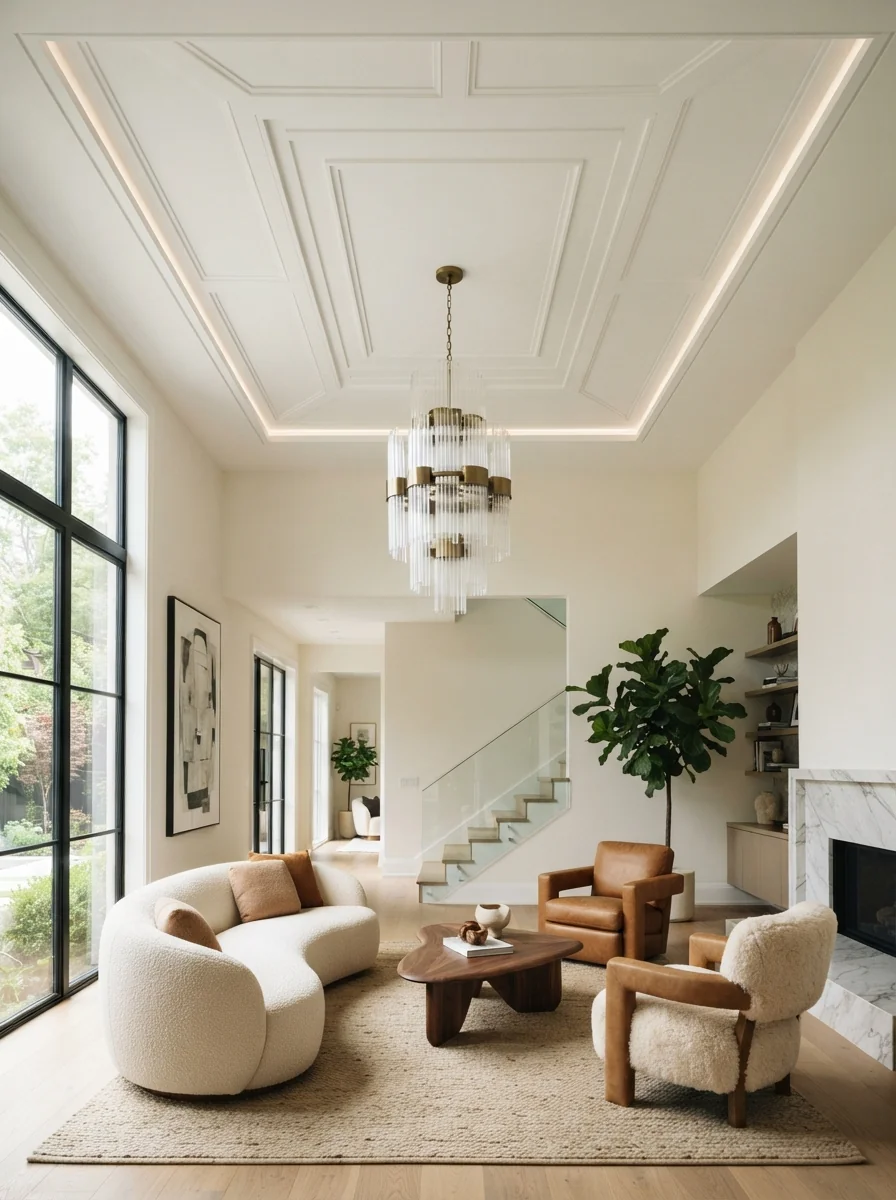
People often call the ceiling the fifth wall, and honestly, that’s pretty accurate. It frames the entire room, affects lighting, and influences how spacious everything feels.
A thoughtfully designed ceiling creates balance. Even if your furniture stays the same, updating the ceiling can make the room feel brighter, taller, or more inviting. Pretty impressive for something most people barely notice until it looks amazing.
The best part? You don’t always need a massive renovation. Small changes often create the biggest visual impact.
Start with the Room’s Purpose
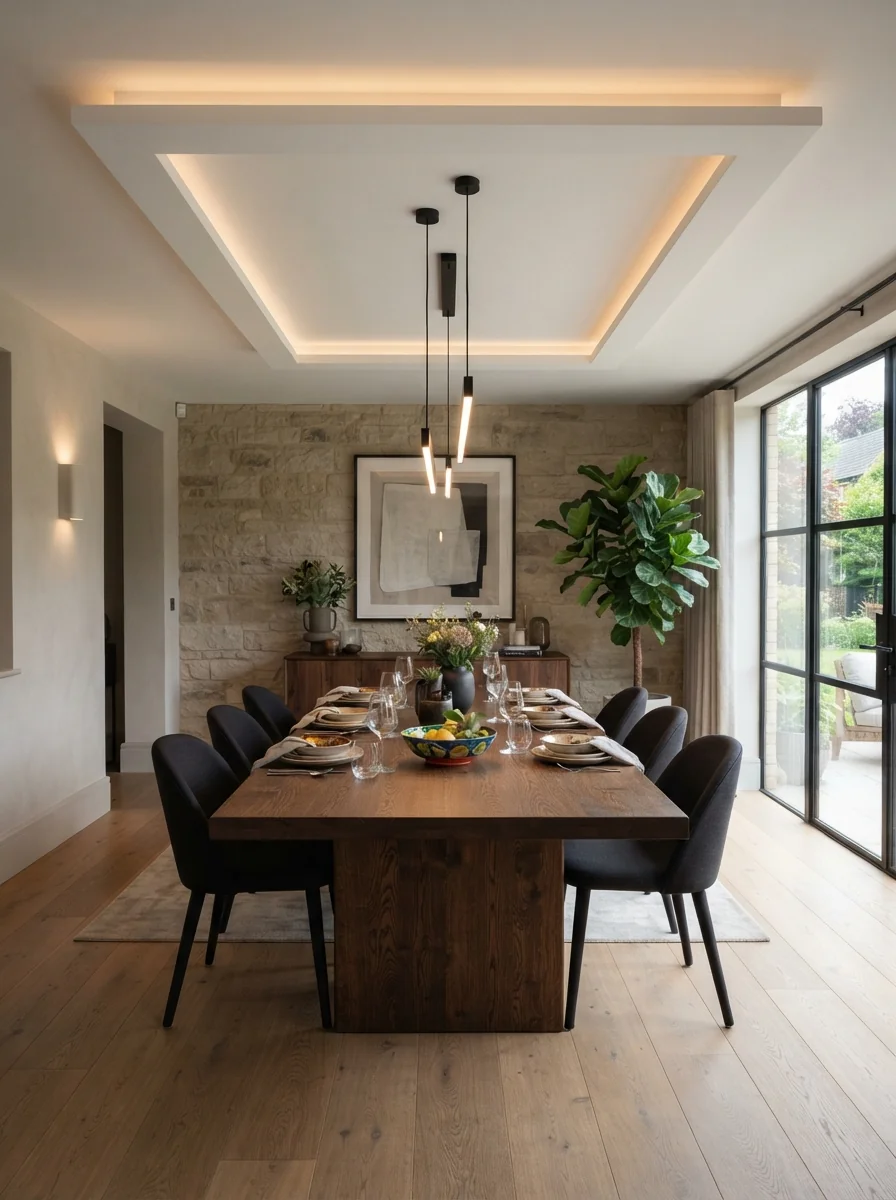
Before choosing materials or lighting, think about how you actually use the space. A cozy bedroom needs a different ceiling than a lively kitchen or an elegant dining room.
Ask yourself a few simple questions:
- Does the room need more light?
- Do you want it to feel larger?
- Should the ceiling become a focal point?
- Do you prefer subtle elegance or bold design?
Once you answer those questions, the design choices become much easier.
Match the Ceiling to Your Interior Style
A contemporary ceiling should complement the rest of the room instead of competing with it.
For example:
- Minimalist rooms look best with clean lines and hidden lighting.
- Scandinavian interiors pair beautifully with light wood accents.
- Luxury spaces benefit from layered ceiling details and statement fixtures.
- Industrial designs often feature exposed concrete or black metal accents.
Everything should work together instead of shouting for attention.
Choose Materials That Feel Modern
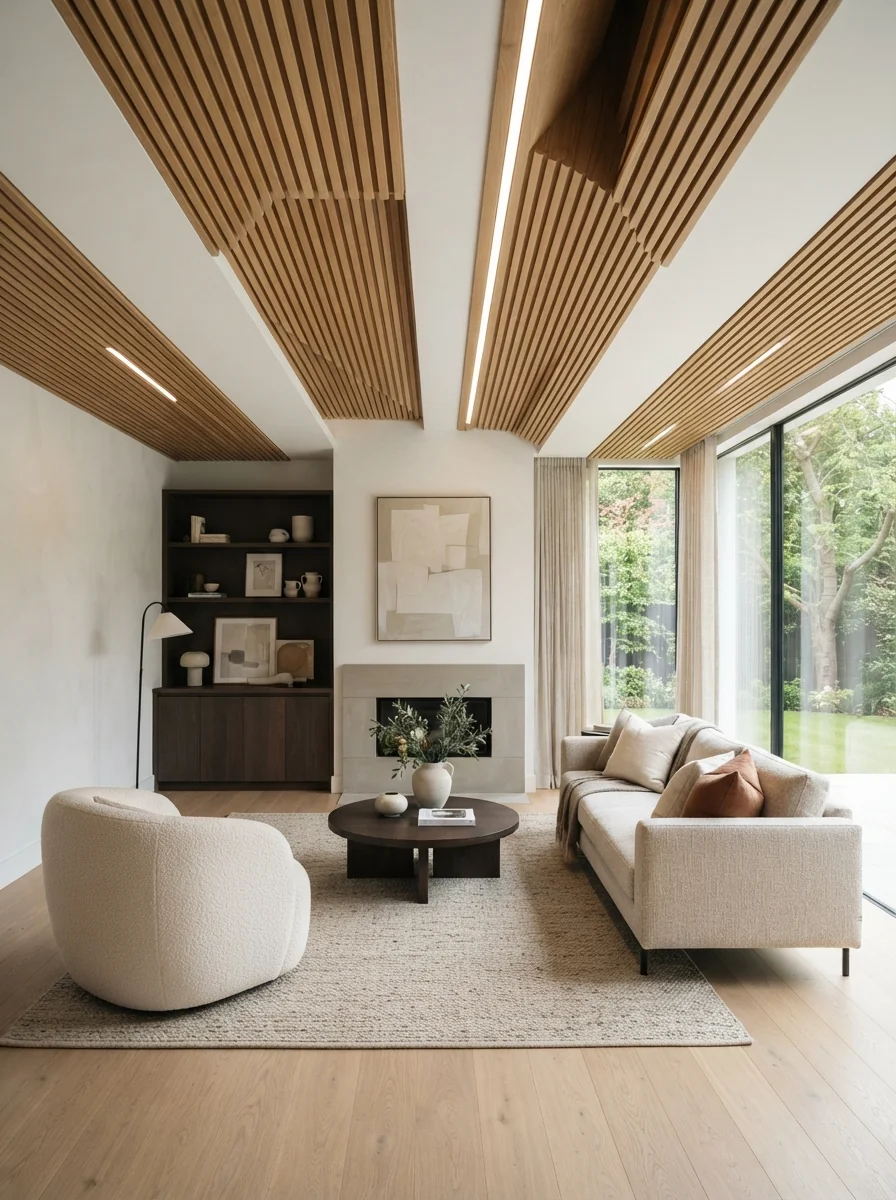
Contemporary design doesn’t mean using the newest trend just because social media says so. It means selecting materials that feel clean, timeless, and functional.
Some excellent choices include:
- Smooth painted drywall
- Natural wood slats
- Decorative gypsum panels
- Slim metal trims
- Concrete finishes
- Acoustic ceiling panels
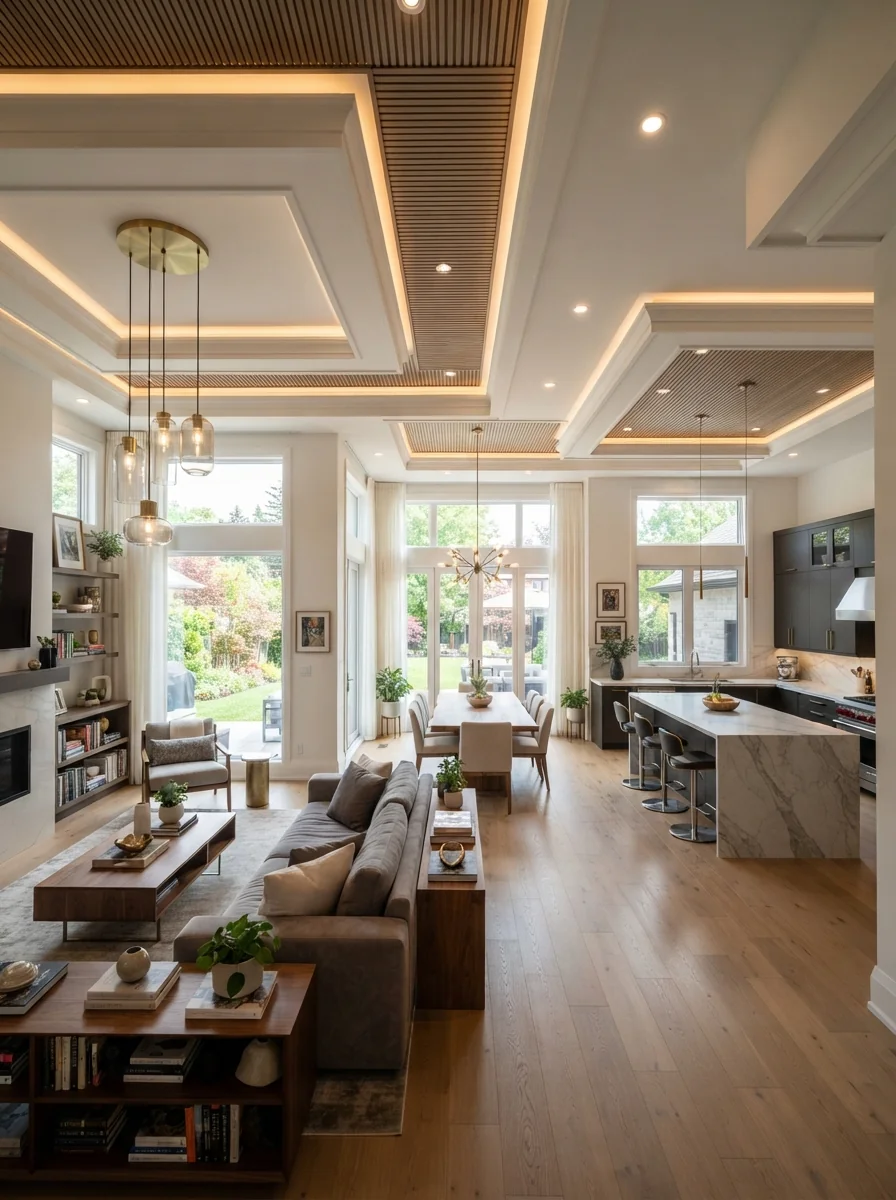
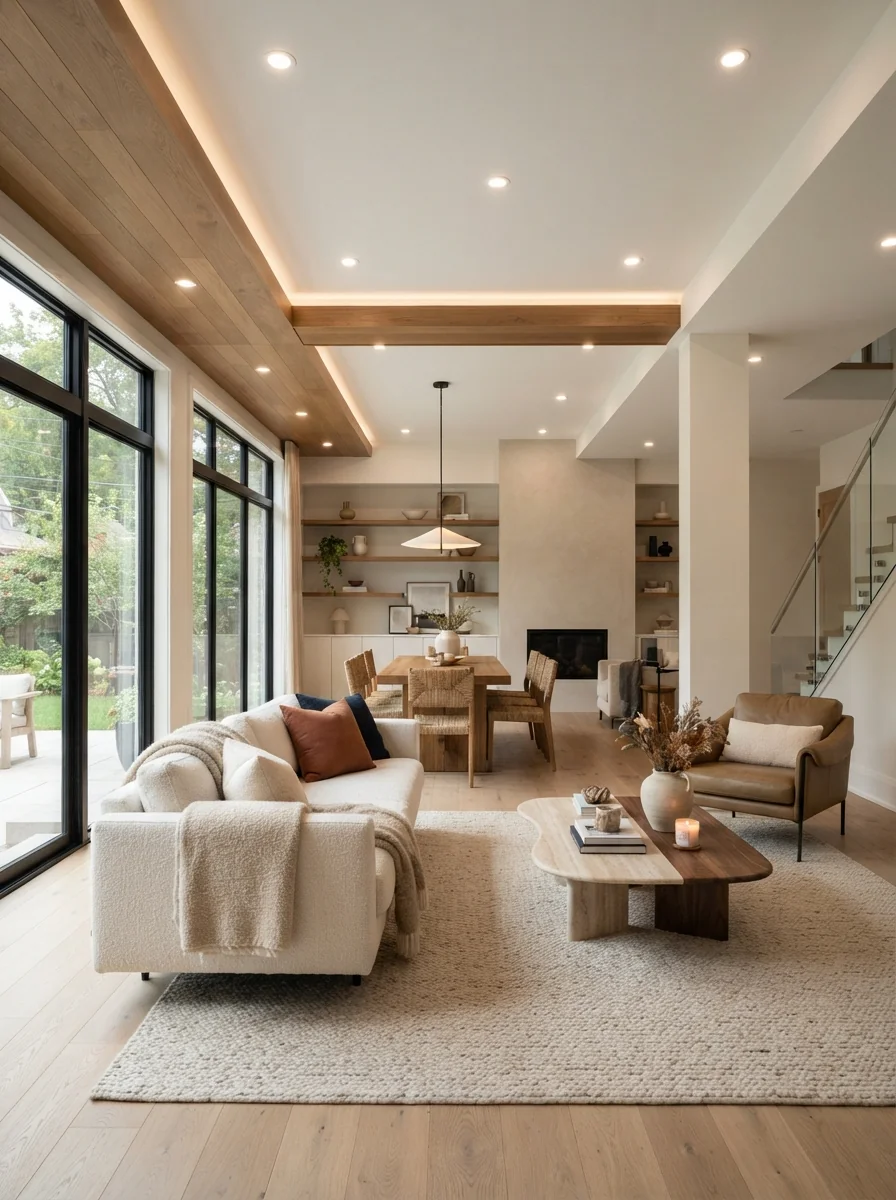
Wood slats have become especially popular because they instantly add warmth without making a room feel heavy. They also pair well with neutral color palettes.
Keep Texture Under Control
Texture adds personality, but too much creates visual clutter.
Instead of covering the entire ceiling with decorative elements, choose one standout feature. A wood accent strip, recessed border, or subtle geometric pattern usually creates a stronger result than filling every inch with detail.
Sometimes less really does more. Yes, that decorating cliché actually earns its paycheck here.
Lighting Makes the Entire Design Come Alive
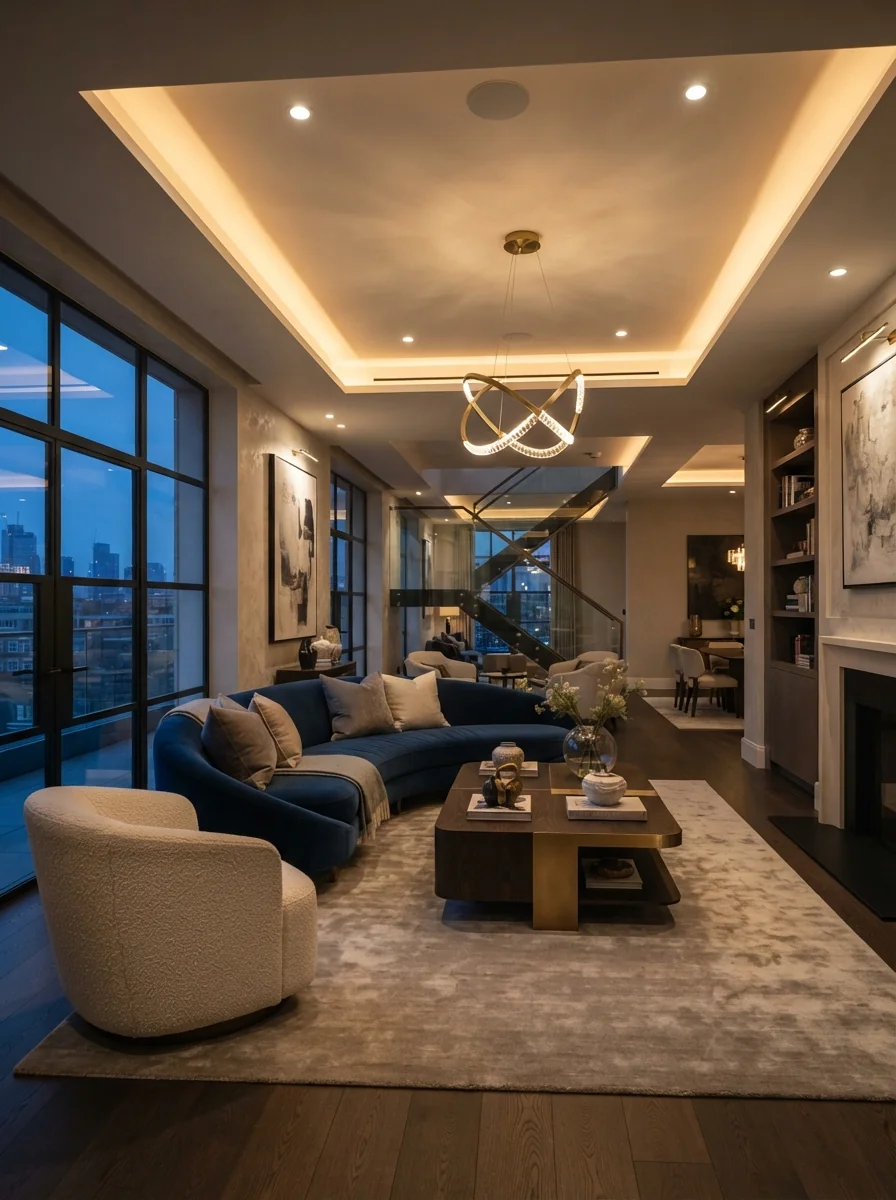
Even the most beautiful ceiling falls flat without the right lighting. Good lighting highlights architectural details and changes the mood within seconds.
Instead of relying on one large ceiling fixture, layer different light sources.
Consider combining:
- Recessed LED lighting for overall brightness
- Cove lighting for a soft glow
- Pendant lights over dining tables or kitchen islands
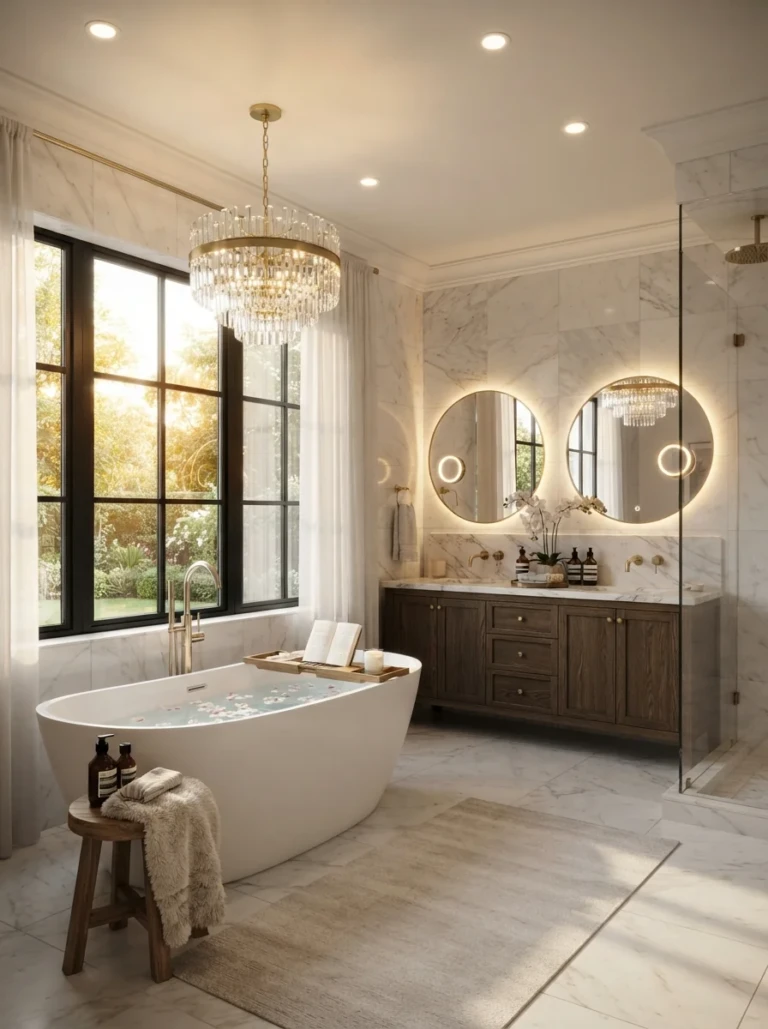
- Statement chandeliers in larger rooms
- Track lighting for flexible illumination
Dimmers deserve an honorable mention too. They let you switch from productive workspace to cozy movie night with one adjustment.
Use Hidden Lighting for a Floating Effect
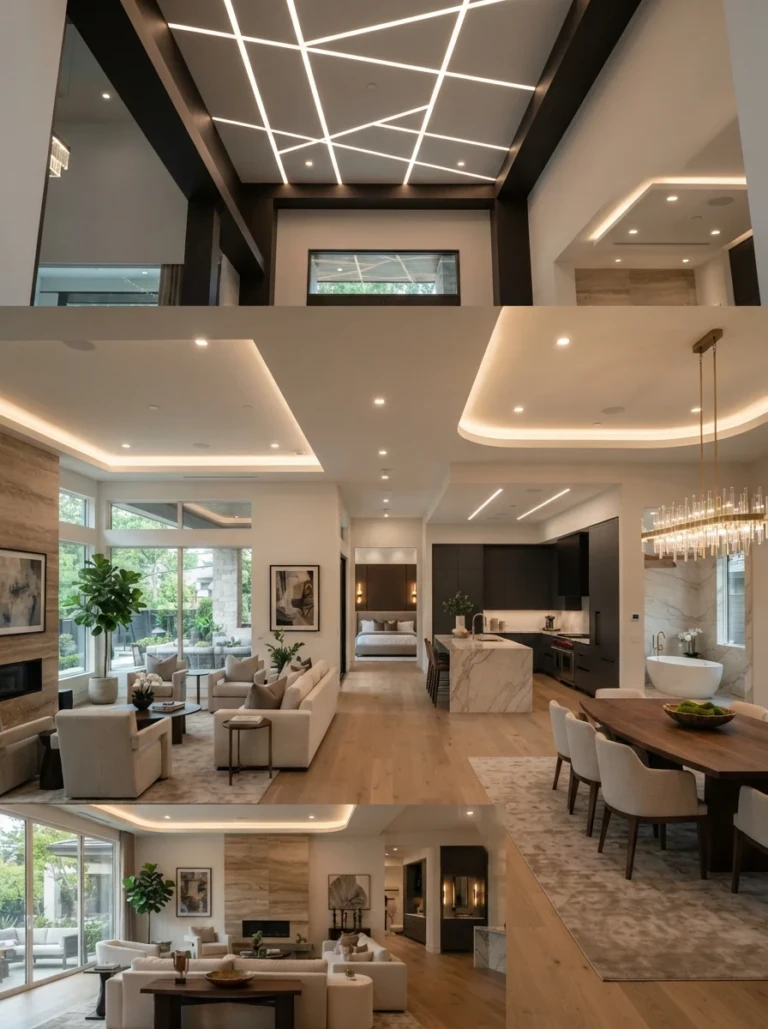
One of the biggest trends in contemporary interiors involves concealed LED strips.
Hidden lighting around recessed ceiling edges creates a floating appearance that feels sophisticated without looking flashy. It also eliminates harsh shadows, making rooms feel larger and more relaxing.
FYI, warm white lighting usually creates a more welcoming atmosphere than cool blue tones in living spaces.
Create Depth Without Overcomplicating Things
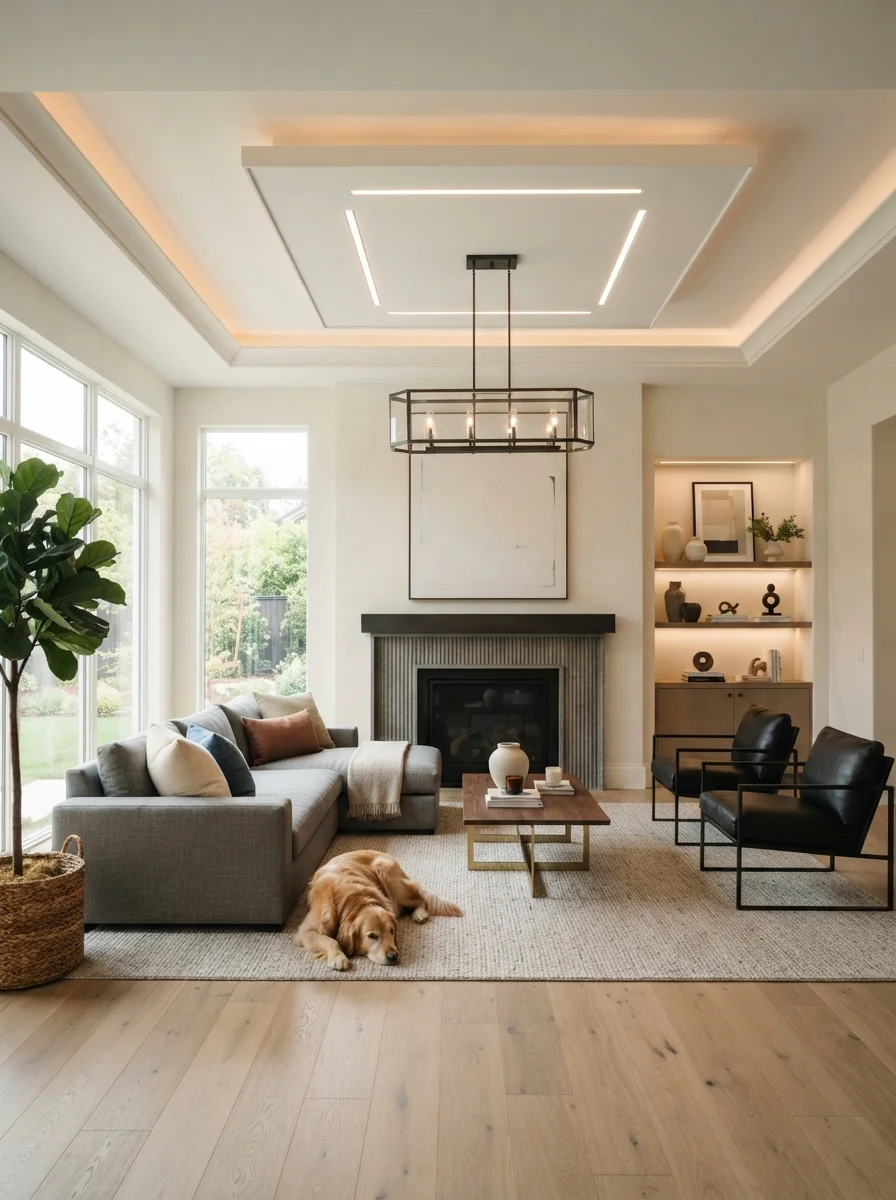
Flat ceilings work perfectly well, but adding dimension gives a room more character.
Popular contemporary options include:
- Tray ceilings
- Coffered ceilings with simple profiles
- Floating ceiling panels
- Suspended ceiling sections
- Layered gypsum borders
The key word here is simple. Contemporary design favors clean geometry over ornate decoration.
If your ceiling already has architectural challenges like beams or uneven heights, work with them instead of fighting them. Sometimes those “problems” become the room’s most interesting feature.
Pick Colors That Open Up the Space
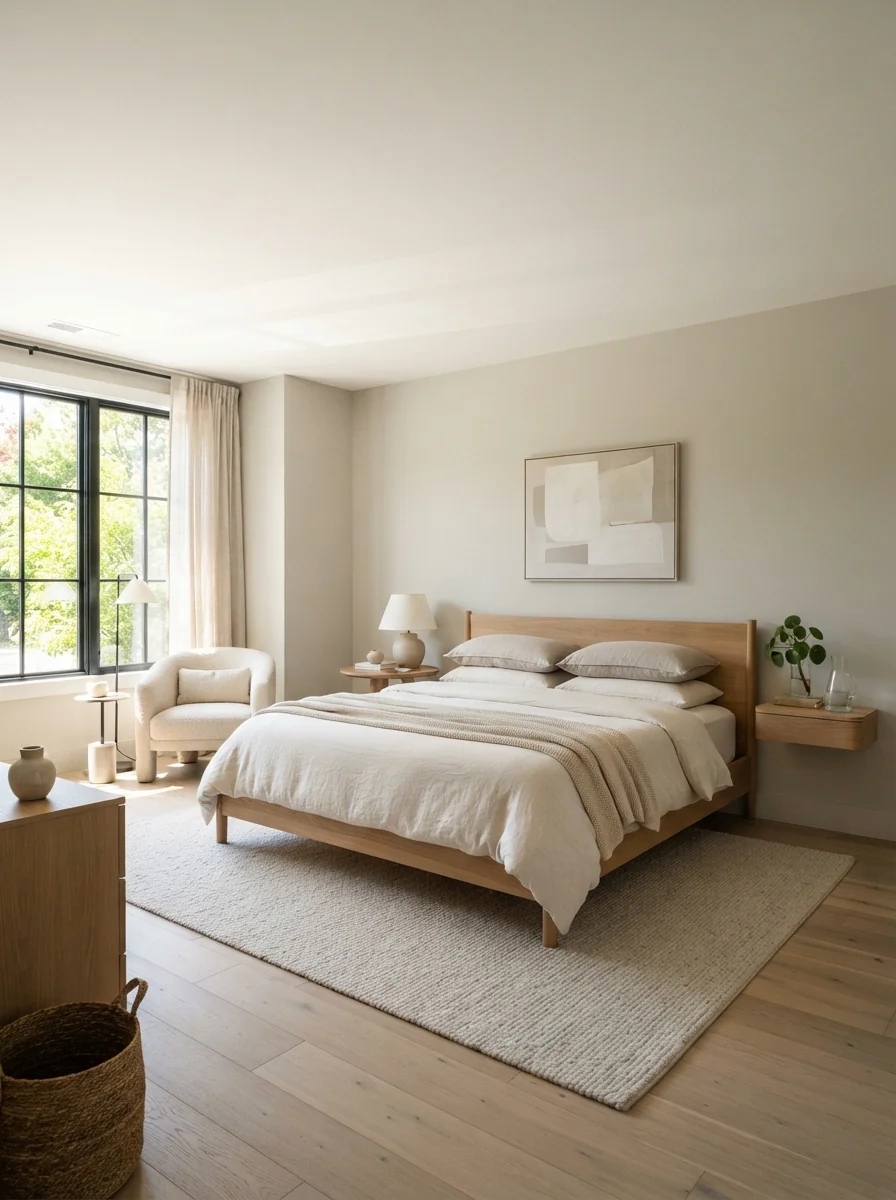
White remains popular for a reason. It reflects light, creates an airy feeling, and matches nearly every decorating style.
That doesn’t mean white serves as your only option.
Soft contemporary colors include:
- Warm white
- Light greige
- Soft beige
- Pale taupe
- Light gray
Feeling a little adventurous? Paint the ceiling one shade lighter than your walls to create subtle depth while maintaining a cohesive appearance.
Dark ceilings also work beautifully in rooms with tall ceilings and abundant natural light. They add drama without overwhelming the space. IMO, charcoal ceilings paired with warm wood accents look especially stunning.
Avoid These Common Ceiling Design Mistakes
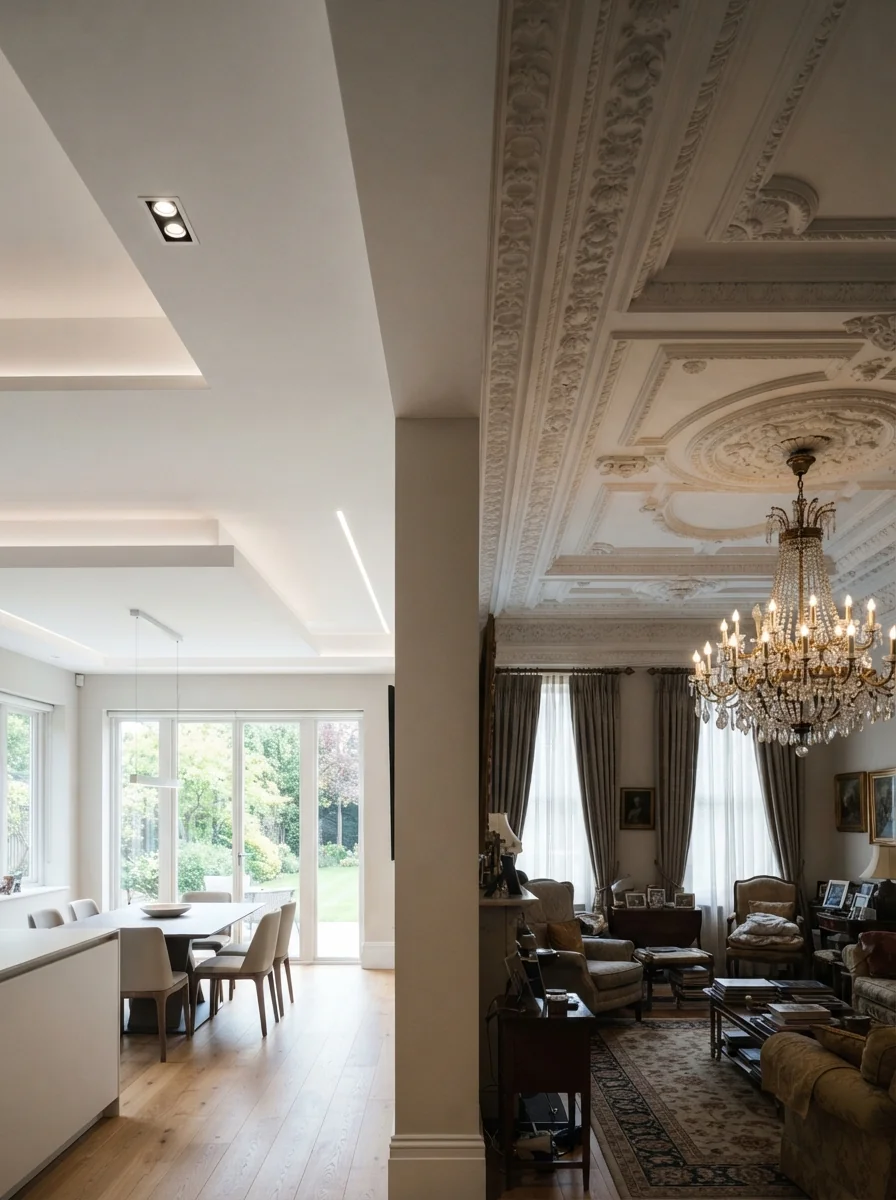
Even expensive renovations can disappoint when basic design principles get ignored.
Watch out for these common mistakes:
- Installing oversized light fixtures in small rooms
- Mixing too many ceiling materials together
- Choosing lighting that’s too cool or harsh
- Ignoring ceiling height during planning
- Overdecorating with unnecessary moldings
- Forgetting about maintenance and cleaning
A contemporary ceiling should feel intentional, not busy.
When in doubt, simplify. Your future self—and your dusting routine—will thank you.
FAQ
What makes a ceiling design contemporary?
A contemporary ceiling focuses on clean lines, simple forms, smart lighting, and modern materials. Instead of ornate decoration, it emphasizes balance, functionality, and visual comfort.
Are contemporary ceiling designs expensive?
Not necessarily. Painting, recessed lighting, or adding subtle wood accents can create a modern look without requiring a full renovation. Costs increase with custom gypsum work, premium materials, and integrated lighting systems.
Which lighting works best for contemporary ceilings?
Layered lighting delivers the best results. Combine recessed LEDs for general illumination with cove lighting or pendant fixtures to add warmth and visual interest.
Can I use a contemporary ceiling in a small room?
Absolutely. Light colors, hidden lighting, and simple ceiling details often make compact spaces appear larger and brighter.
Should every room have the same ceiling design?
No. Consistency helps, but each room has different needs. Bedrooms usually benefit from softer lighting, while kitchens and home offices often require brighter, more practical illumination.
Conclusion
A contemporary ceiling design does far more than cover the top of a room. It shapes the atmosphere, improves lighting, and ties the entire interior together. Focus on clean lines, thoughtful materials, and layered lighting, and you’ll create a space that feels modern without chasing short-lived trends. The ceiling might sit above everything else, but it deserves a place at the very top of your design priorities.