Open Concept Living Room Inspiration: Smart Ideas for Stylish, Functional Spaces
1) Why Open Concept Living Works So Well
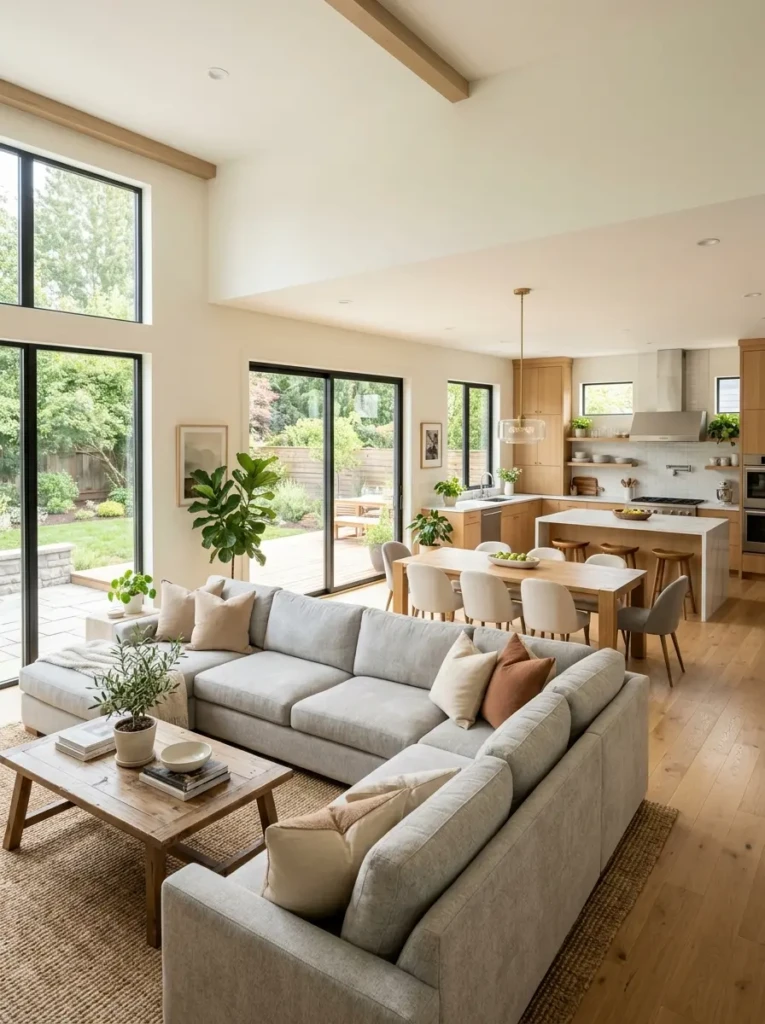
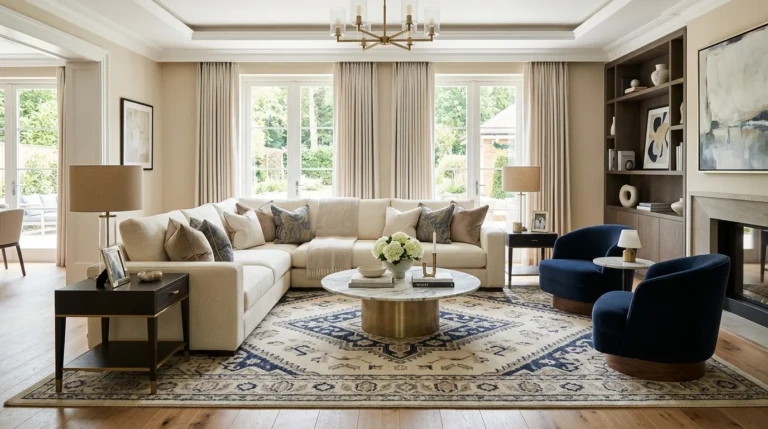
An open-concept layout creates flow, flexibility, and visual spaciousness. Instead of dividing walls between common areas, the design connects conversation, cooking, dining, and relaxation into one seamless zone. The biggest advantage is how naturally people move through the home. Families can interact more easily, guests feel included, and even smaller homes feel larger. The secret to great open concept living room inspiration is not just openness—it’s intentional zoning, furniture placement, lighting, and texture that make every section feel purposeful.
2) Designing the open concept living room and dining room
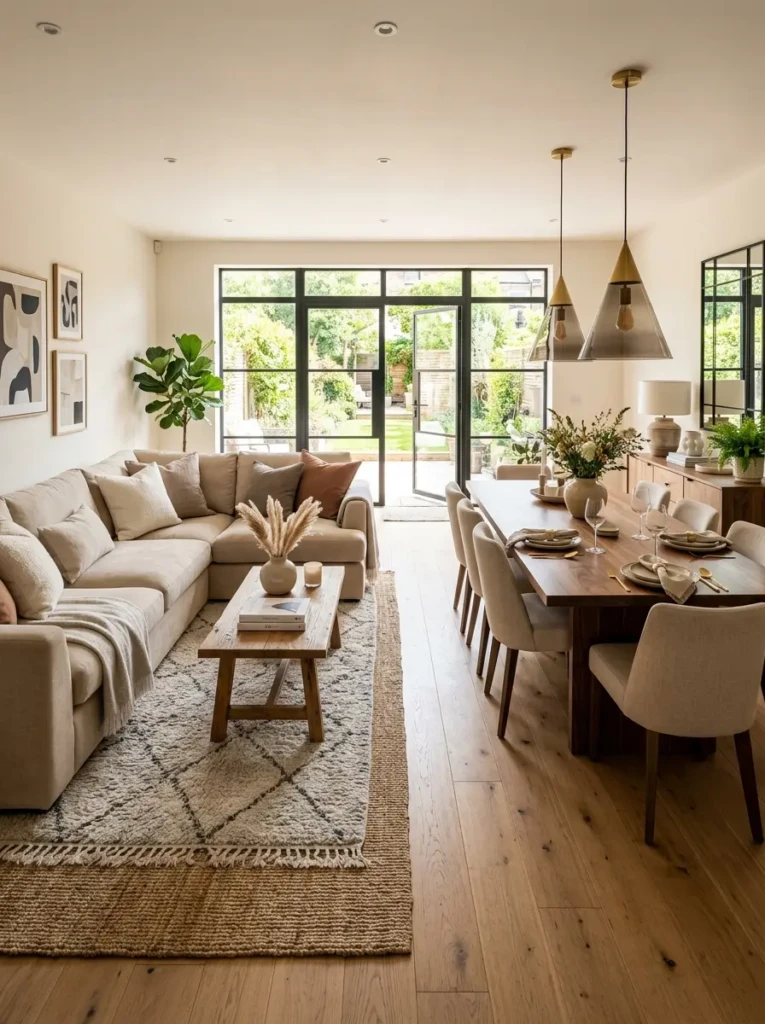
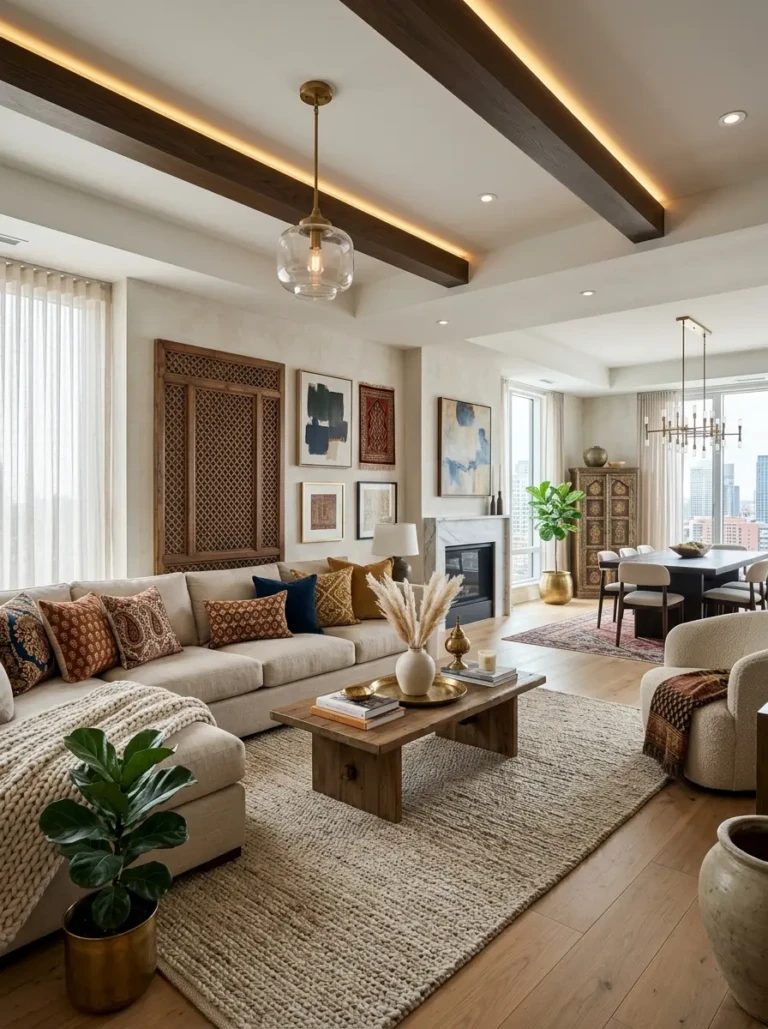
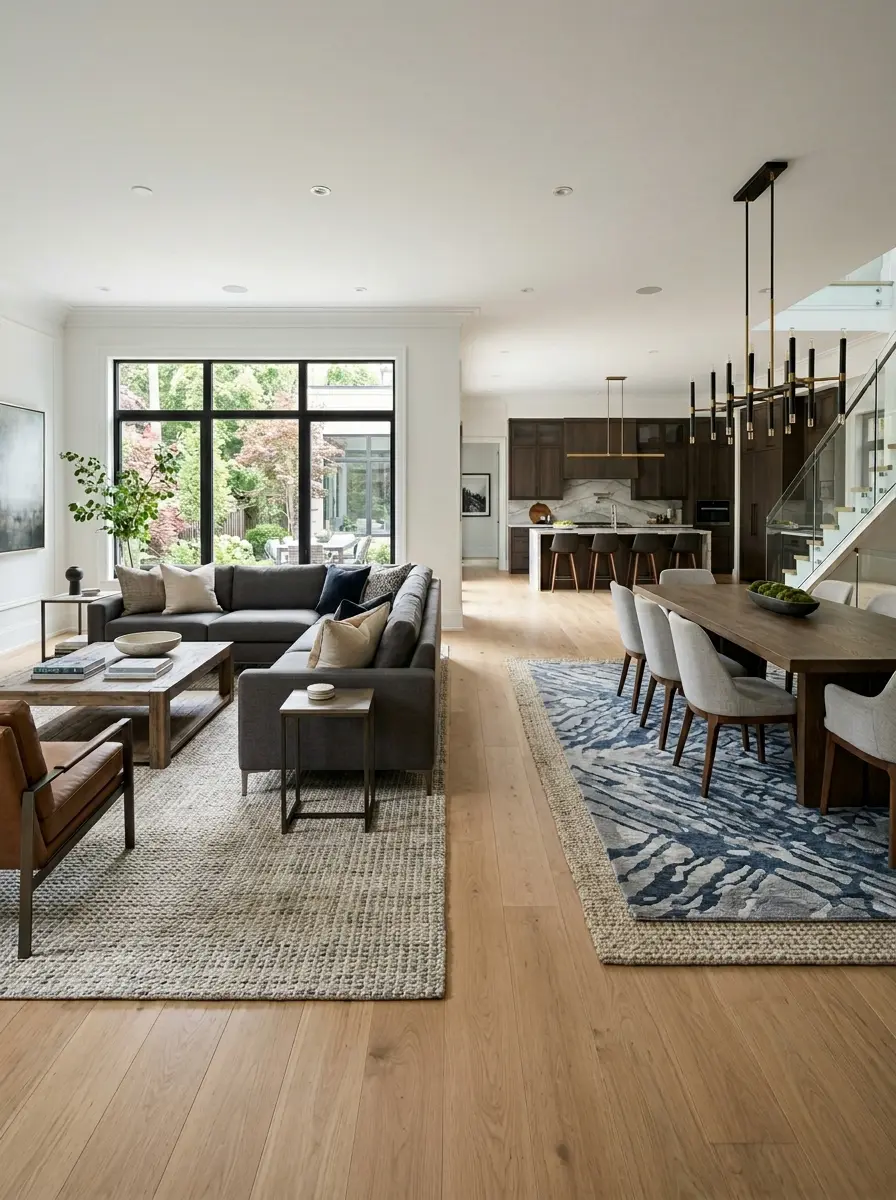
The open concept living room and dining room should feel connected without blending into visual chaos. Use a shared color palette across both areas, then distinguish each zone through furniture shape and rug placement. A large area rug can anchor the seating section, while a dining table pendant clearly marks the eating space. Repeating materials like wood tones, black metal, or linen fabrics helps unify the two areas while preserving their individual functions.
3) Balancing the open living room and kitchen
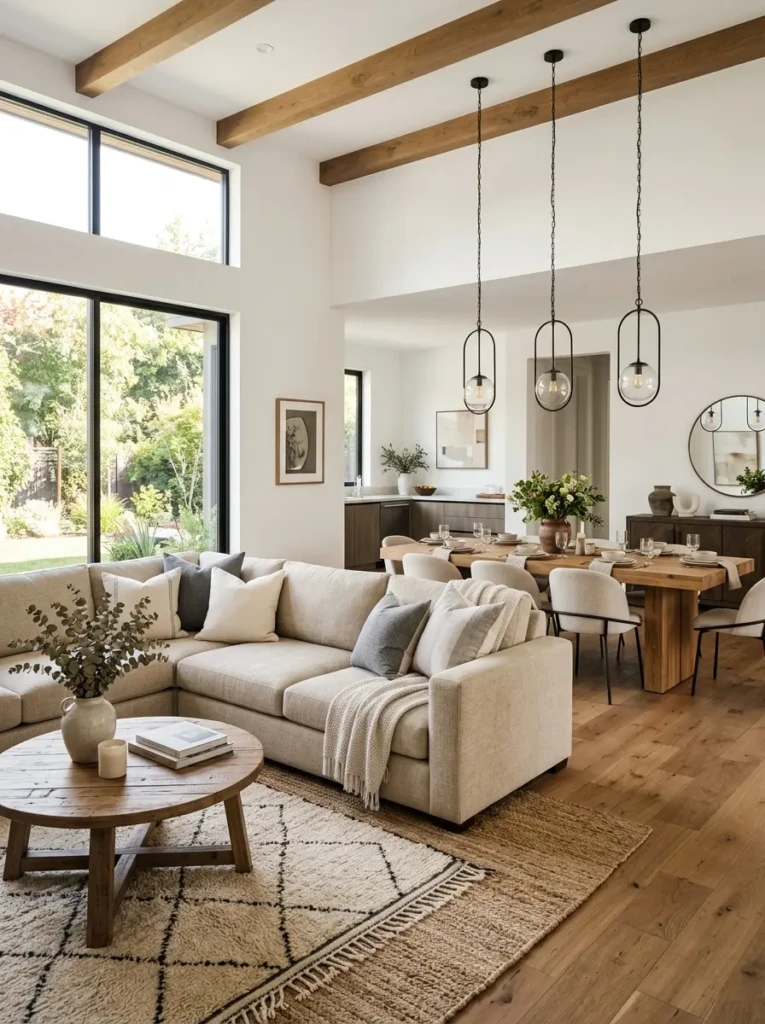
The open living room and kitchen layout performs best when the kitchen feels like part of the social environment rather than a separate work zone. Kitchen islands work as transition points, offering both prep space and casual seating. Align finishes between the kitchen and lounge—such as matching cabinet hardware with coffee table accents—to keep continuity. Soft bar stools, layered lighting, and clean sightlines help the kitchen support the overall room aesthetic instead of interrupting it.
4) Establishing Zones Without Walls
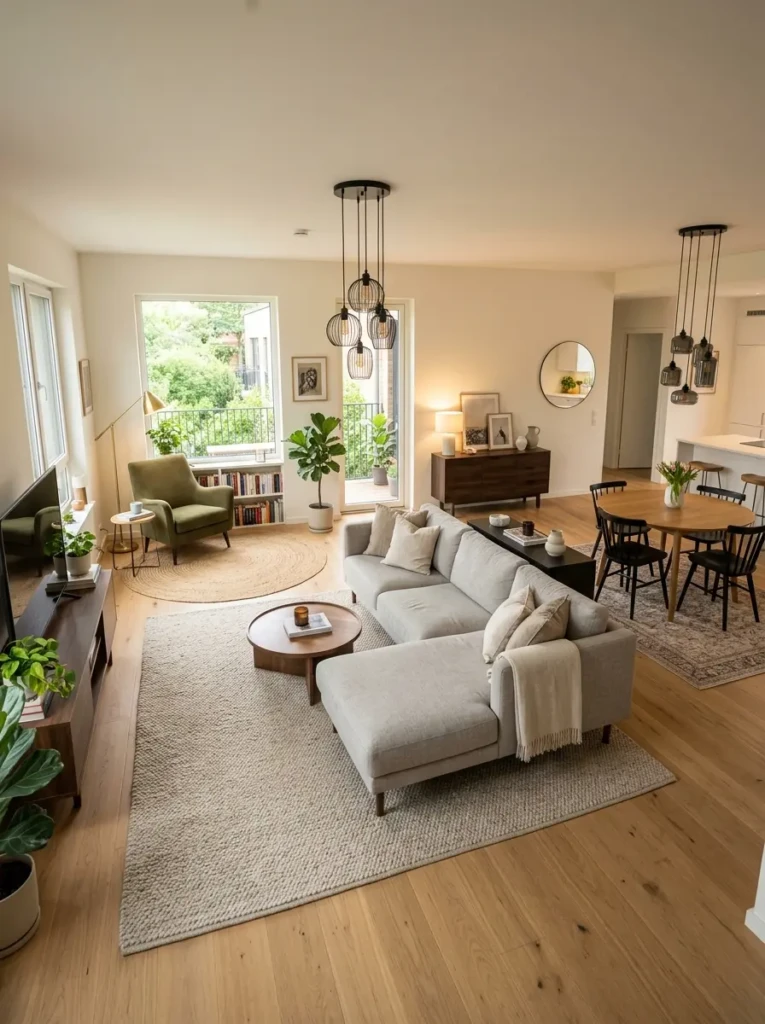
In an open room, invisible boundaries matter. Rugs, console tables, sectional sofas, and lighting clusters can all define specific functions. A sofa placed with its back toward the dining space instantly separates lounging from eating. Open shelving can subtly divide spaces while maintaining light flow. The goal is to create structure without losing openness.
5) Creating a Strong modern living room interior
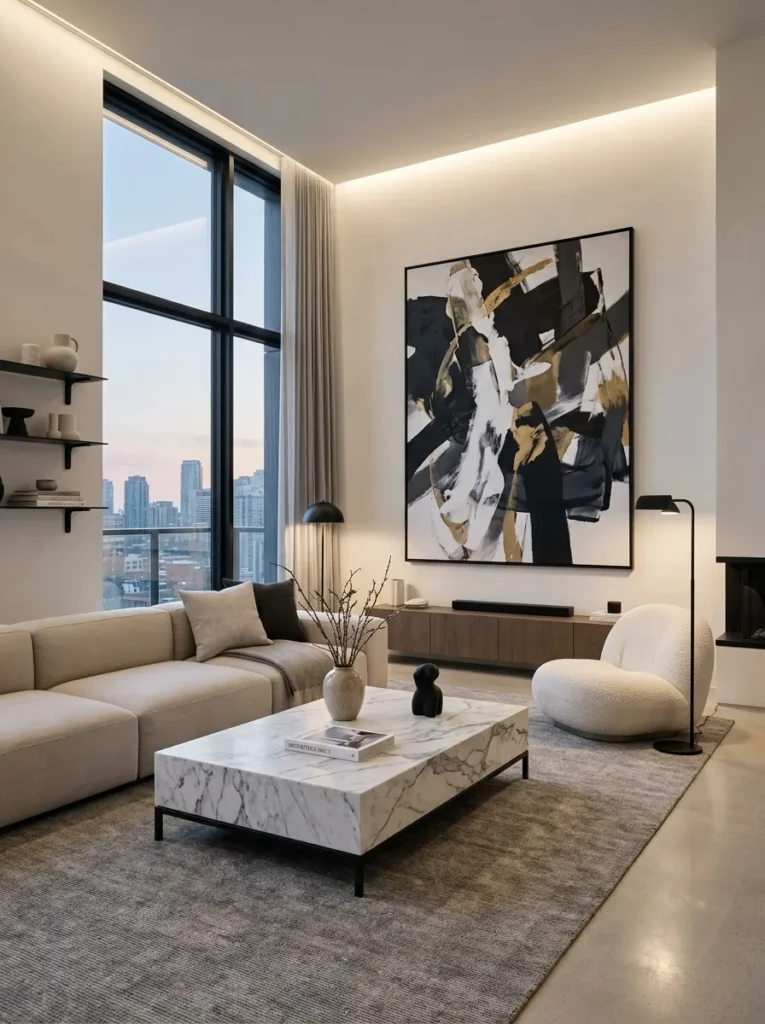
A refined modern living room interior thrives on simplicity, contrast, and intentional shapes. Choose low-profile furniture, clean-lined sofas, minimal decor, and statement materials like marble, oak, matte black, or boucle. Avoid overcrowding surfaces. Instead, let one oversized coffee table book, sculptural vase, or textured throw create visual impact. Modern open rooms feel strongest when every piece has both purpose and presence.
6) Furniture Layout for Better Conversation
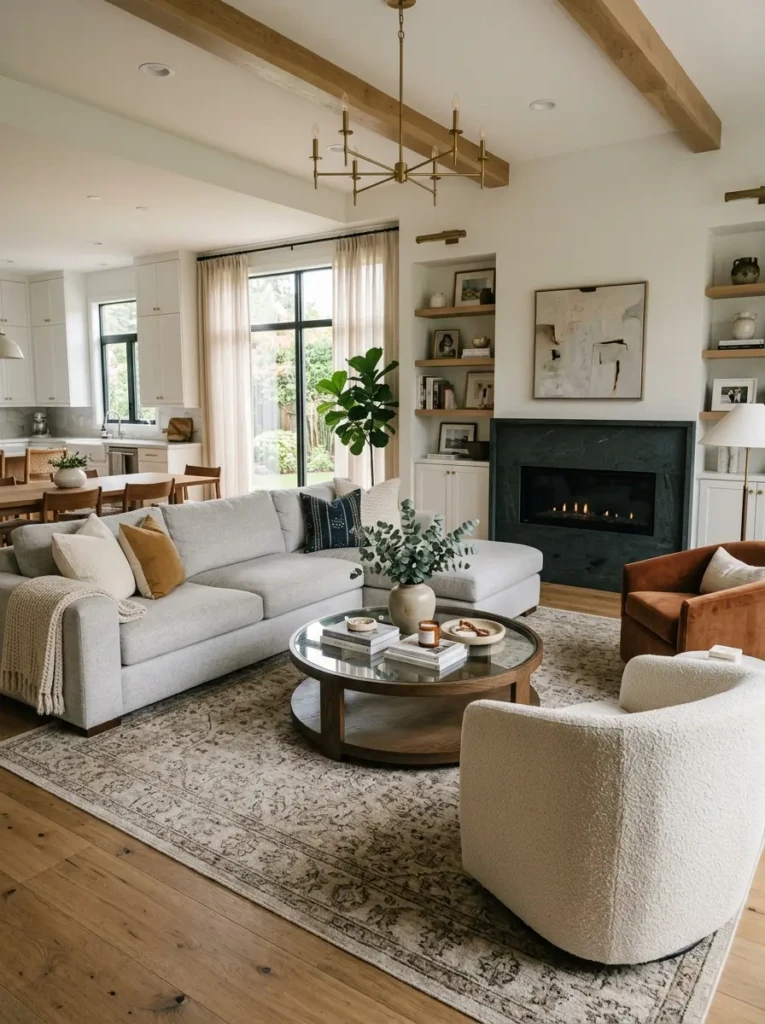
The best layouts prioritize human interaction. Face seating inward to encourage conversation and use sectionals to maximize floor efficiency. In larger rooms, create multiple conversation points: a main sofa zone and a secondary reading chair nook. Leave at least clear walking paths between the kitchen, dining, and lounge zones so the room remains functional during gatherings.
7) Using living room lights to Define Space
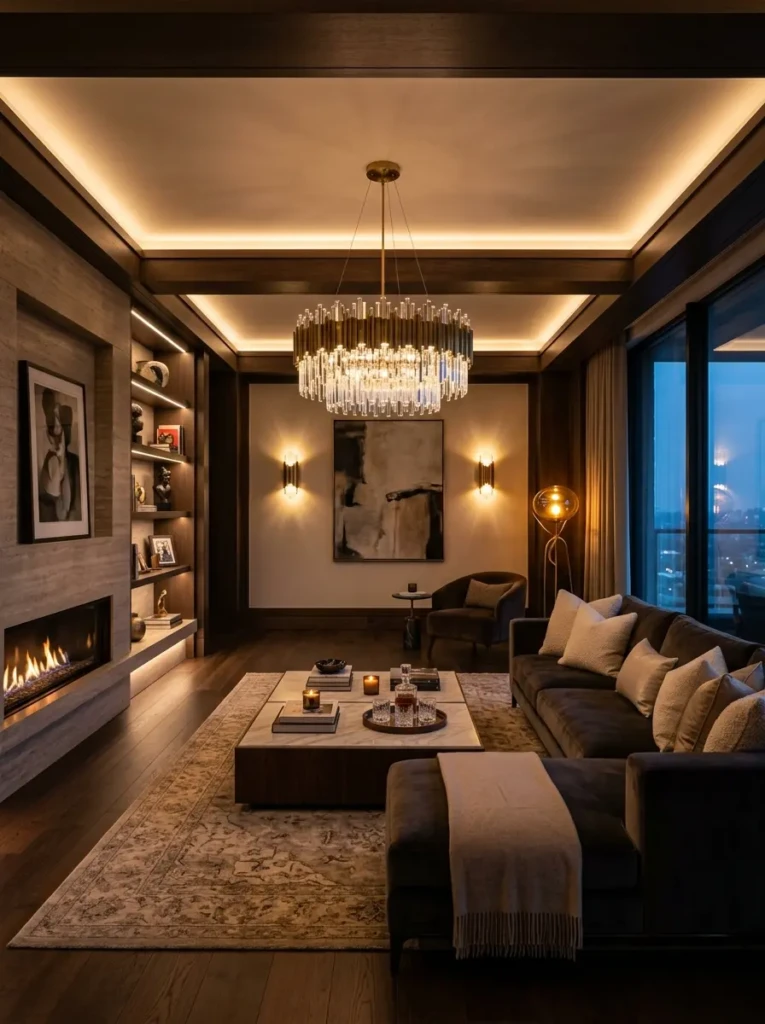
Lighting is one of the most powerful tools in open-concept design. Strategic living room lights can separate functions better than walls ever could. Use recessed lights for general illumination, floor lamps for corners, sconces for atmosphere, and a statement chandelier above the coffee table to anchor the lounge. Warm bulbs create comfort, while dimmers allow the room to shift from daytime productivity to evening relaxation.
8) Start With a living room mood board
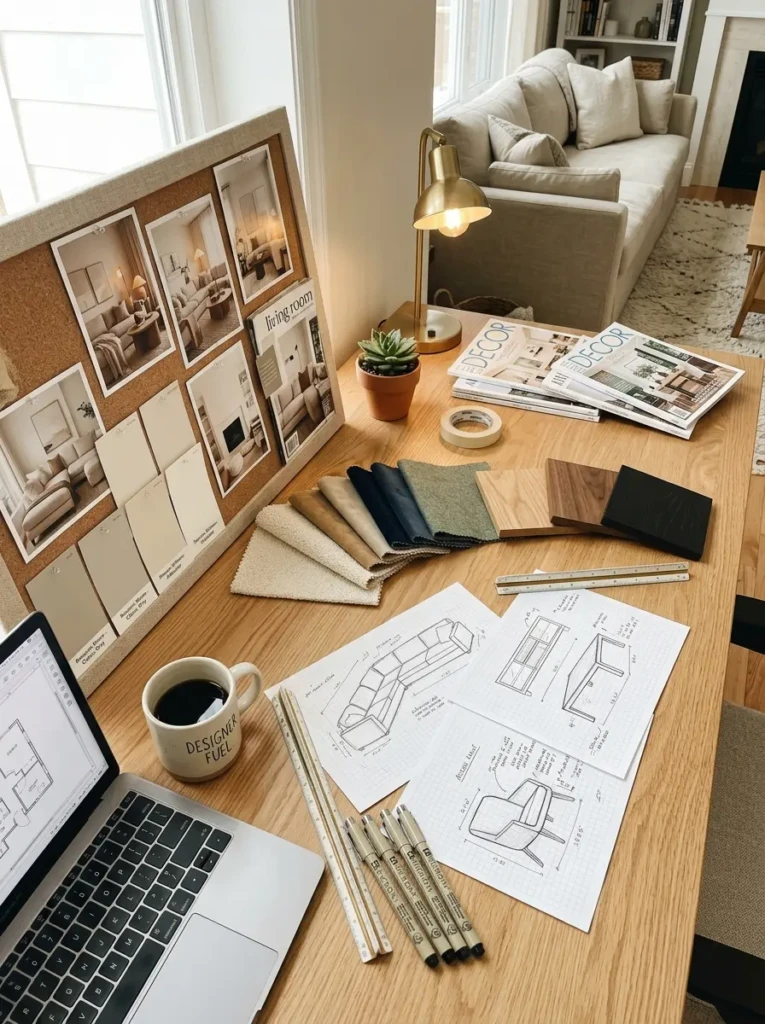
Before buying furniture, build a living room mood board that includes color palette, textures, furniture silhouettes, lighting ideas, and decor references. This prevents mismatched purchases and helps ensure the living, kitchen, and dining areas feel cohesive. Include flooring samples, paint swatches, wood finishes, and fabric references so every decision supports the same visual story.
9) Defining Your living room style
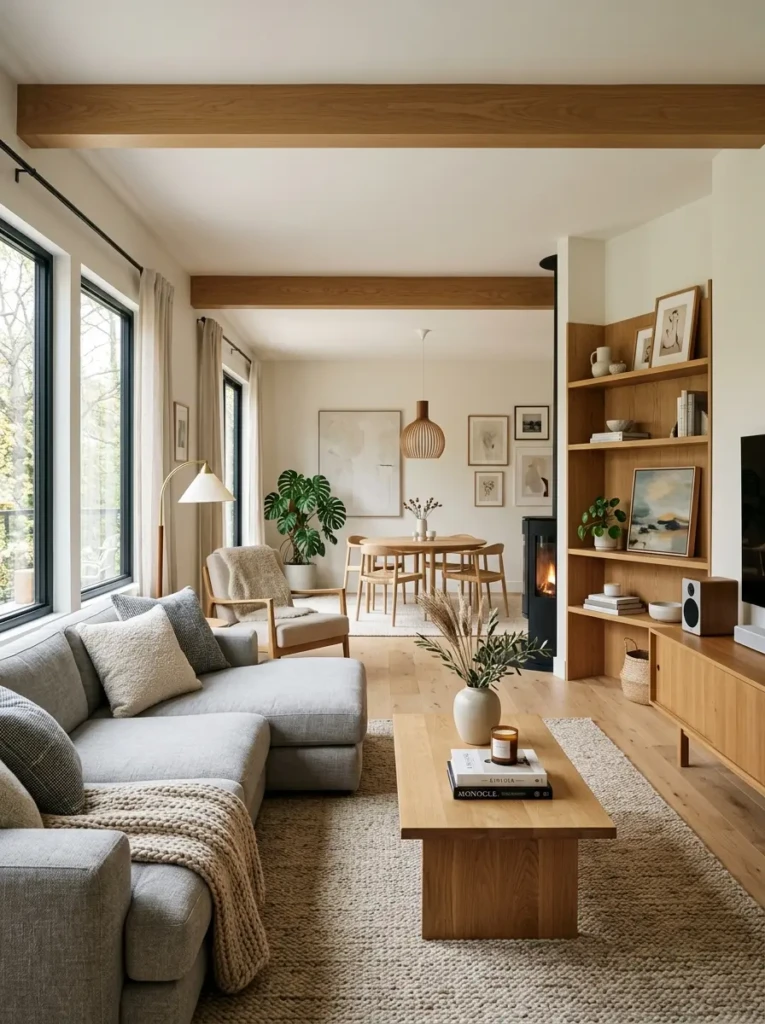
Your living room style should guide every design decision in an open space. Whether your direction is modern organic, Scandinavian, transitional, or minimalist luxury, consistency is essential. Because all zones are visible at once, one conflicting style element can disrupt the entire room. Keep forms, finishes, and textiles aligned so the space feels curated rather than assembled over time.
10) Practical small living room inspiration
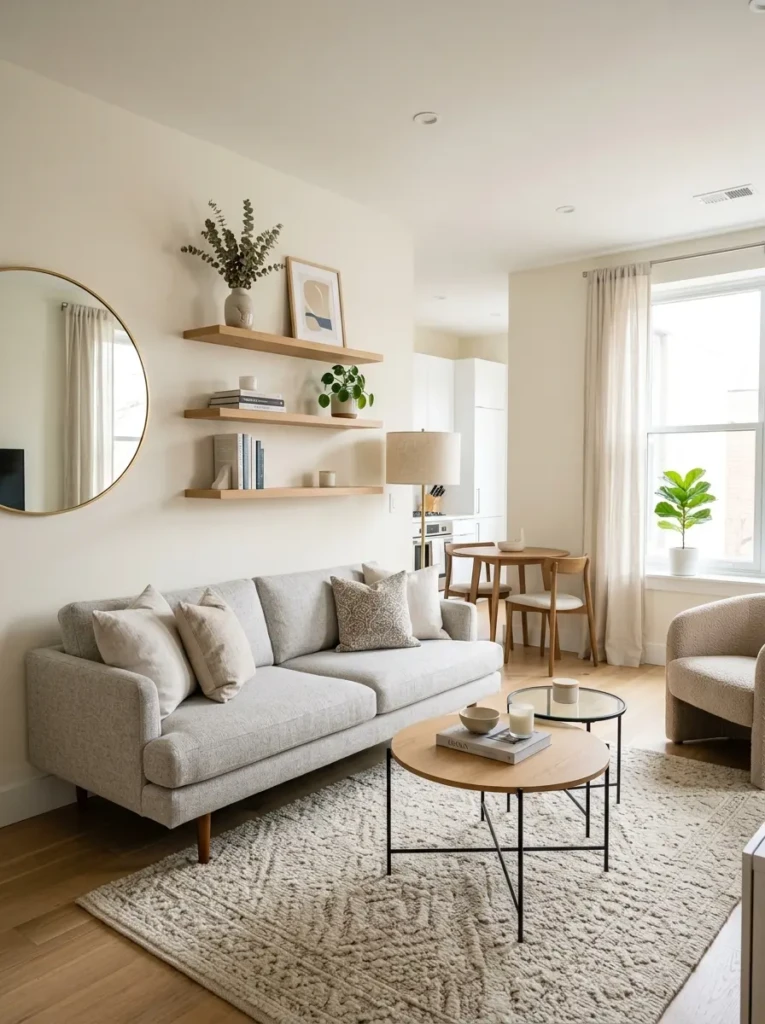
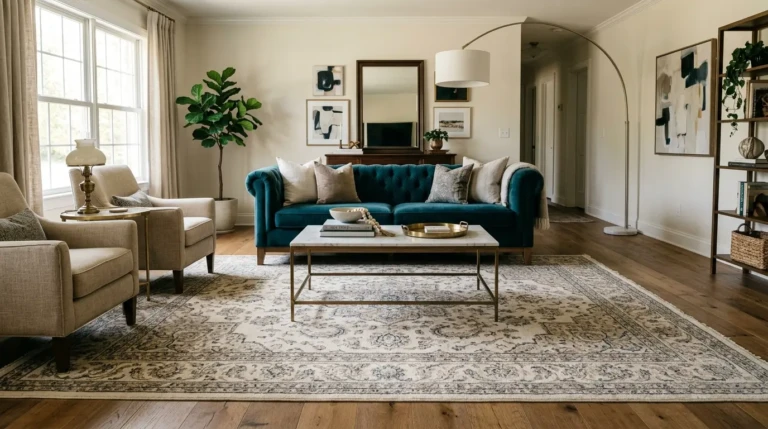
The best small living room inspiration focuses on scale. Use slim-arm sofas, nesting tables, wall-mounted shelves, and elevated furniture legs to create visual breathing room. Avoid oversized sectionals unless the room shape specifically supports them. Mirrors, light-toned upholstery, and vertical storage can dramatically improve how spacious the room feels. In small open layouts, every inch must serve a purpose.
11) Layering Texture for Warmth
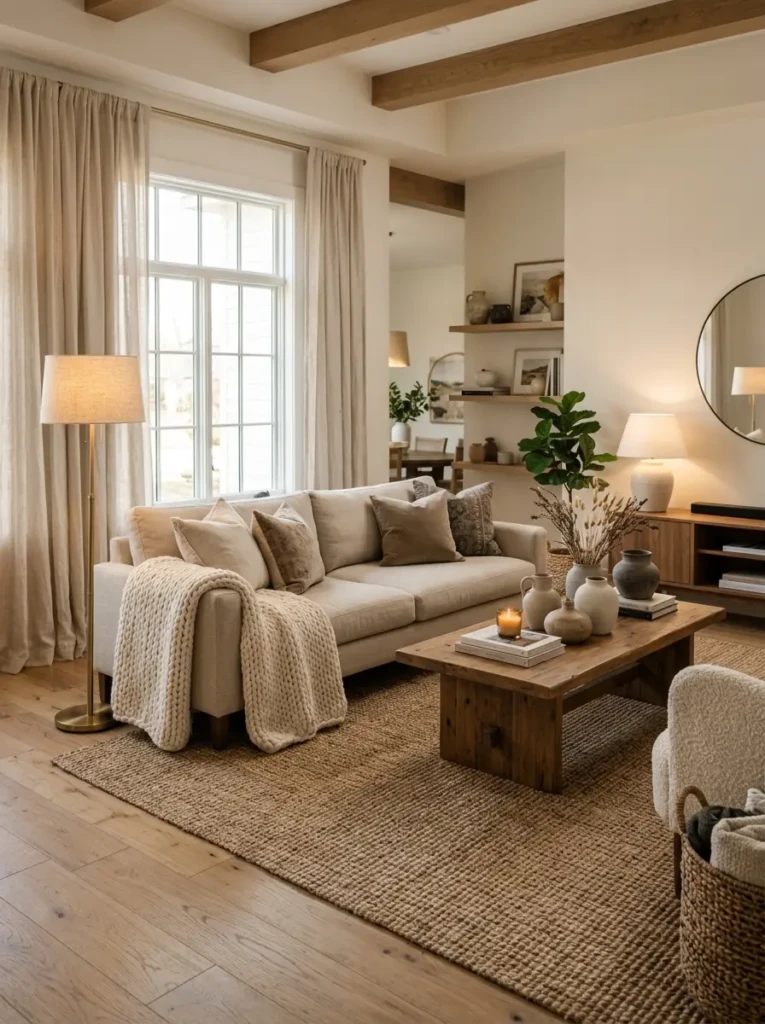
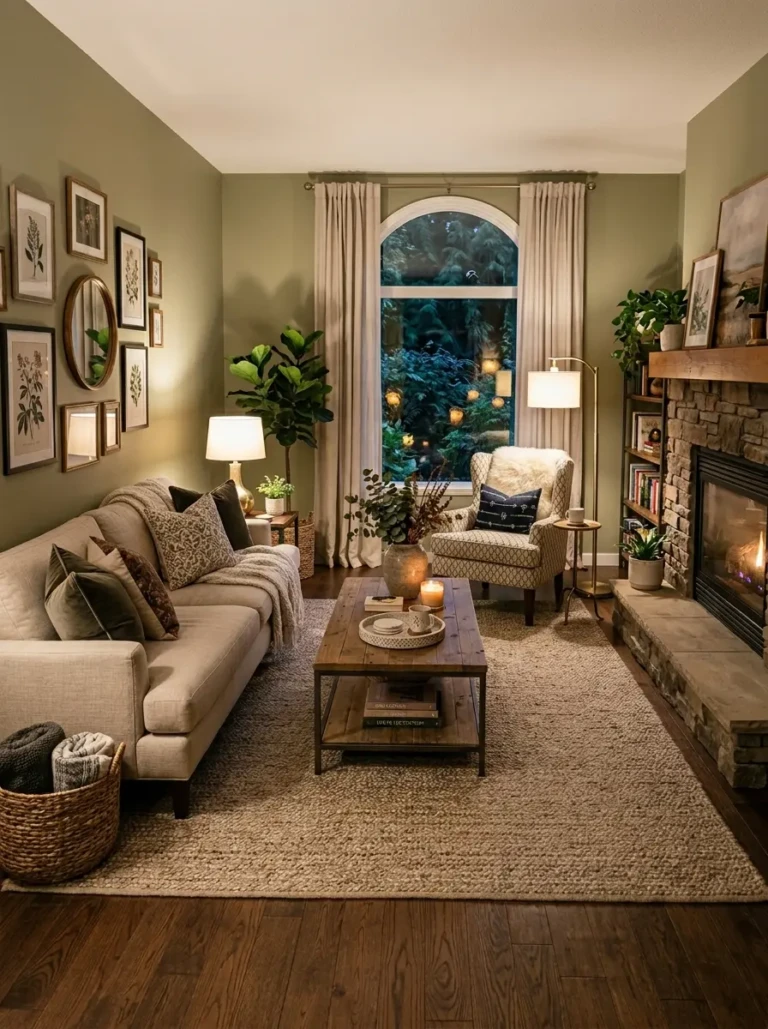
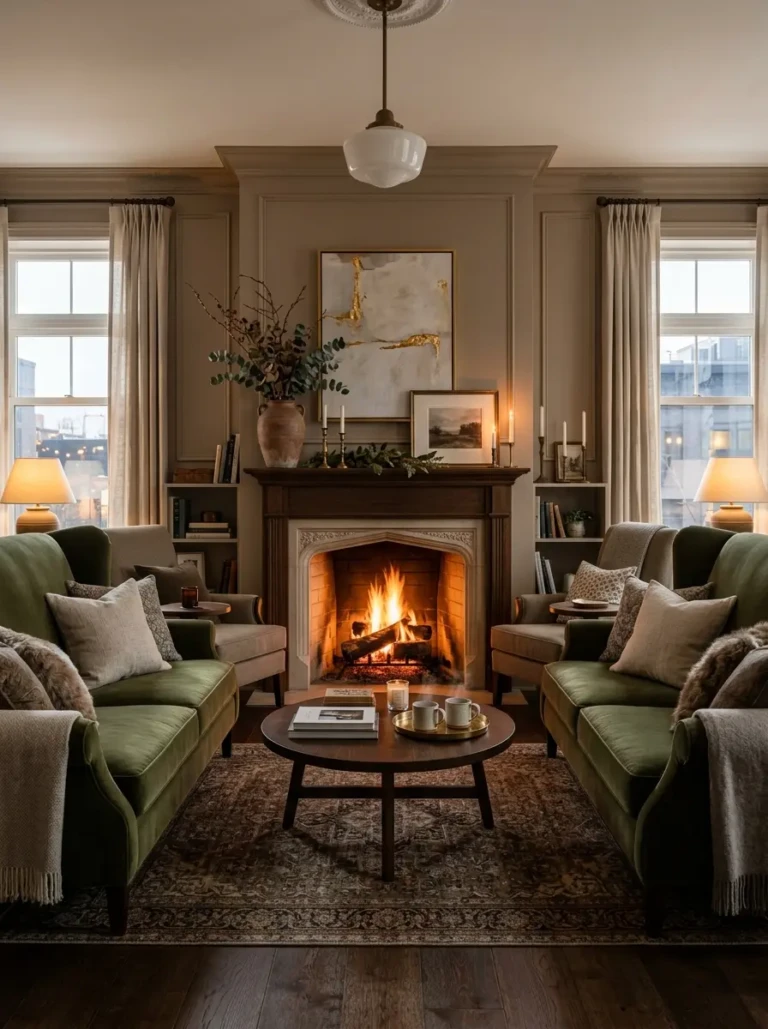
Open rooms can sometimes feel cold if everything is smooth and minimal. Add warmth through layered textures: woven rugs, linen curtains, boucle chairs, wood furniture, ceramic decor, and soft knit throws. Texture replaces the coziness that walls naturally create in closed rooms. This is especially important in modern layouts where clean lines dominate.
12) home decor ideas living room cozy Enough for Everyday Use
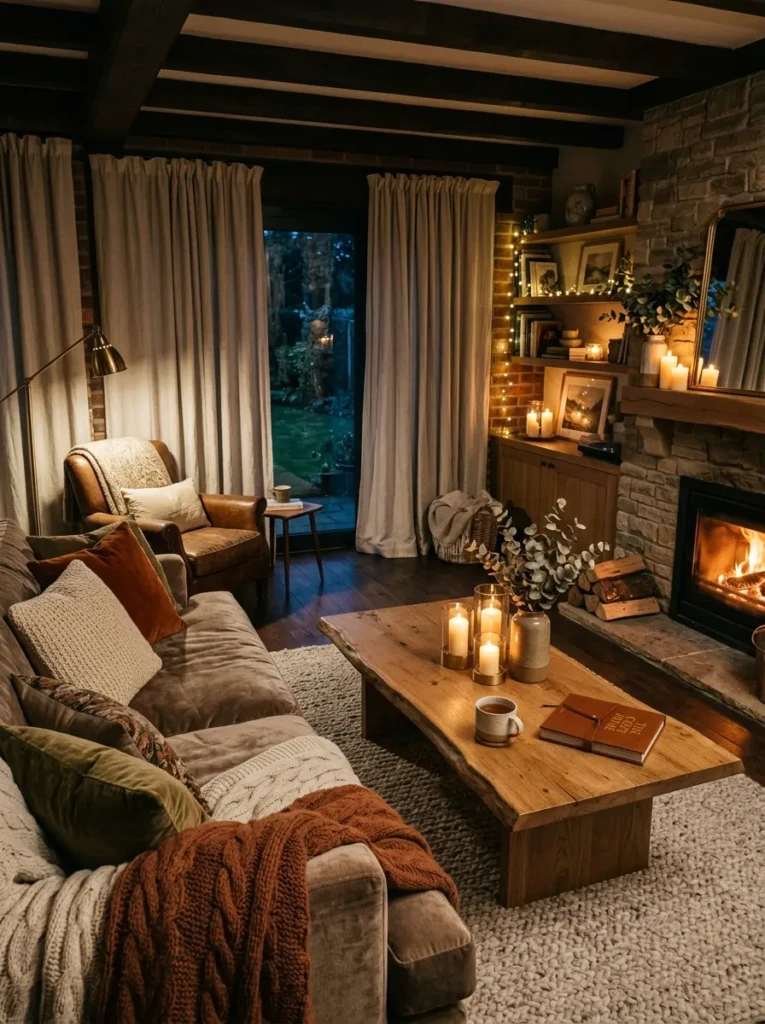
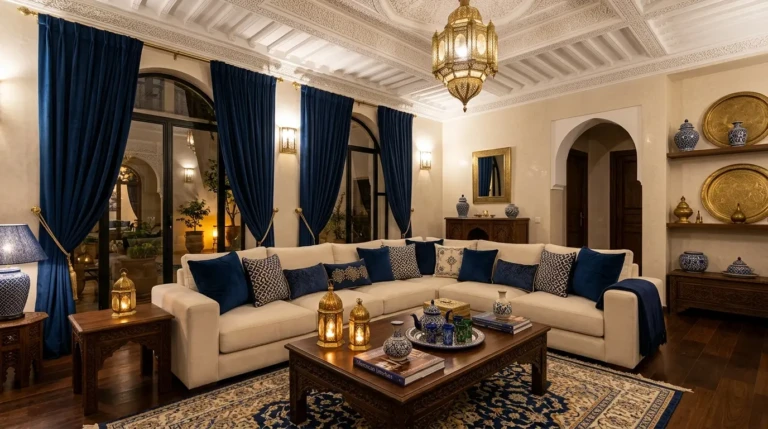
The best home decor ideas living room cozy begin with softness and personal detail. Add oversized cushions, warm neutral throws, candles, layered curtains, and low ambient lighting. Include natural materials like oak, jute, and stone to keep the space grounded. Cozy doesn’t mean cluttered—it means tactile, welcoming, and emotionally warm. Personal books, framed art, and meaningful objects make the room feel lived in.
13) Solving the narrow living room layout
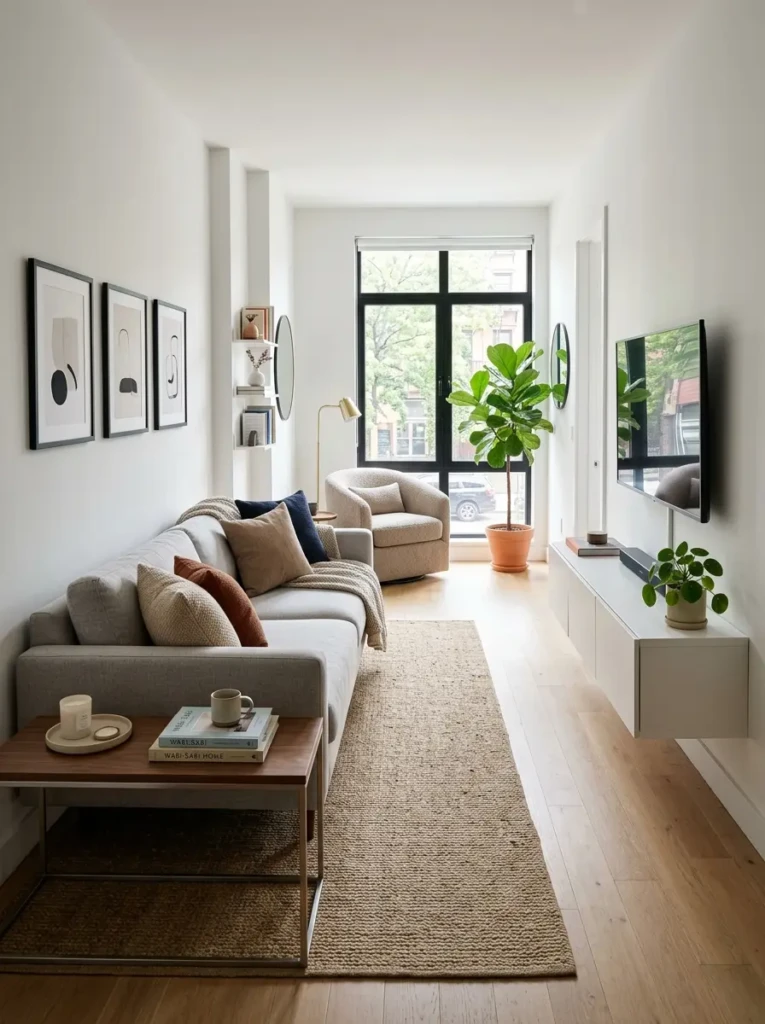
A narrow living room layout requires strong linear planning. Float the sofa along the longest wall and keep traffic moving in one clear direction. Choose rectangular rugs and elongated coffee tables that reinforce the room’s natural shape. Avoid bulky side chairs that squeeze pathways. Instead, use slim accent seating or benches that can tuck under consoles when not in use.
14) Color Strategies That Keep the Space Cohesive
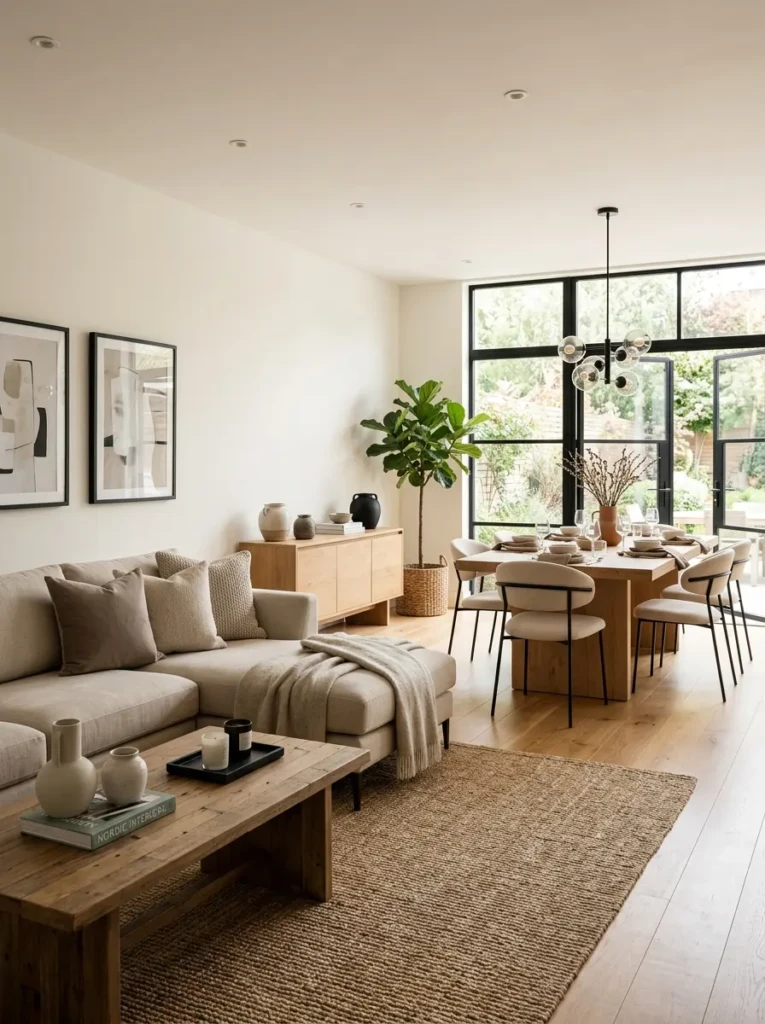
Color is what visually stitches an open room together. Start with one dominant neutral—warm white, greige, taupe, or soft gray—then layer two supporting tones through decor and textiles. Repeat accent colors across zones: cushions in the lounge, art in the dining area, and kitchen accessories. This repetition creates harmony without making the room feel repetitive.
15) Choosing Decor That Connects Multiple Areas
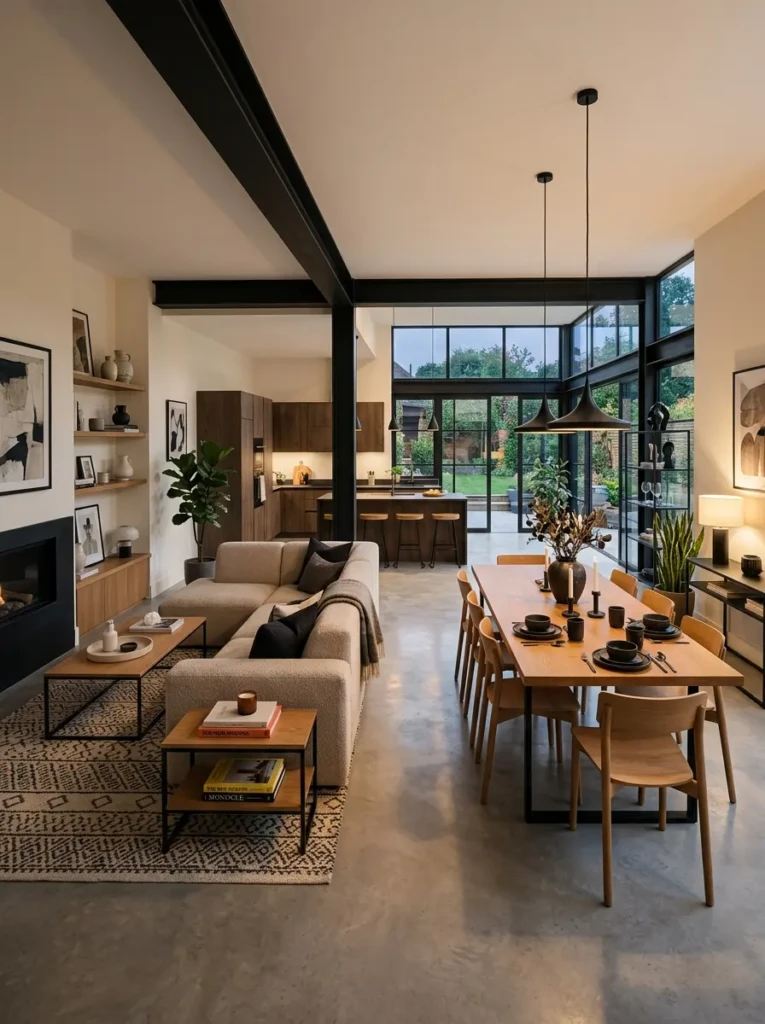
Decor should act as a bridge between spaces. Use repeating shapes, materials, or finishes throughout the room. If your coffee table has black metal legs, echo that in dining chairs or pendant fixtures. If your sofa includes warm beige upholstery, repeat that tone in bar stool cushions. The room should feel like one complete design language.
16) Flooring and Rugs That Support Flow
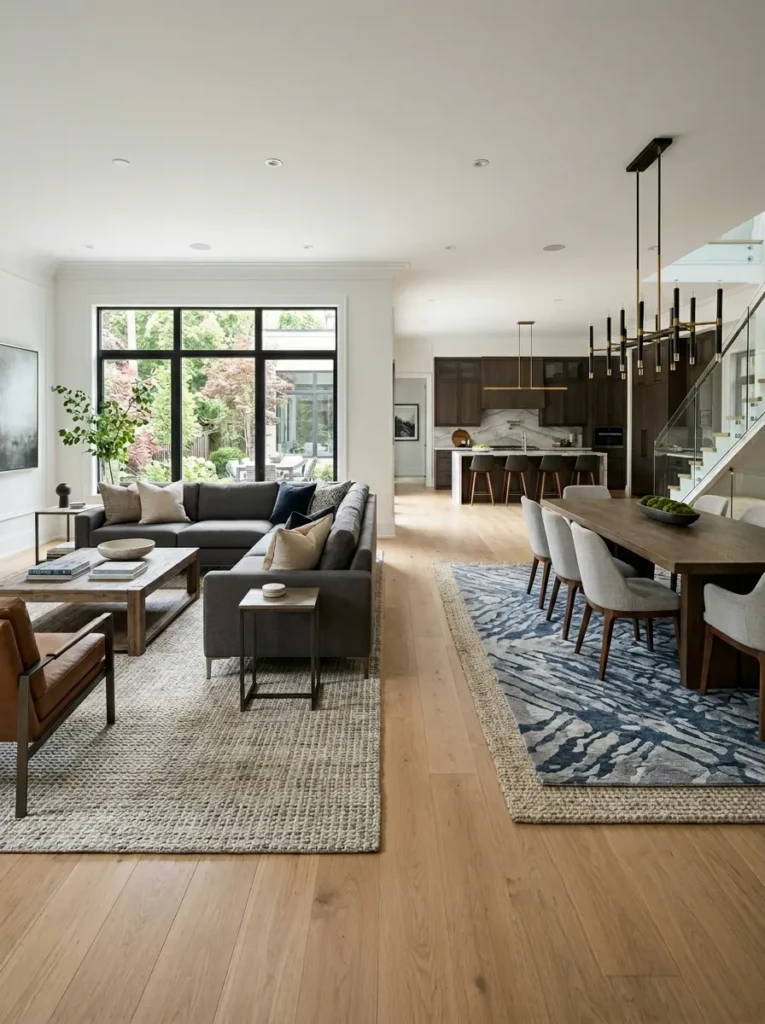
Continuous flooring is essential in open-concept homes. Hardwood, luxury vinyl plank, polished concrete, or large-format tile all help the eye travel uninterrupted. Rugs then define individual zones. Keep rug colors complementary rather than identical so each area feels distinct while still connected.
17) Storage Solutions That Reduce Visual Noise
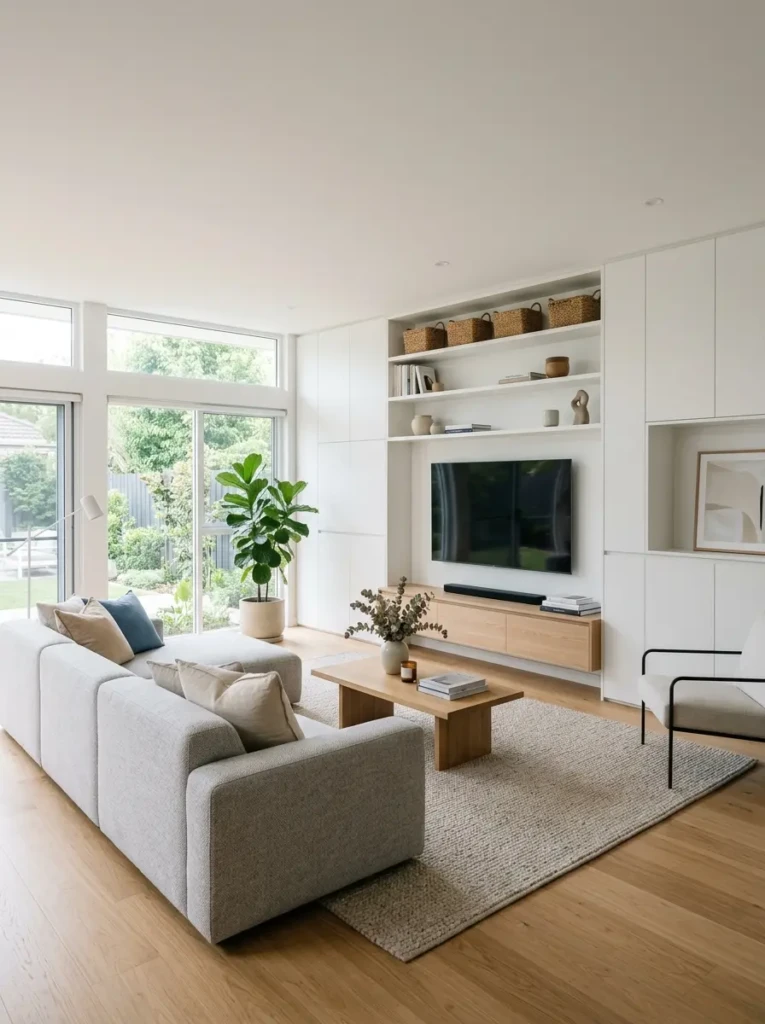
Because everything is visible in an open room, clutter multiplies quickly. Use closed cabinetry, media consoles, built-ins, and stylish baskets to hide everyday items. Storage benches and lift-top coffee tables are especially useful in family spaces. Visual calm is one of the most important ingredients in successful open-concept design.
18) Styling With Statement Pieces Instead of Clutter
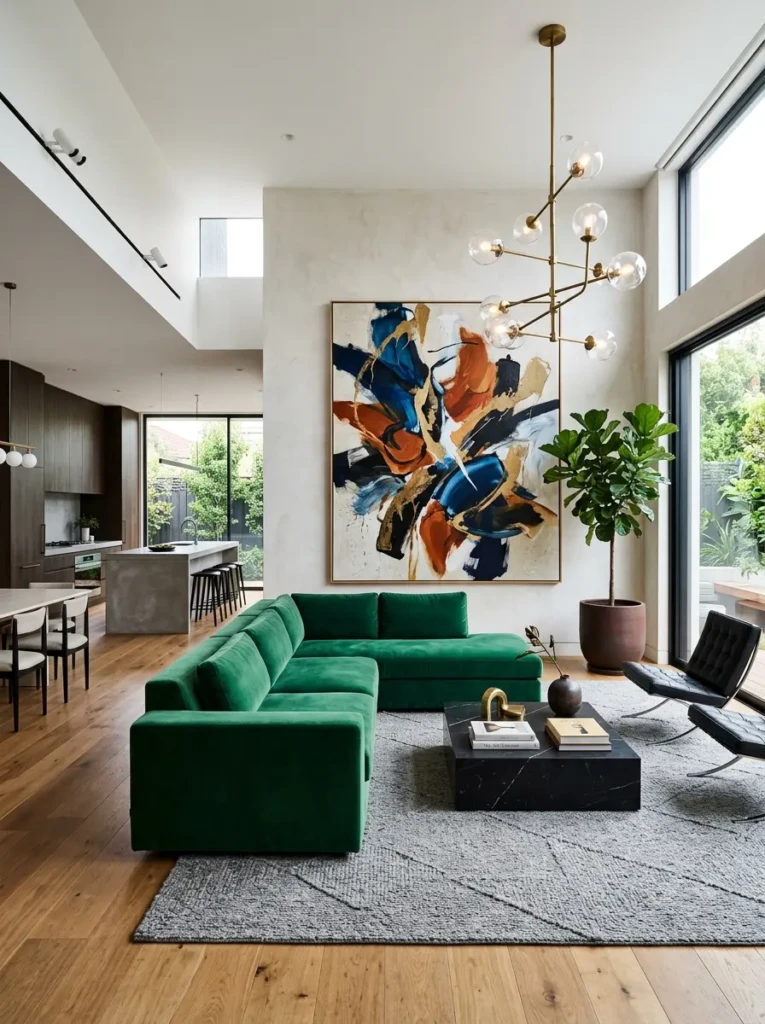
Rather than many small decorative items, choose fewer large-impact pieces. One oversized artwork, a sculptural floor lamp, or a bold sectional creates sophistication. Open rooms benefit from clarity. Too many small objects make the entire home feel busy because all zones are seen simultaneously.
19) Making the Layout Feel Personal
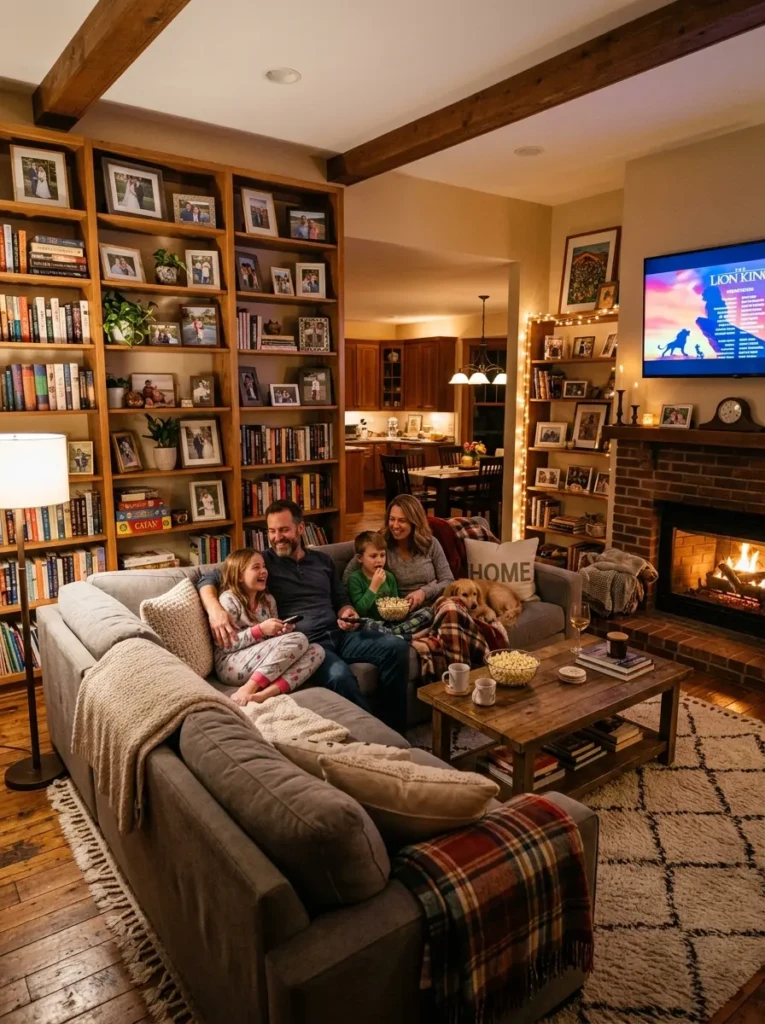
The most inspiring open concept spaces reflect real lifestyle habits. If you host often, prioritize conversational seating and bar stools. If your family gathers for movies, make the sectional the hero piece. If you work from the dining table, lighting and chair comfort become essential. Function should shape beauty.
20) Final Thoughts on Open Concept Living Room Inspiration
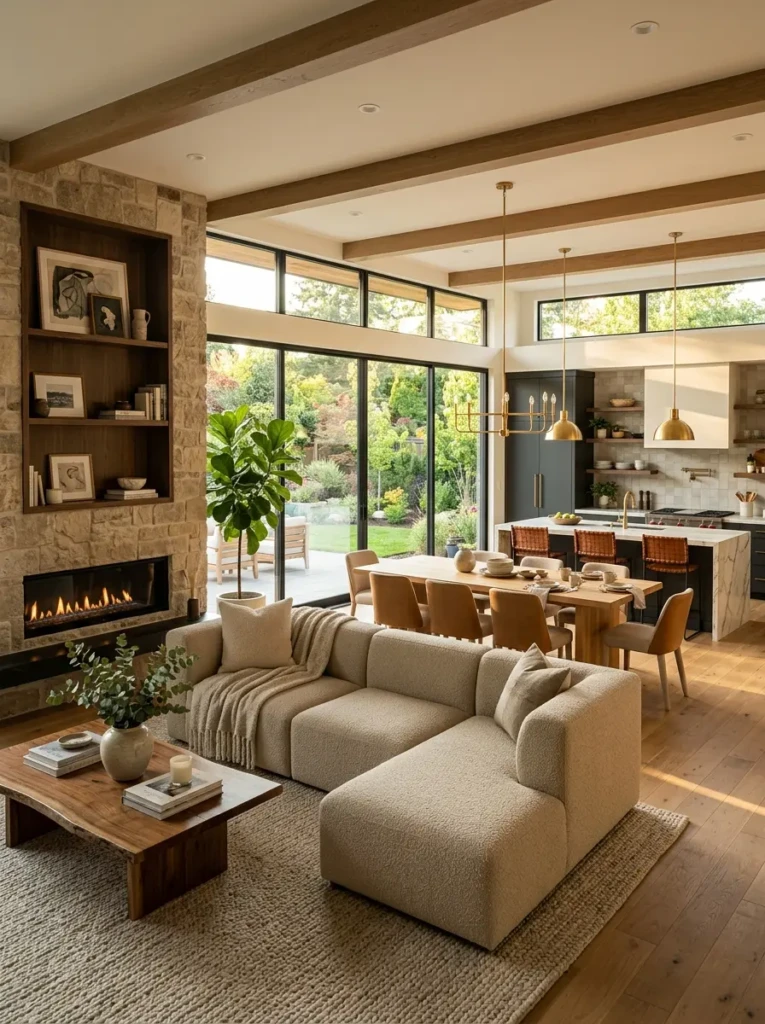
The best open-concept spaces combine flow with structure. Through smart zoning, consistent materials, layered textures, and thoughtful lighting, one room can successfully support living, dining, and kitchen functions without losing warmth or elegance. Whether you are styling a large shared area or solving a compact apartment layout, the key is intentional design. Great open concept living room inspiration always balances openness with comfort, beauty with practicality, and style with everyday life.