Kitchen Open Shelf Styling
1. Start With a Clear Shelf Purpose
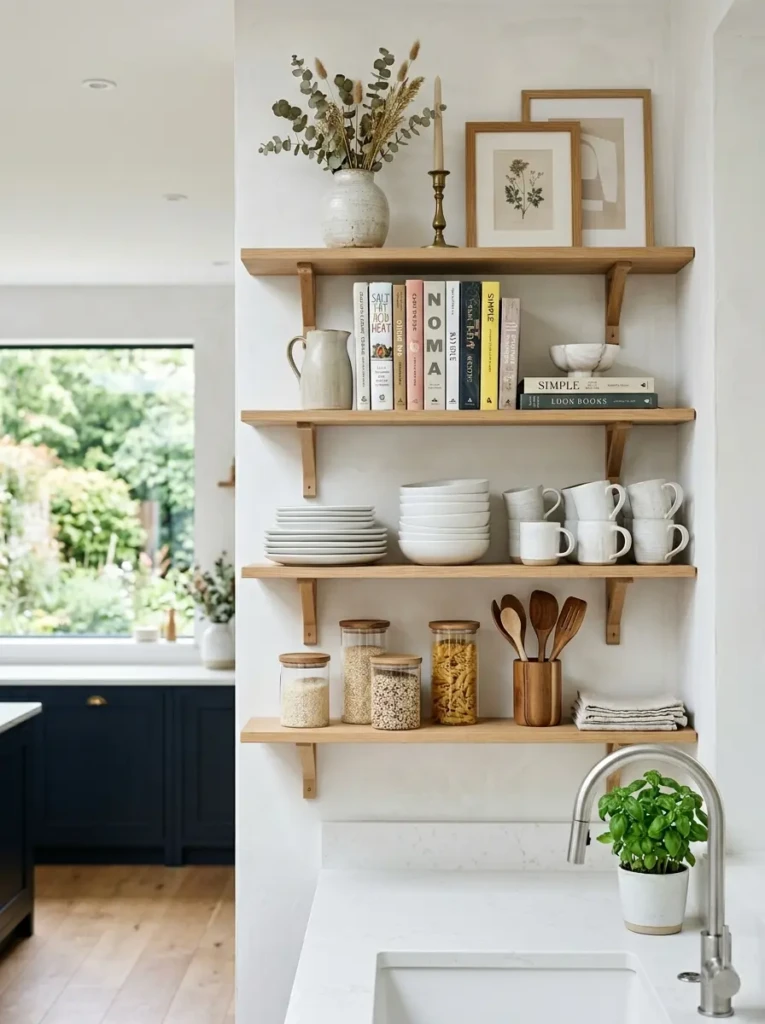
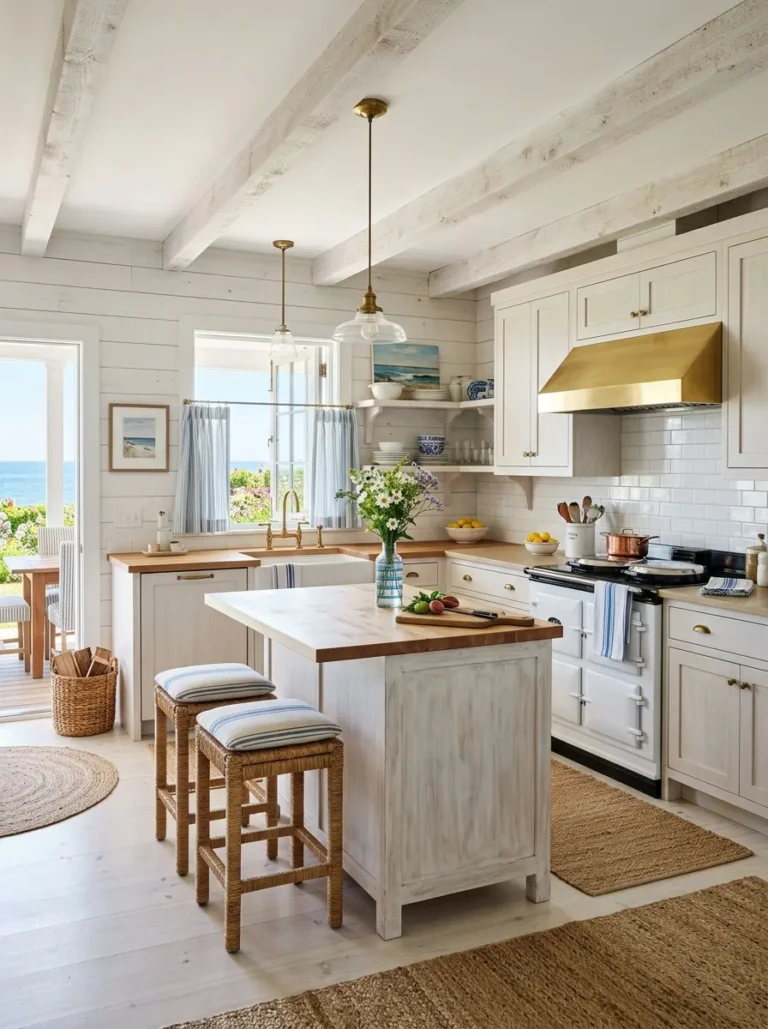
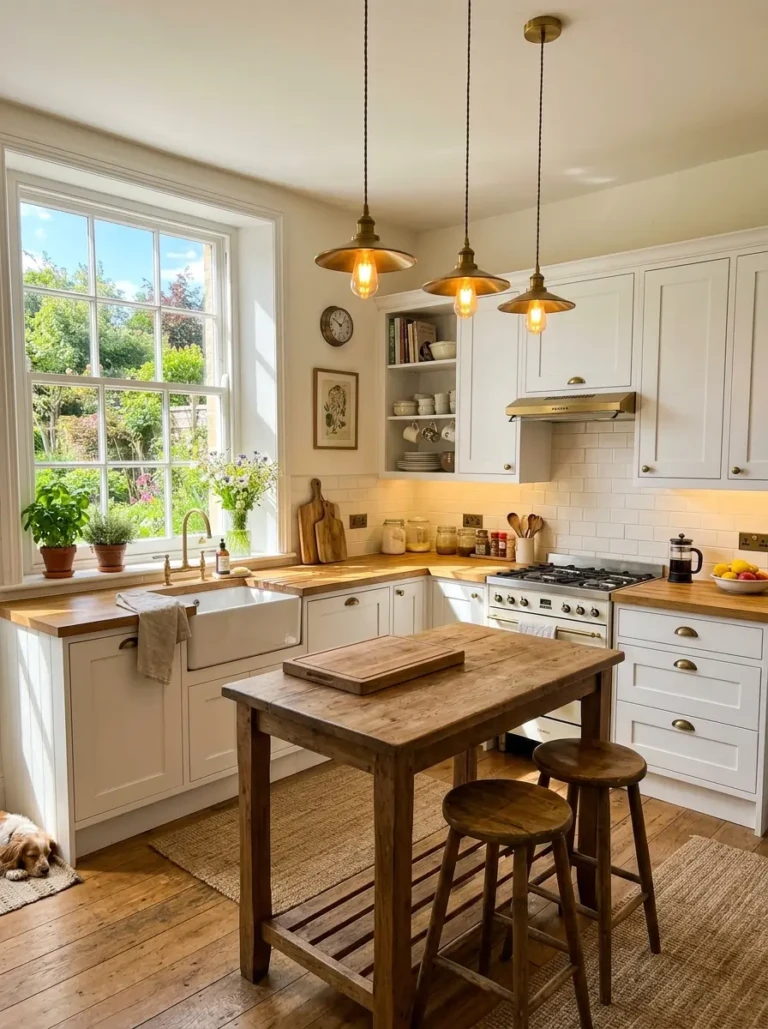
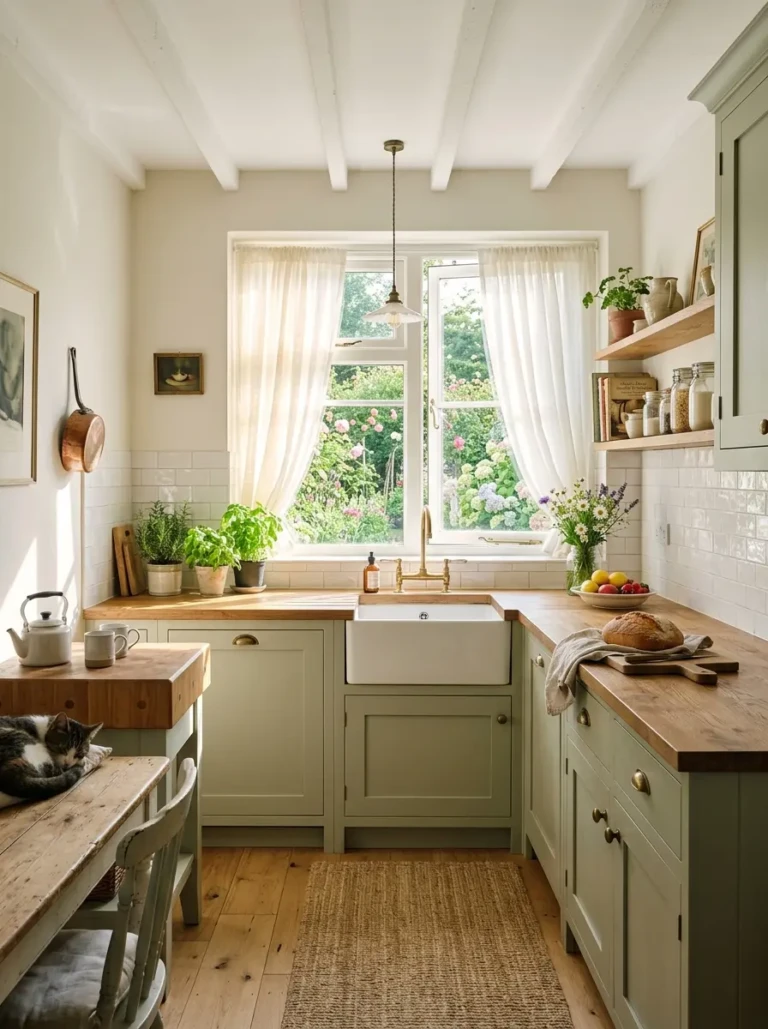
Before styling, decide what each shelf should do: daily storage, display, or a mix of both. Open shelving looks best when every section has a role. Keep everyday bowls, mugs, and plates on lower kitchen wall shelves, while upper shelves can hold decorative pieces, cookbooks, or seasonal accents.
2. Build Around Your Kitchen’s Style
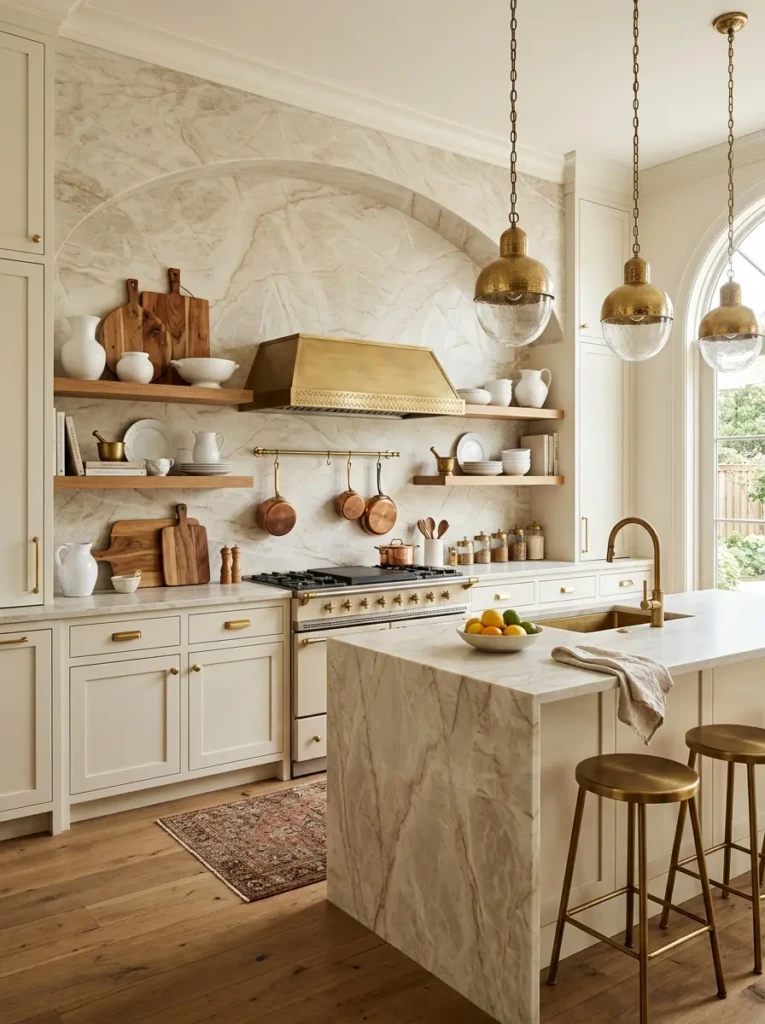
Shelf styling should match the room’s existing design language. In a taj mahal kitchen, for example, the soft veining and luxurious stone surfaces pair beautifully with ceramic whites, warm woods, and brushed brass accents. Let the material palette guide every item you place.
3. Use the Rule of Three
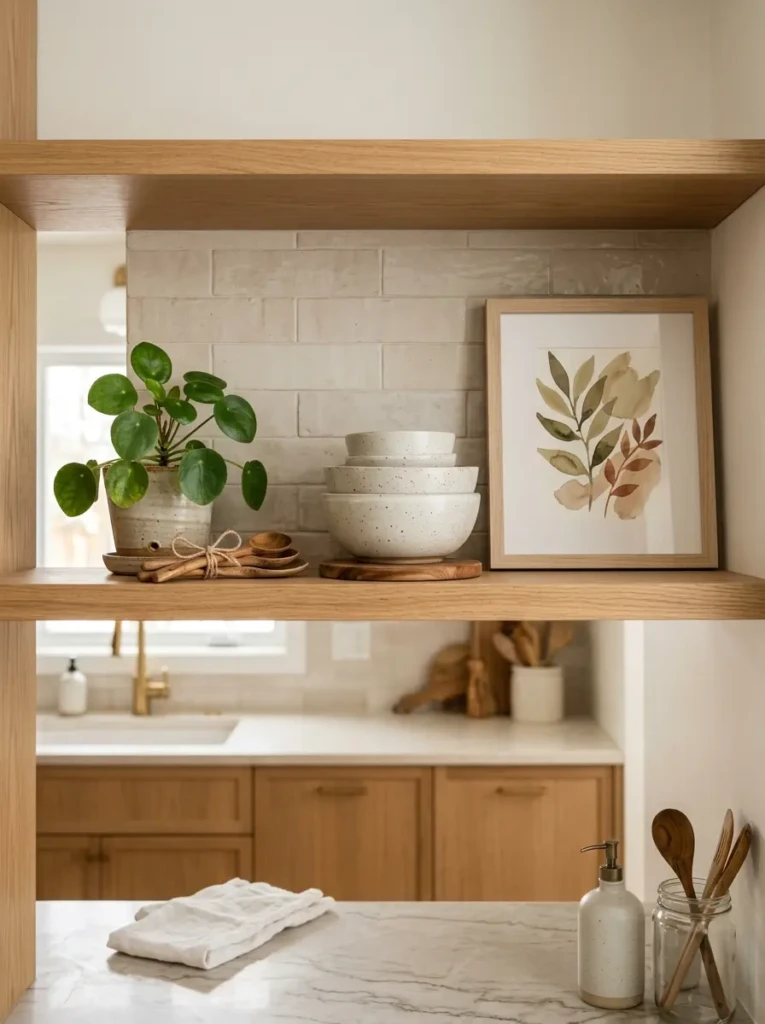
The easiest way to make shelves feel intentional is grouping items in threes. A small plant, stacked bowls, and a framed object create balance. Repeating this rhythm across multiple shelves keeps the composition structured rather than cluttered.
4. Mix Practical and Decorative Pieces
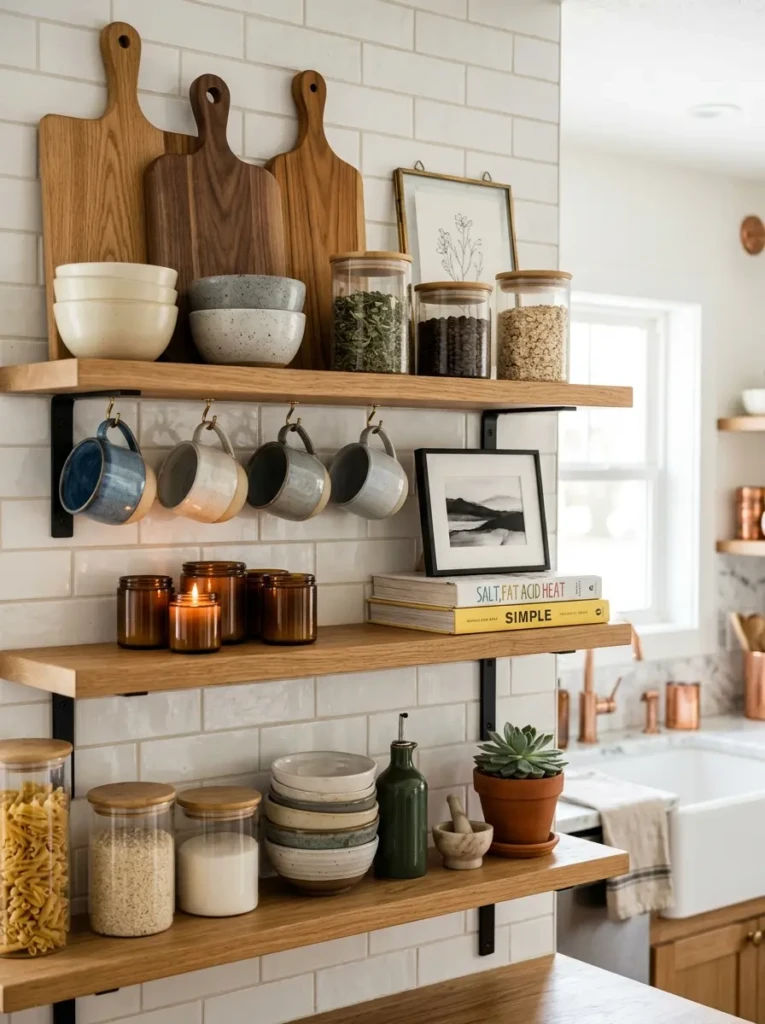
The best open shelves are functional. Blend cutting boards, jars, mugs, and serving bowls with candles or small artwork. This approach keeps the space useful while still delivering strong visual styling.
5. Create Height Variation
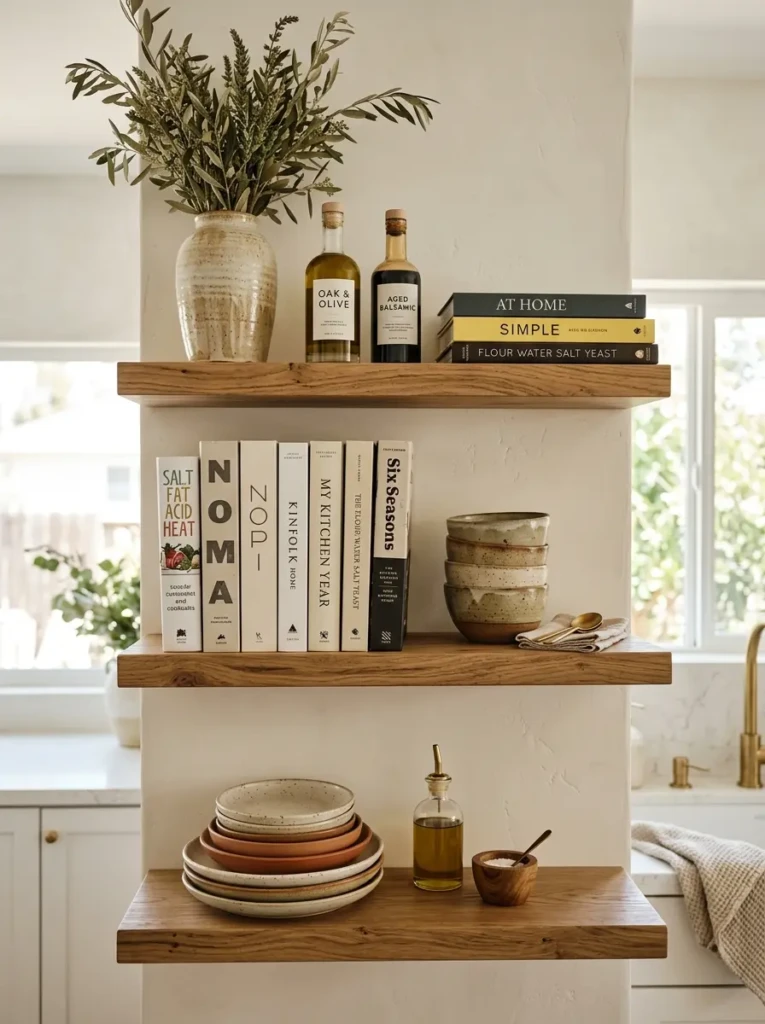
Flat shelf lines need vertical contrast. Use tall vases, olive oil bottles, or upright cookbooks beside shorter bowls and trays. This layered height creates movement and keeps the eye traveling naturally across the shelf.
6. Coordinate With Island Lighting Kitchen Features
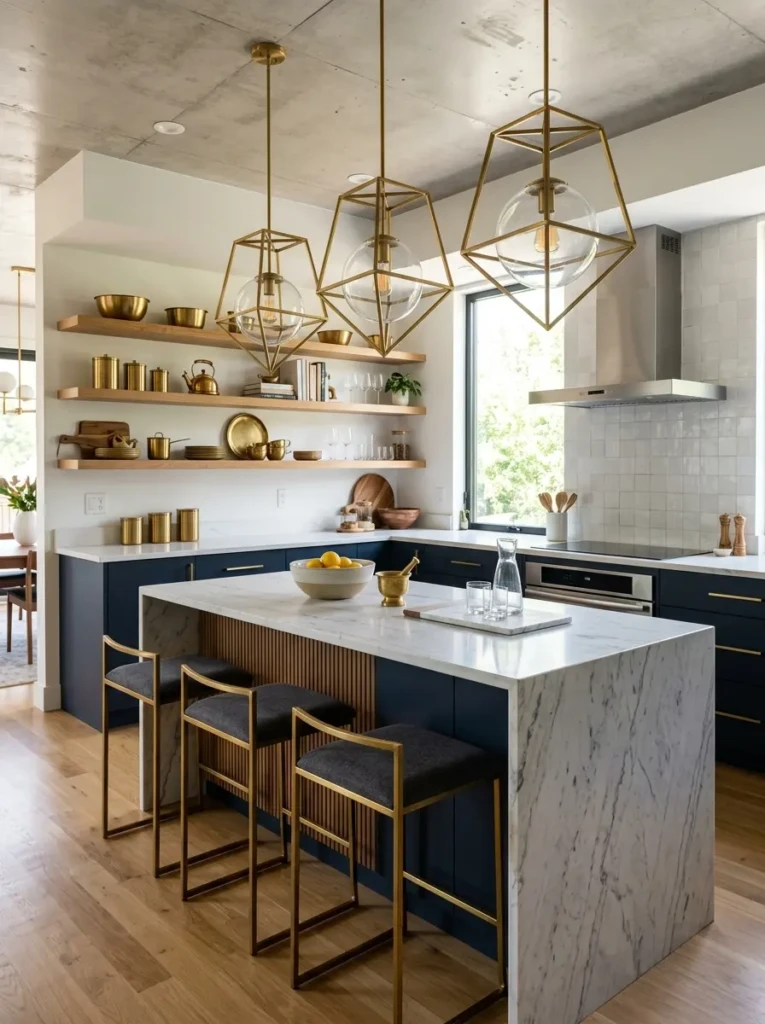
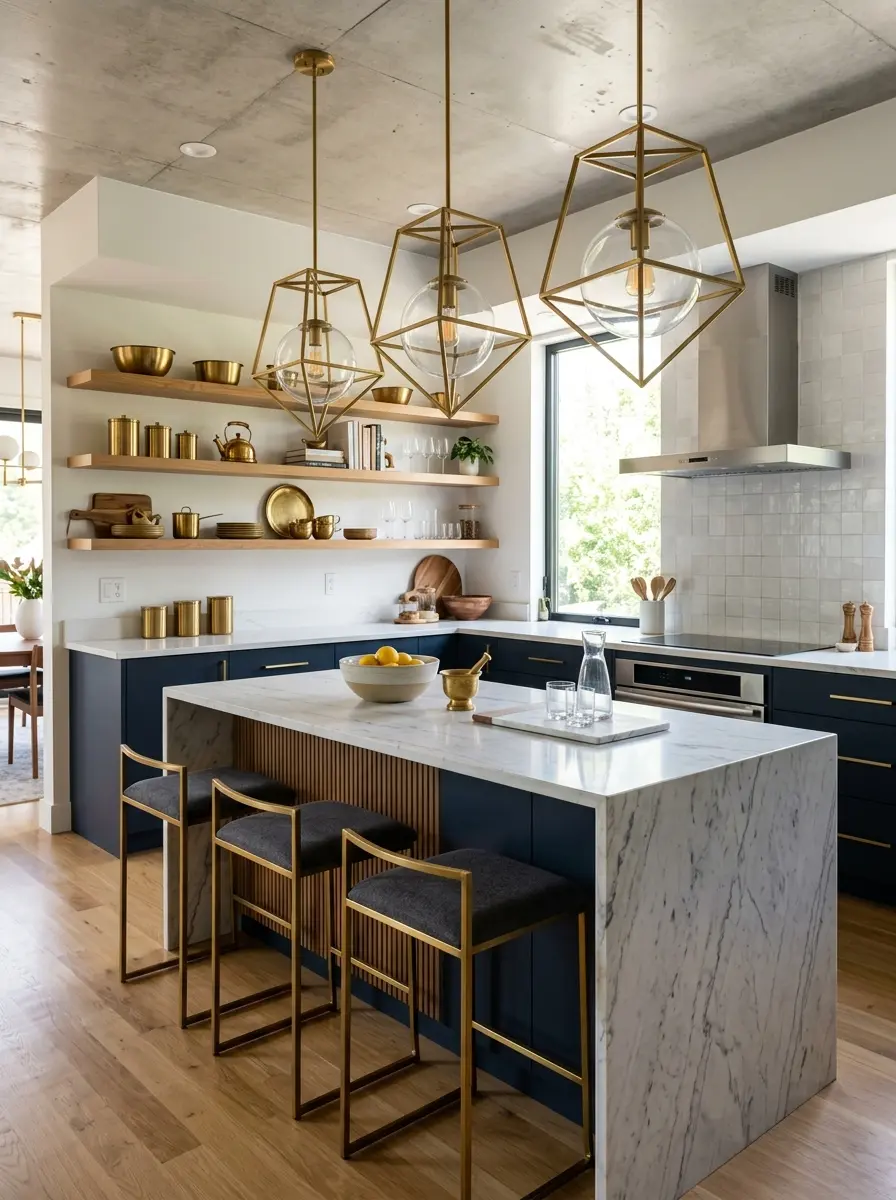
Shelf styling should visually connect with major focal points like the island. If your design includes bold island lighting kitchen pendants, echo the finish through shelf accessories such as brass bowls, matte black frames, or glass jars with metallic lids.
7. Balance Color Against Cabinetry
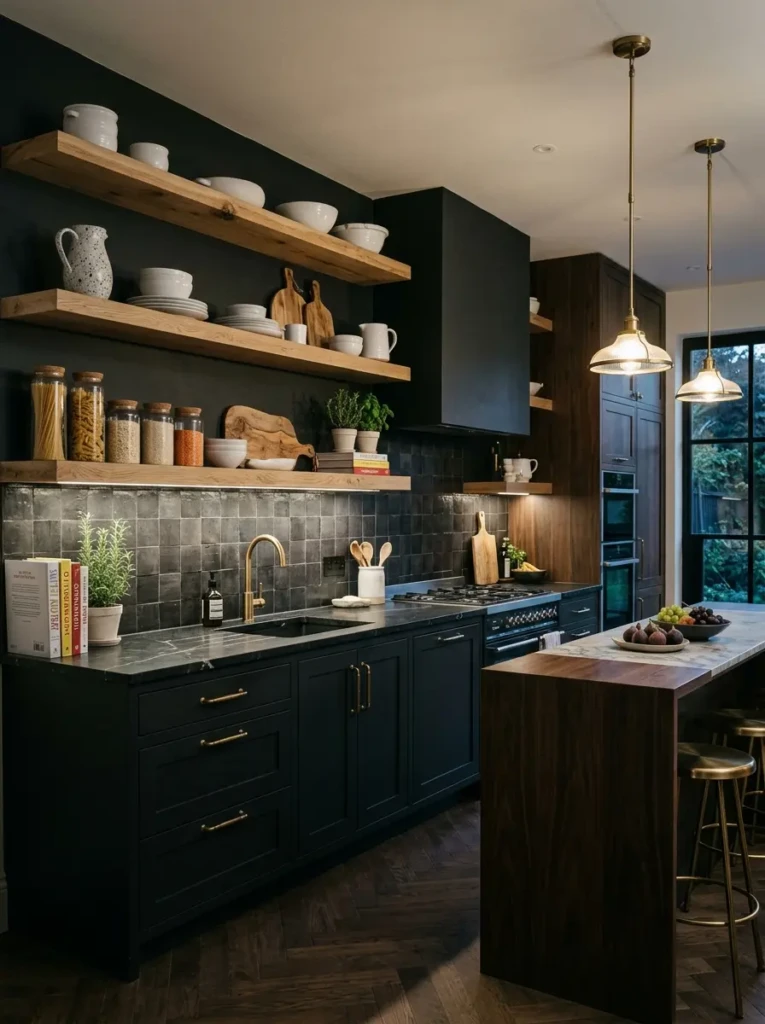
Open shelves should complement cabinet tones, not fight them. In a kitchen with dark cabinets, lighter ceramics, pale wood cutting boards, and clear glass containers prevent the space from feeling too heavy.
8. Add Warmth Through Natural Wood
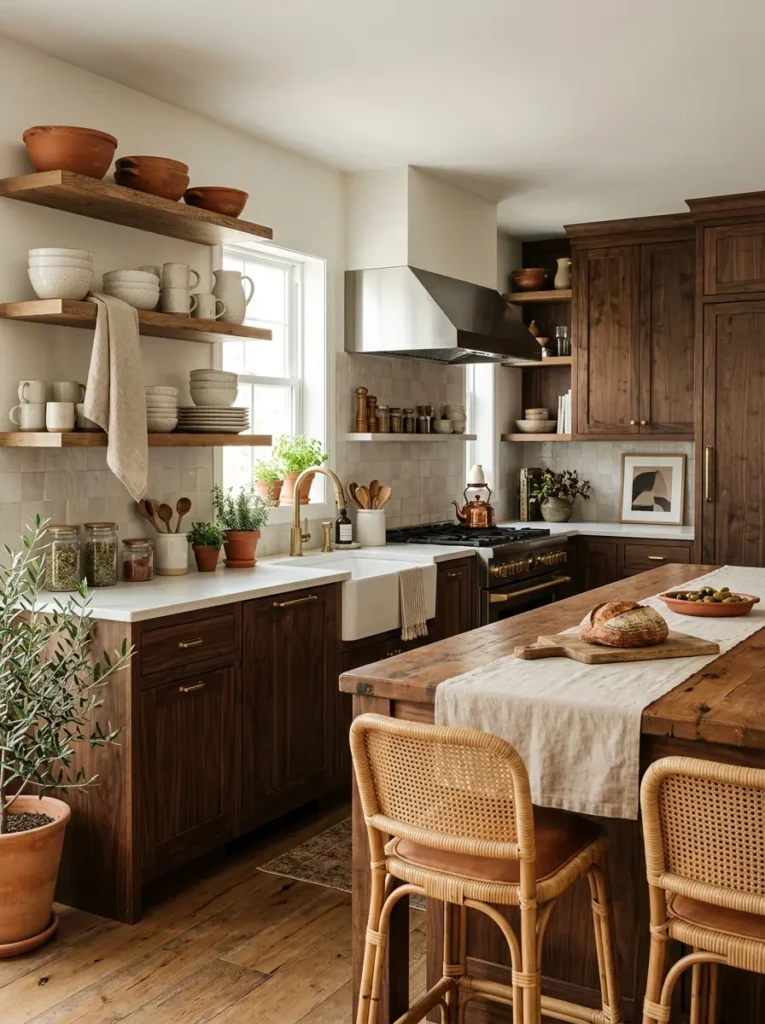
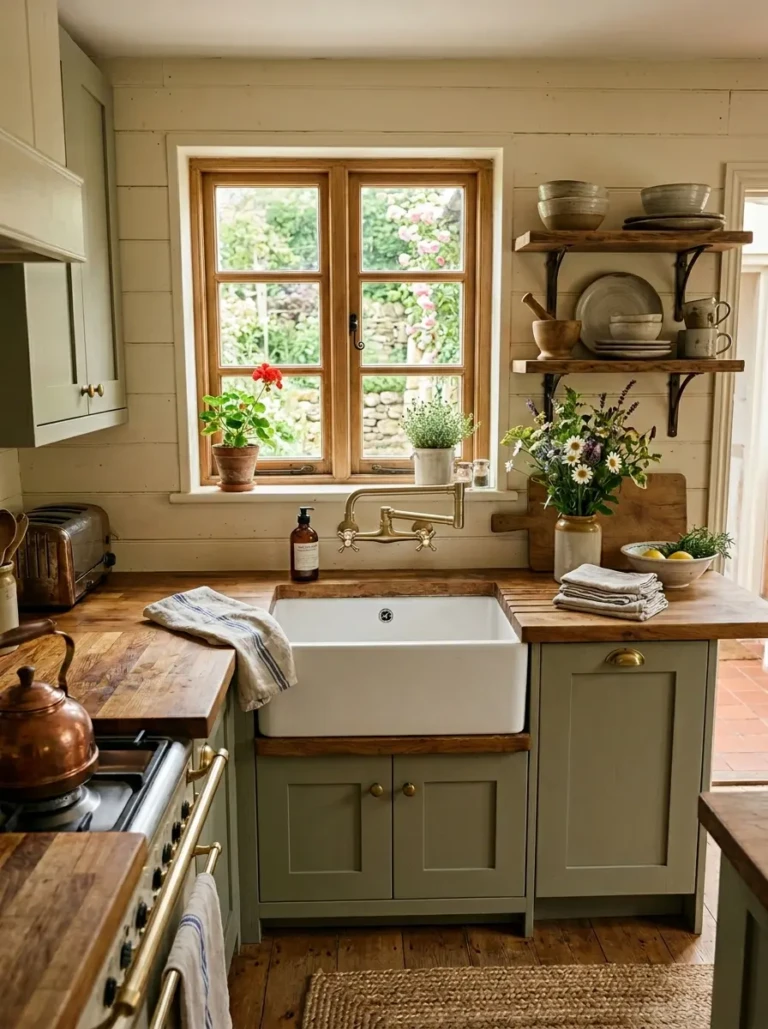
Wood instantly softens hard kitchen surfaces. Walnut boards, oak trays, or hand-carved utensils work especially well beside stone counters and painted walls. This is also a smart way to tie shelves into surrounding kitchen cabinets ideas without redesigning the whole room.
9. Style Around Stained Kitchen Cabinets
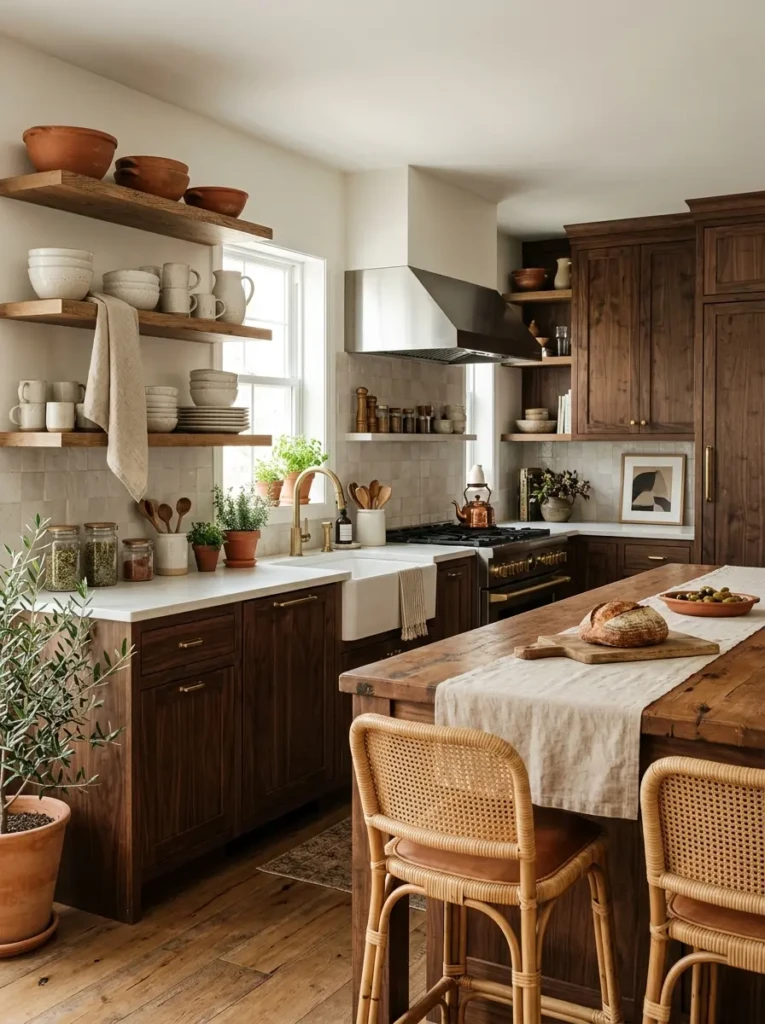
If you already have stained kitchen cabinets, use the shelf decor to either match or intentionally contrast the undertone. Warm oak cabinets pair well with linen, terracotta, and cream pieces, while cooler espresso stains look stronger with matte black and white accessories.
10. Use Kitchen Vent Hood Ideas as a Focal Link
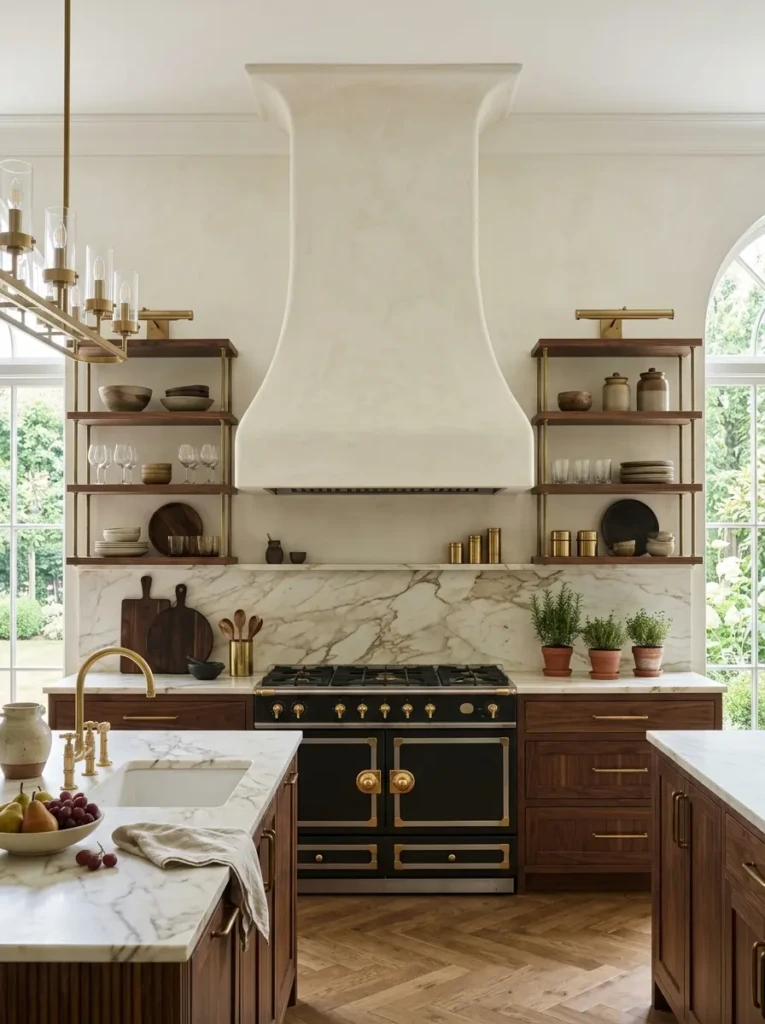
Shelves placed near the range should visually connect with the hood. Strong kitchen vent hood ideas often include plaster, wood wraps, or metal trims, and your shelf styling should borrow one of those textures to make the room feel cohesive.
11. Keep Negative Space Visible
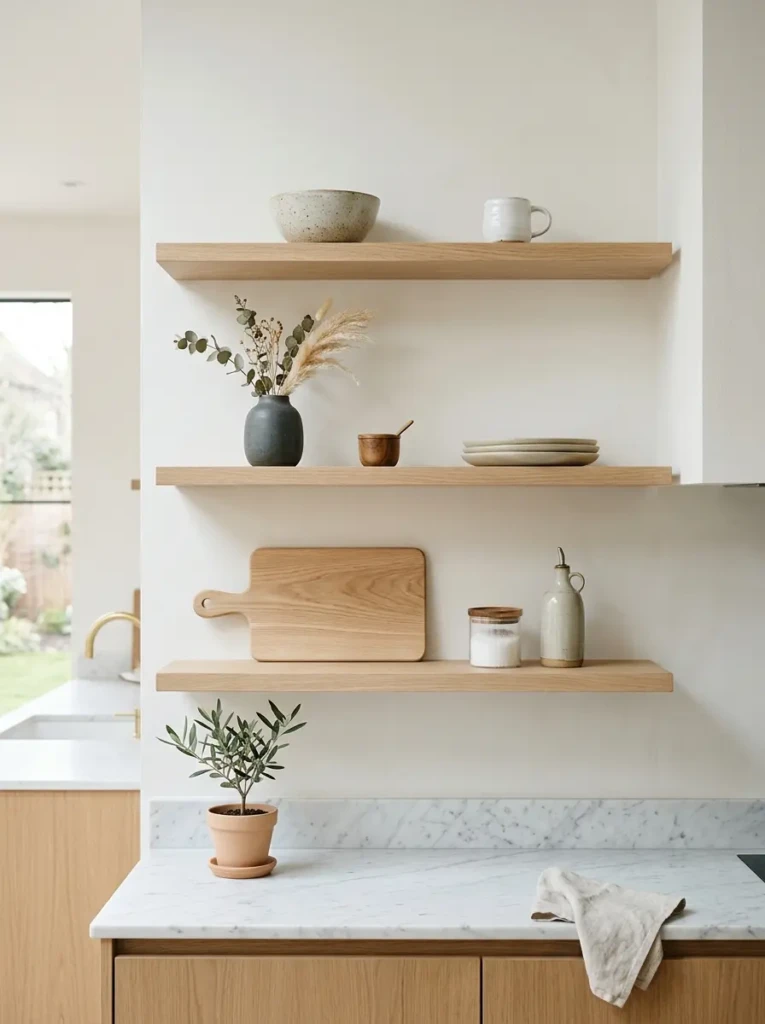
One of the biggest styling mistakes is filling every inch. Leave 20–30% of each shelf empty. That blank space gives featured items room to stand out and keeps the kitchen looking clean.
12. Rotate Seasonal Christmas Decor Ideas
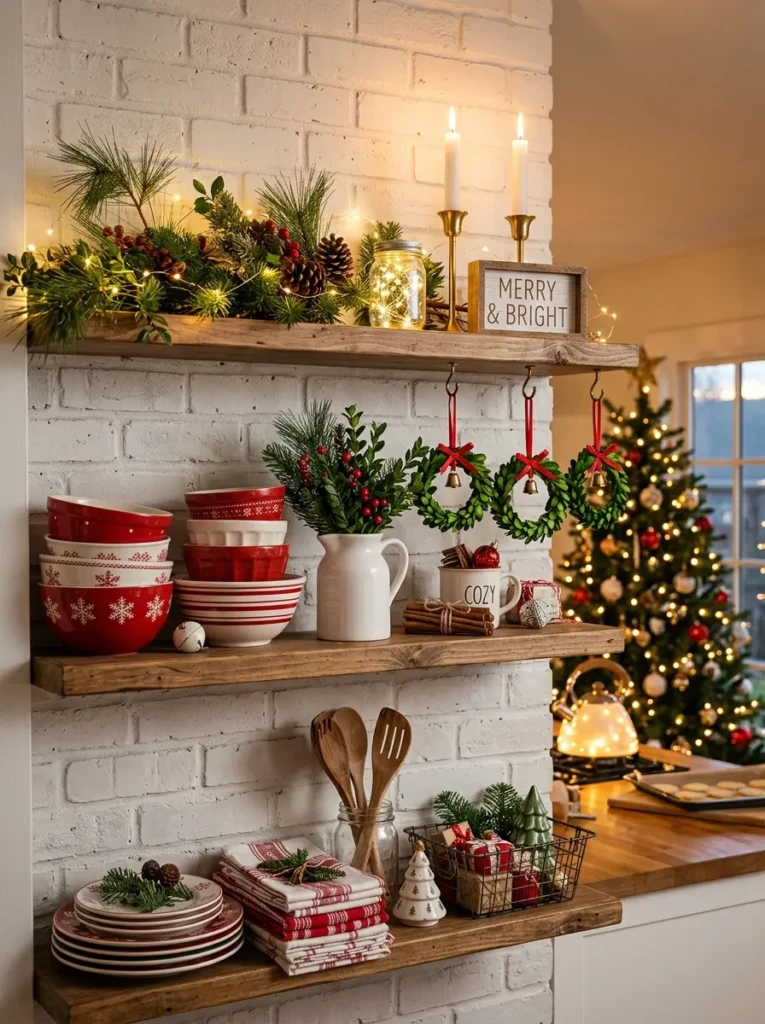
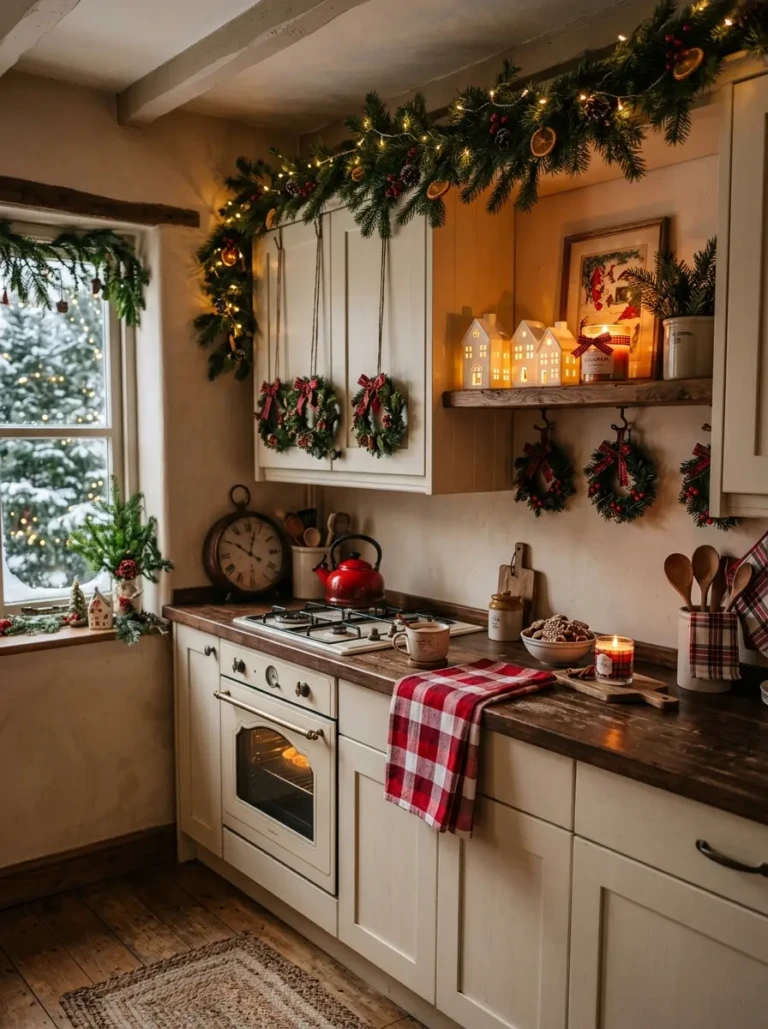
Open shelves are perfect for seasonal updates. For christmas decor ideas, swap in mini wreaths, amber glass candle holders, pine stems, or red-and-white ceramics. Keep the changes minimal so the kitchen still feels elevated rather than themed.
13. Layer Art and Small Frames
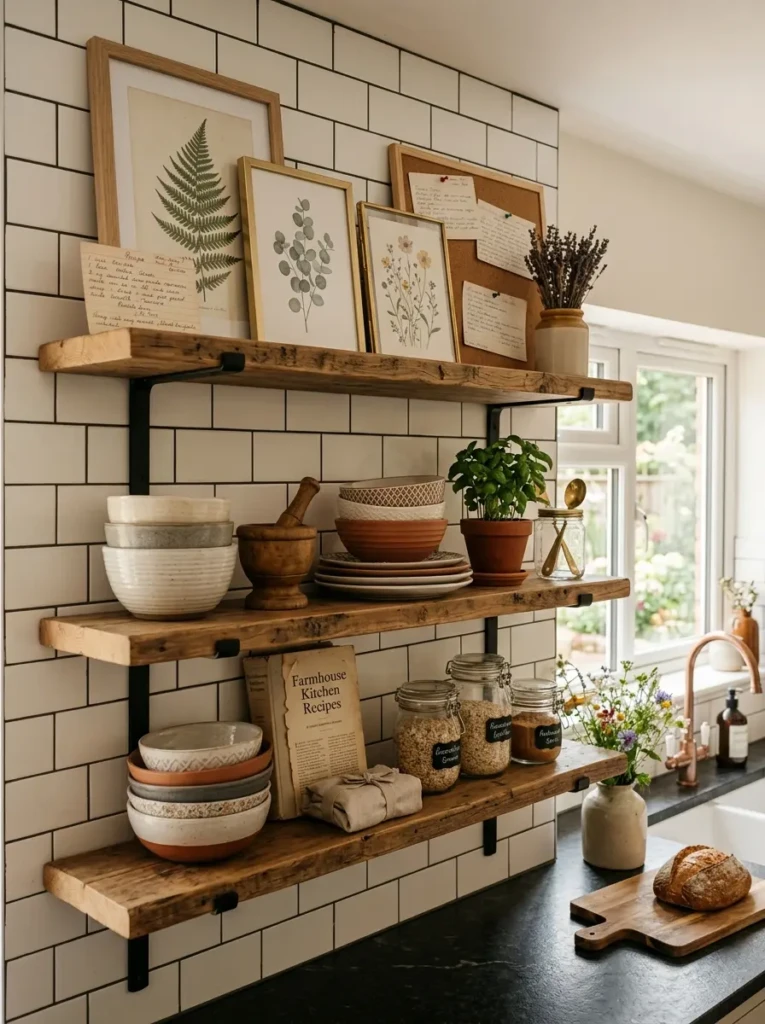
Leaning small framed prints or recipe cards behind objects adds depth. Choose food sketches, vintage botanical prints, or typography that supports the kitchen’s overall mood.
14. Use Texture in Kitchen Decoration Ideas
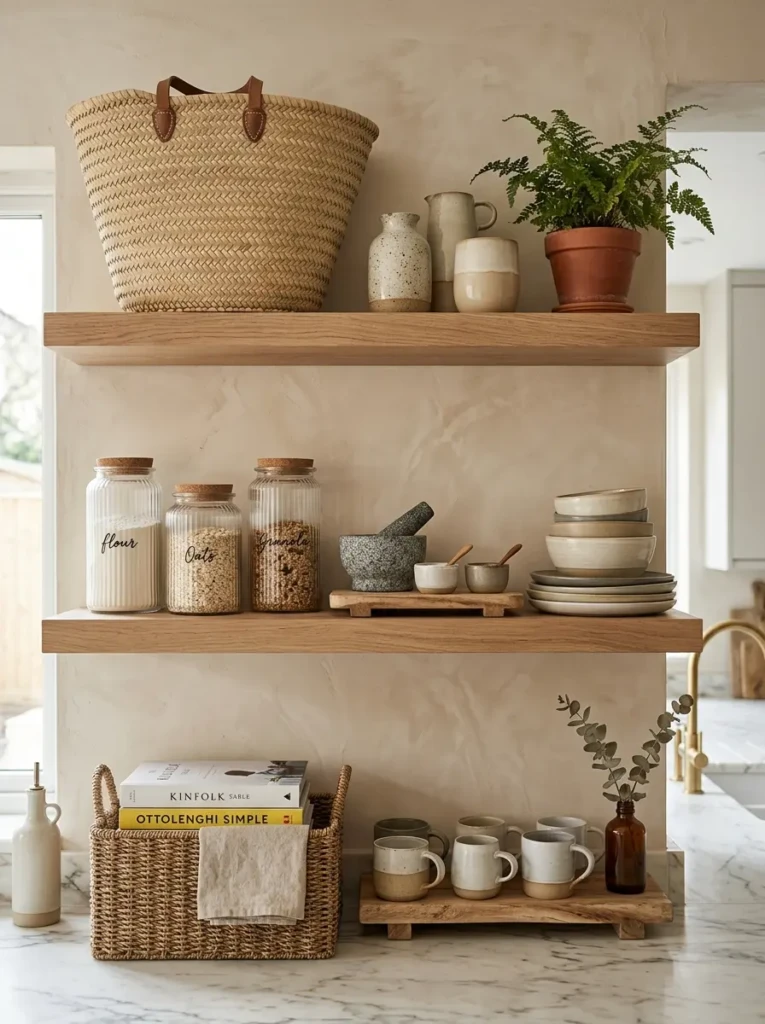
Great kitchen decoration ideas rely on contrast. Combine smooth ceramics, ribbed glass, woven baskets, and raw wood in one shelf composition. Texture adds richness even when your palette stays neutral.
15. Make Room for Mobile Storage Pieces
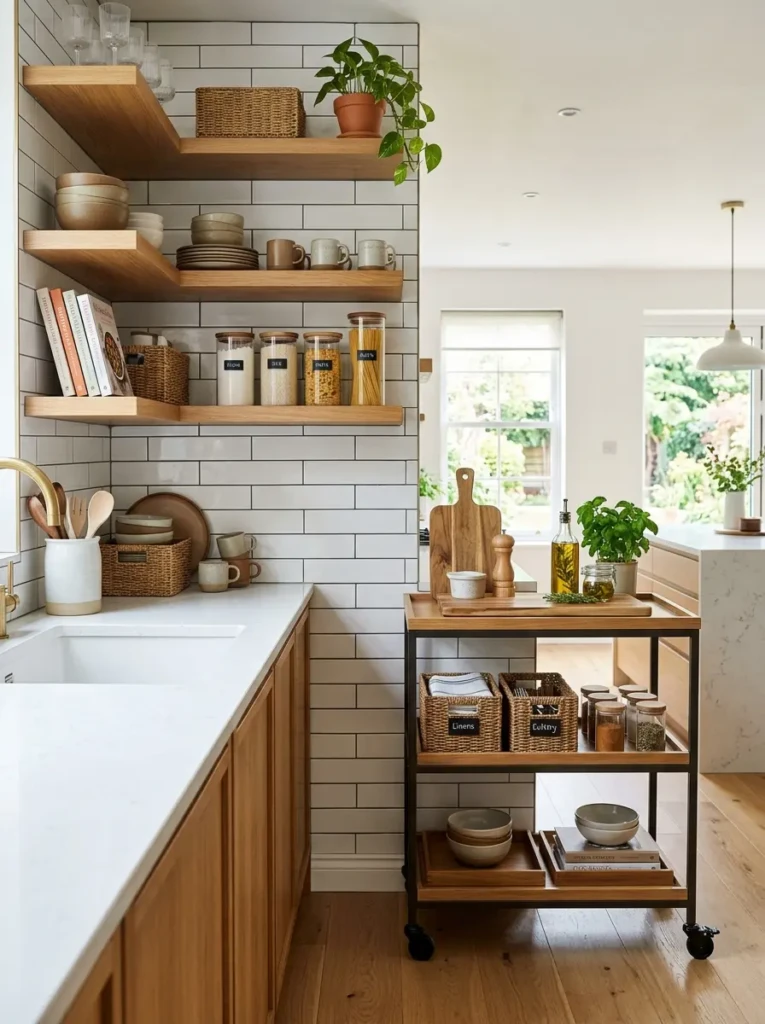
If your kitchen includes a kitchen trolley, style nearby shelves with similar materials or colors so the movable unit feels integrated. For example, match the trolley’s wood top with shelf cutting boards or matching baskets.
16. Organize Everyday Essentials in Beautiful Containers
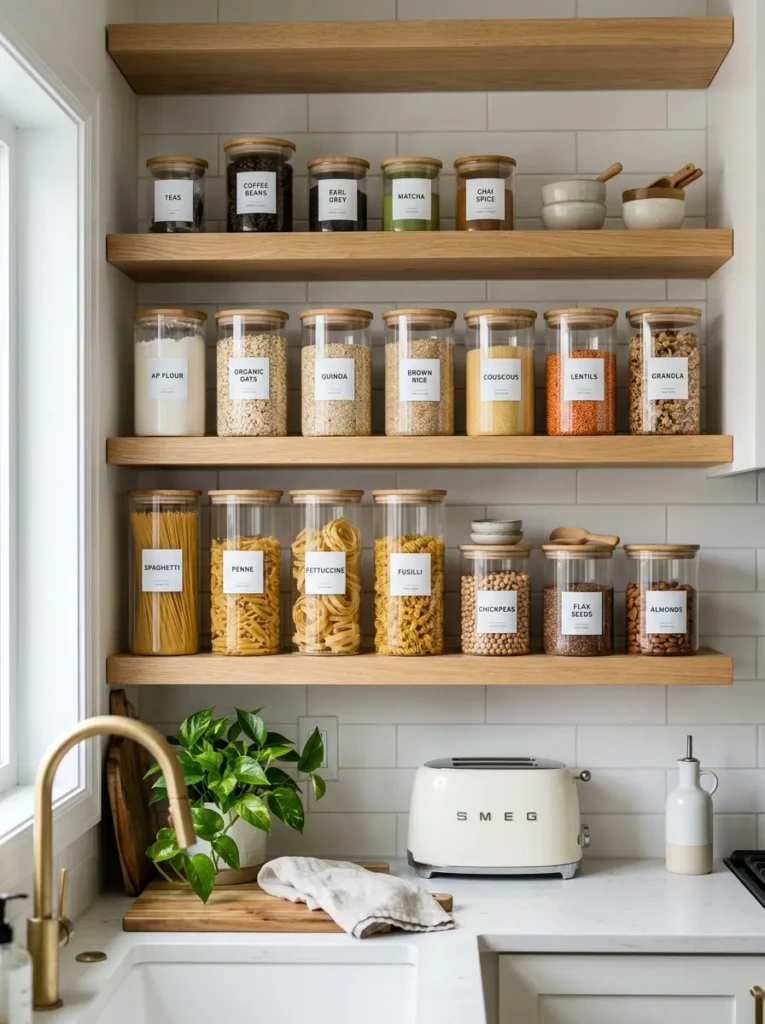
Flour, coffee, tea, pasta, and grains look excellent in glass jars. Choose matching containers with simple labels to keep shelves visually calm and highly functional.
17. Use Plants Sparingly
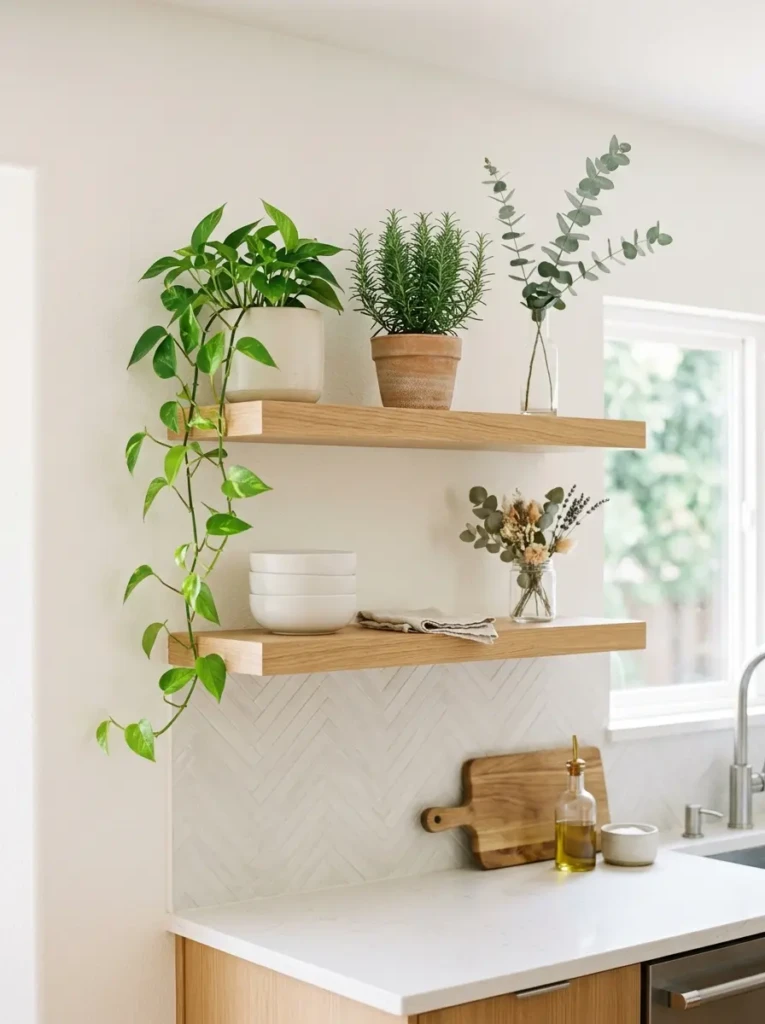
A small trailing pothos, rosemary pot, or eucalyptus stem can soften rigid lines. Limit greenery to one or two shelves so it stays fresh and doesn’t turn into visual noise.
18. Think About What to Put on Top of Kitchen Cabinets
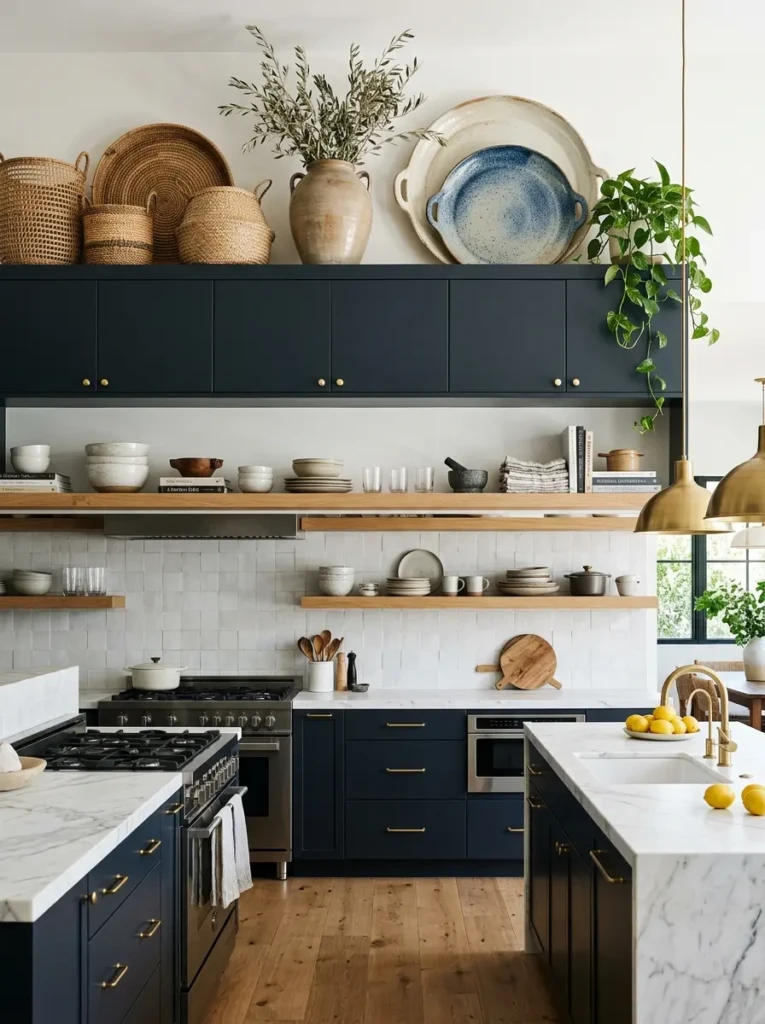
If you are also deciding what to put on top of kitchen cabinets, use that upper zone as a secondary styling layer, not a duplicate of the shelves. Baskets, oversized serving platters, or large vases work better above cabinets, while detailed objects stay on eye-level shelves.
19. Keep Frequently Used Items Accessible
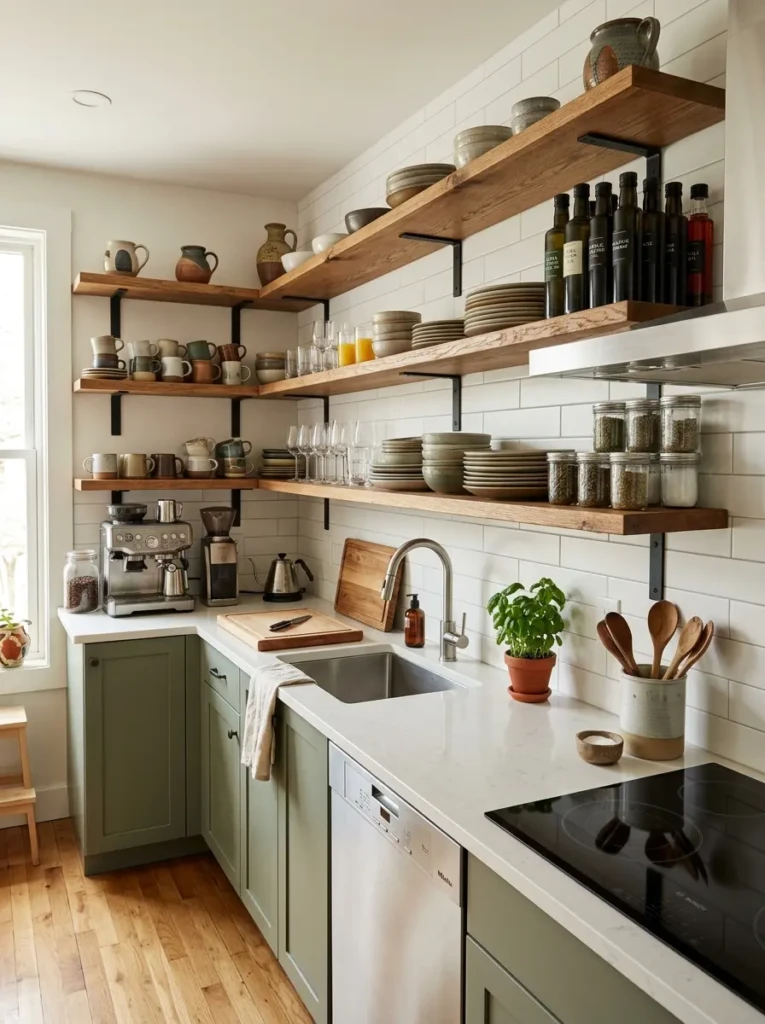
Open shelf styling should support workflow. Keep mugs near the coffee station, plates near the dishwasher, and oils near the stove. Beauty should never reduce efficiency.
20. Refresh With Small Rotations
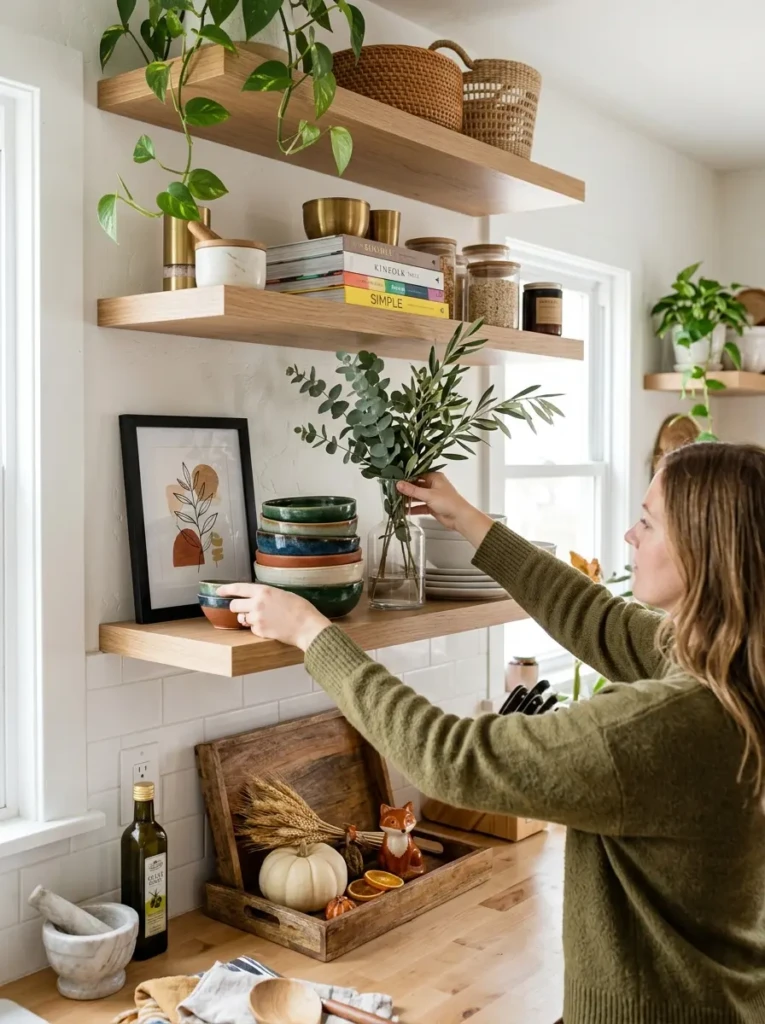
The easiest way to keep shelves interesting is rotating a few pieces every month. Switch bowls, move artwork, replace stems, or bring in new trays. Small edits maintain freshness without needing a full redesign.
21. Final Styling Edit
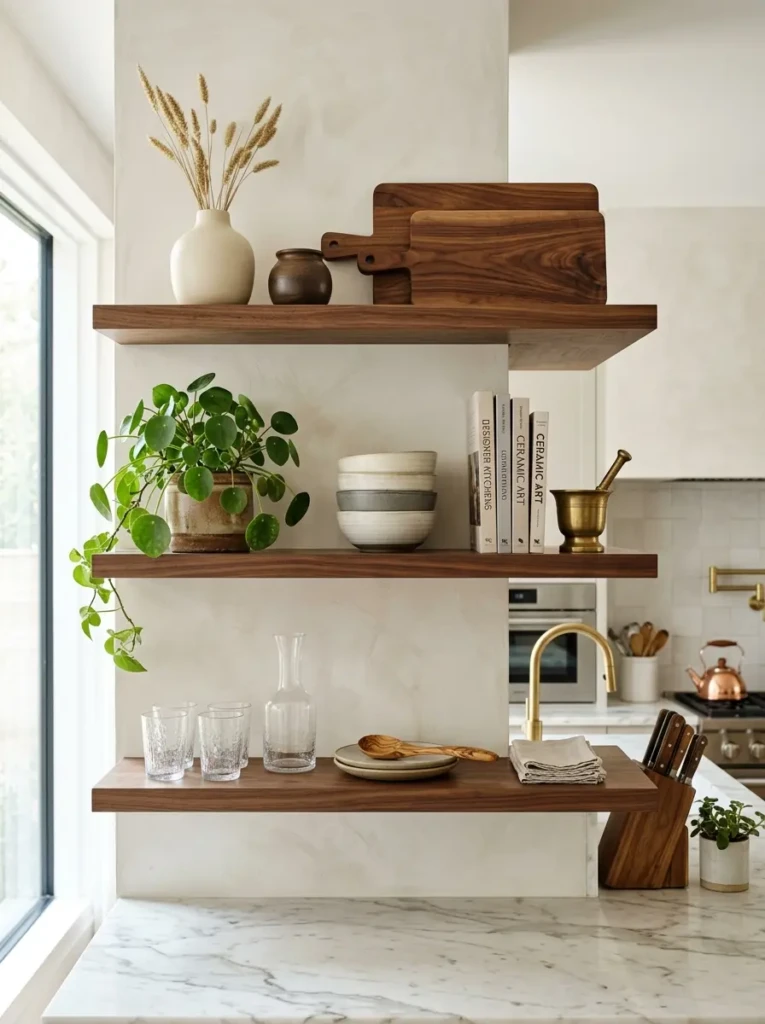
Once everything is placed, step back and remove one or two items from each shelf. The final edit is what makes open shelves feel designer-level instead of overfilled. Focus on balance, utility, and material consistency, and your shelves will always look polished.
Open shelf styling works best when it reflects how the kitchen is actually used. By combining practical storage with thoughtful grouping, texture, and color balance, you can turn shelves into one of the most attractive features in the room.