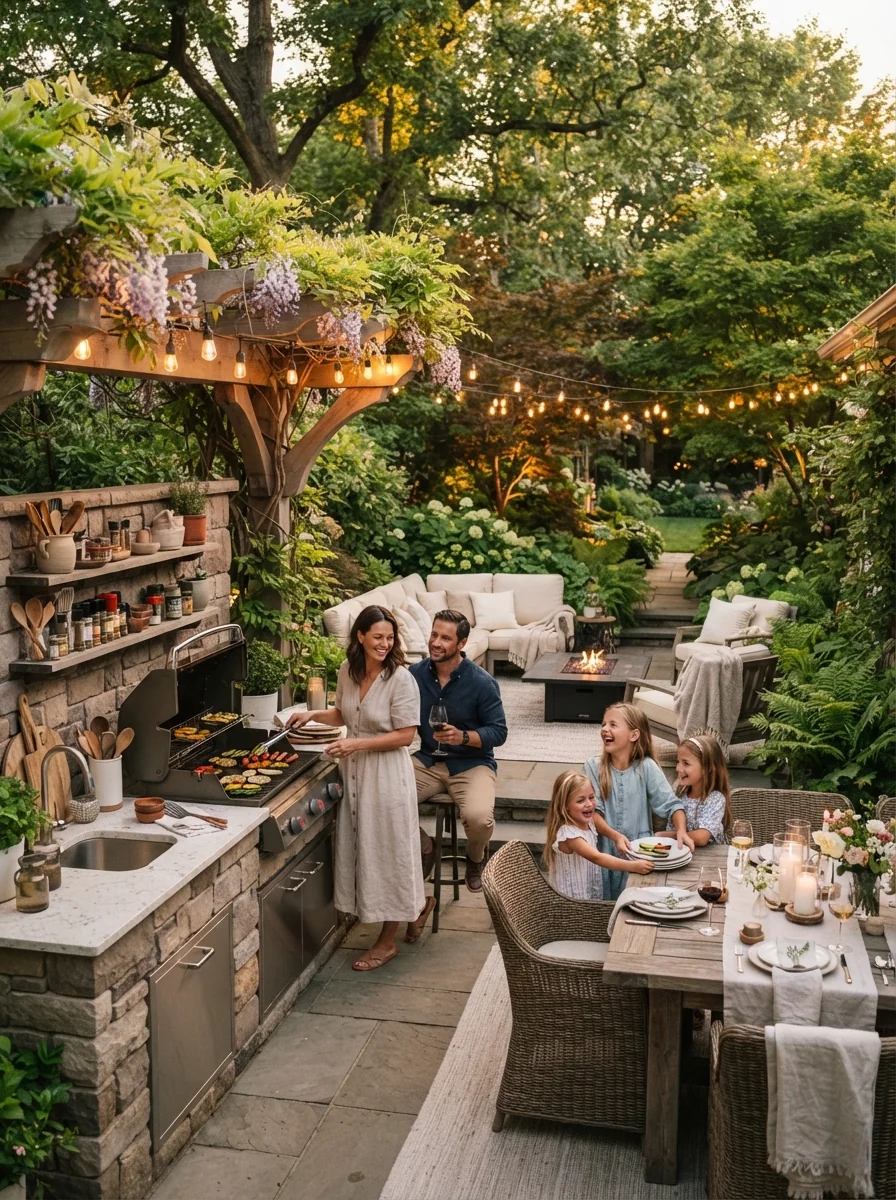
Outdoor Kitchen Design Tips for Creating a Functional and Beautiful Backyard Cooking Space Everyone Will Love
Dreaming about cooking outside without running back and forth to the house every five minutes? A well-planned outdoor kitchen makes backyard meals easier, more enjoyable, and honestly, a lot more fun. Whether you love weekend barbecues or quiet family dinners under the stars, the right design can completely transform your outdoor space. Let’s dive into practical ideas that blend style, comfort, and everyday functionality.
Start With a Smart Layout
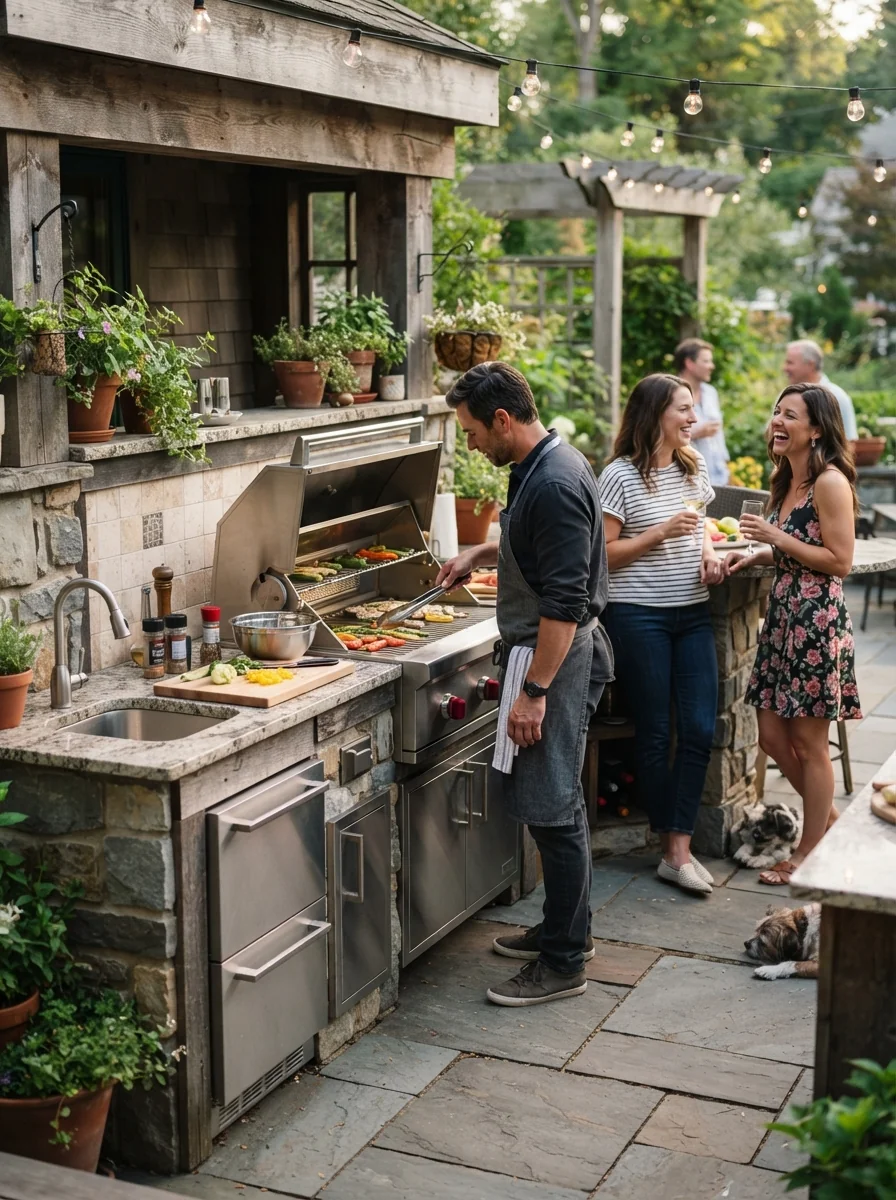
Before you shop for fancy grills or stylish countertops, think about how you’ll actually use your outdoor kitchen. The layout shapes everything, from cooking efficiency to guest interaction.
Keep your grill, prep area, and sink close enough to move between them without taking unnecessary steps. Think of it like your indoor kitchen—you don’t want to play a game of backyard marathon every time you flip a burger.
Consider the Traffic Flow
Your guests should move around comfortably without bumping into whoever’s cooking.
Keep these layout tips in mind:
- Leave plenty of walking space around cooking zones.
- Position seating away from high-heat appliances.
- Place serving counters where guests can grab food without interrupting the cook.
- Connect the outdoor kitchen naturally with your patio or dining area.
A thoughtful layout makes entertaining feel effortless instead of chaotic.
Choose Durable Materials That Handle the Weather
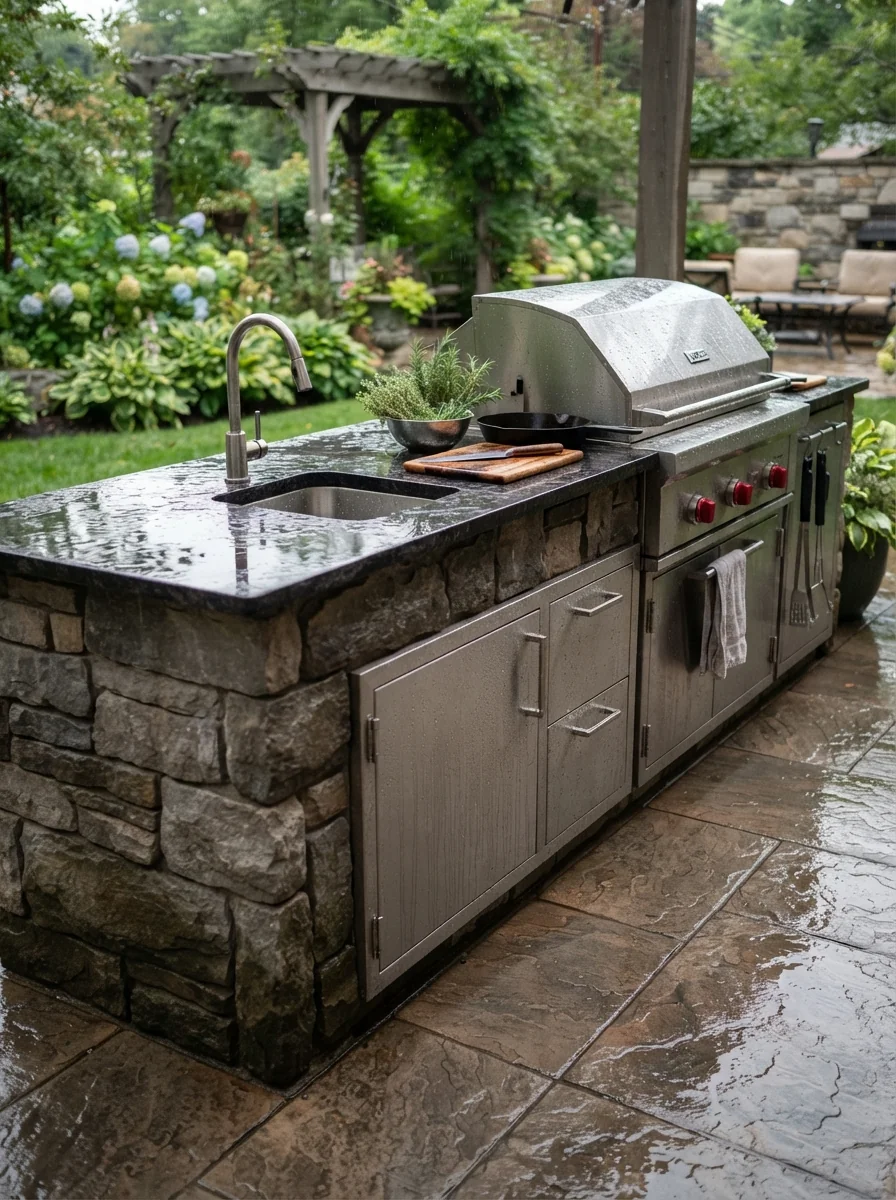
Outdoor kitchens face sun, rain, wind, dust, and sometimes the occasional bird with questionable manners. Choosing durable materials saves money and frustration later.
Stainless steel appliances resist rust and clean up easily. Stone, concrete, and porcelain countertops hold up better than materials designed only for indoor use.
Best Materials for Long-Term Performance
Popular choices include:
- Granite countertops for durability and natural beauty.
- Concrete counters for a modern custom look.
- Natural stone for timeless character.
- Powder-coated aluminum cabinets that resist corrosion.
- Weather-resistant tile flooring with slip-resistant finishes.
Avoid materials that absorb moisture or fade quickly. They may look great at first, but they’ll age faster than milk left in the sun.
Plan for Plenty of Storage and Prep Space
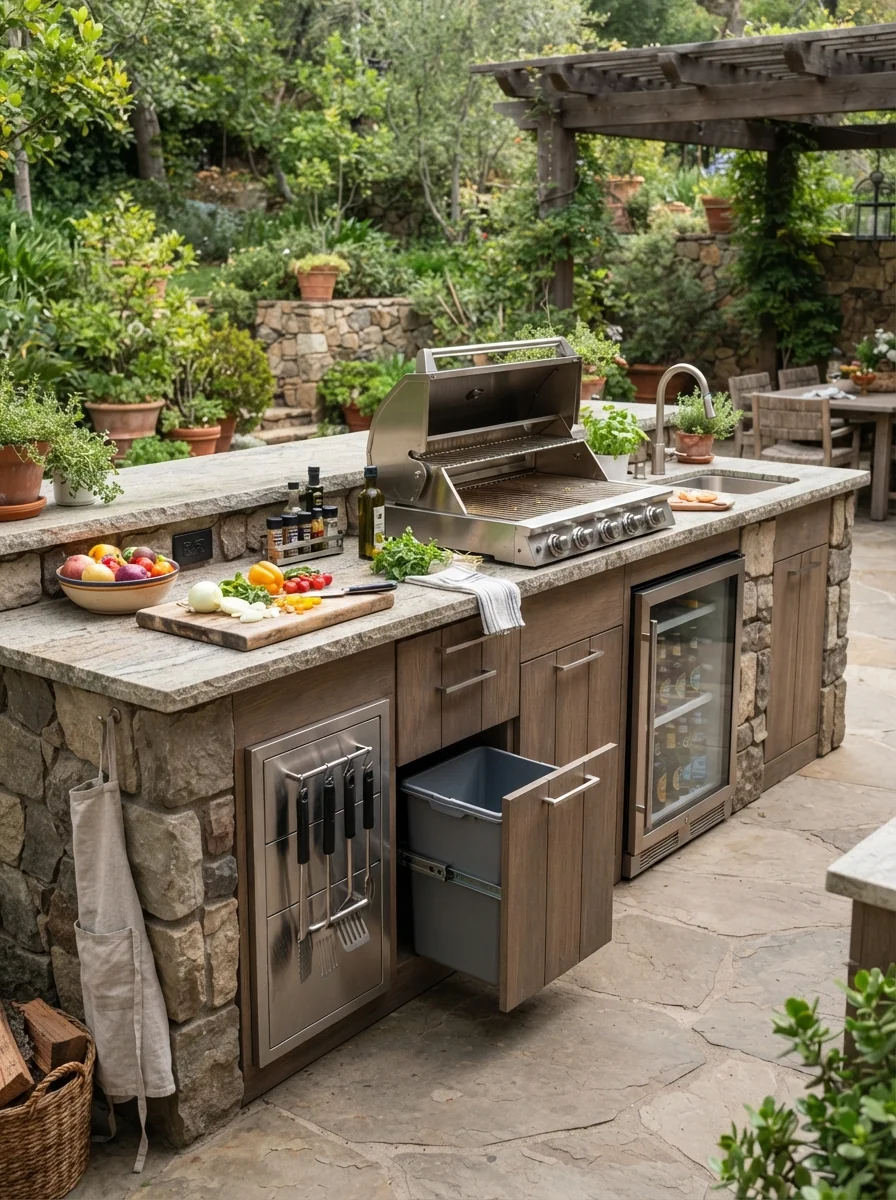
Nobody enjoys balancing a cutting board on top of a cooler. Give yourself enough room to prepare meals comfortably.
Add cabinets for grilling tools, serving dishes, spices, and outdoor tableware. You’ll appreciate having everything within reach instead of making constant trips inside.
A generous prep counter also lets multiple people cook together. After all, outdoor cooking often becomes a social event rather than a solo task.
Don’t Forget Functional Extras
Small additions often make the biggest difference.
Consider including:
- Pull-out trash and recycling bins.
- Paper towel holders.
- Spice drawers.
- Beverage refrigerators.
- Ice makers.
- Storage for propane tanks or charcoal.
- Hooks for cooking utensils.
These features keep your workspace organized and clutter-free.
Make Comfort Part of the Design
An outdoor kitchen should feel inviting, not like you’re standing in a parking lot with a grill.
Add shade with pergolas, retractable awnings, or covered patios. Protection from direct sunlight makes summer cooking much more enjoyable.
Lighting also deserves attention. Layer different types for the best results.
Use Multiple Lighting Sources
Combine several lighting options:
- Bright task lighting over prep stations.
- Ambient lighting for dining areas.
- Path lights for safe walking.
- Accent lighting to highlight landscaping or architectural details.
Good lighting extends your outdoor gatherings long after sunset.
Comfort also includes seating. Mix dining chairs with lounge seating so guests can relax while meals cook. Let’s be honest—people always gather around the food anyway.
Pick Appliances That Match Your Lifestyle
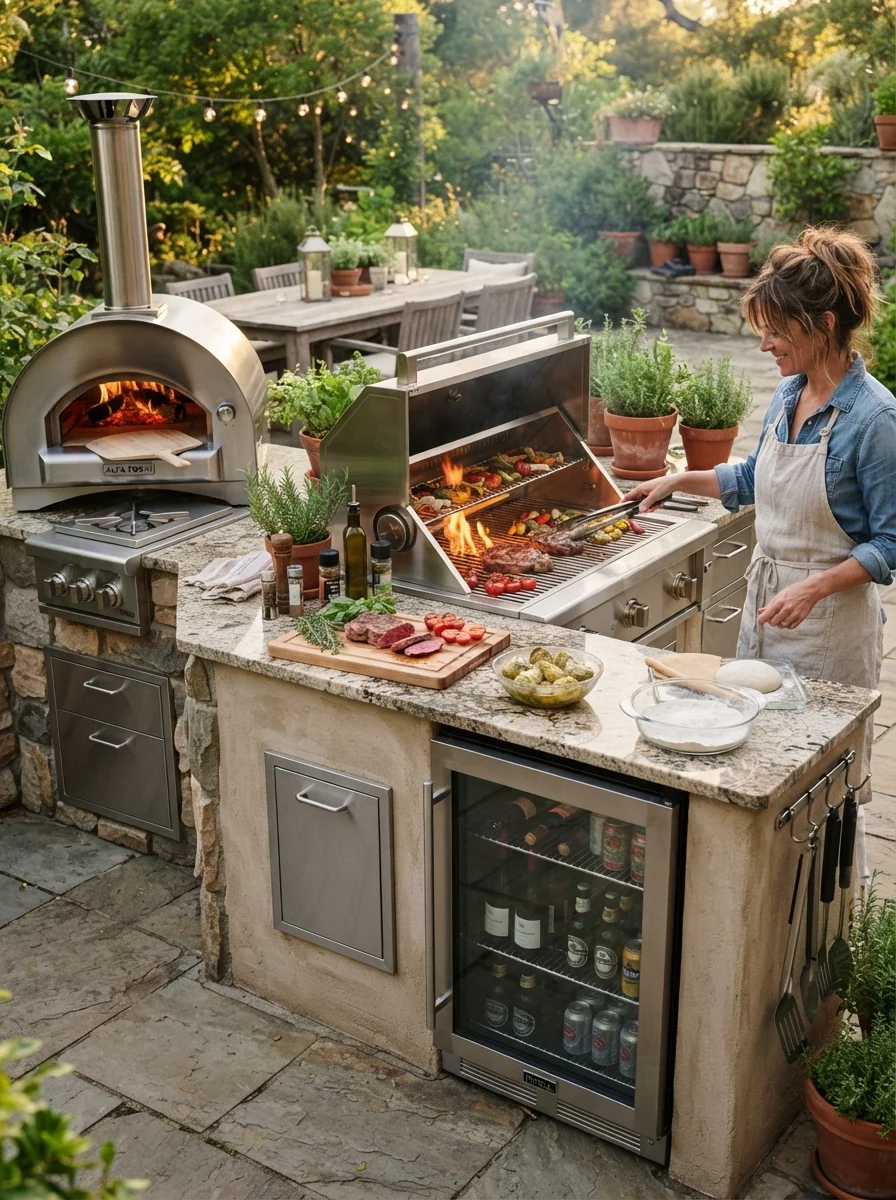
It’s tempting to buy every outdoor cooking gadget available. Resist the urge unless you’ll actually use them.
Start with the essentials:
- High-quality grill
- Sink
- Refrigerator
- Prep counter
Once those basics fit your needs, add specialty appliances if they make sense.
Popular Upgrades Worth Considering
Depending on your cooking style, you might enjoy:
- Pizza ovens.
- Side burners.
- Smokers.
- Flat-top grills.
- Wine coolers.
- Outdoor beverage centers.
IMO, it’s better to invest in one excellent grill than five mediocre appliances that rarely leave their covers.
Blend Your Outdoor Kitchen With the Rest of Your Backyard
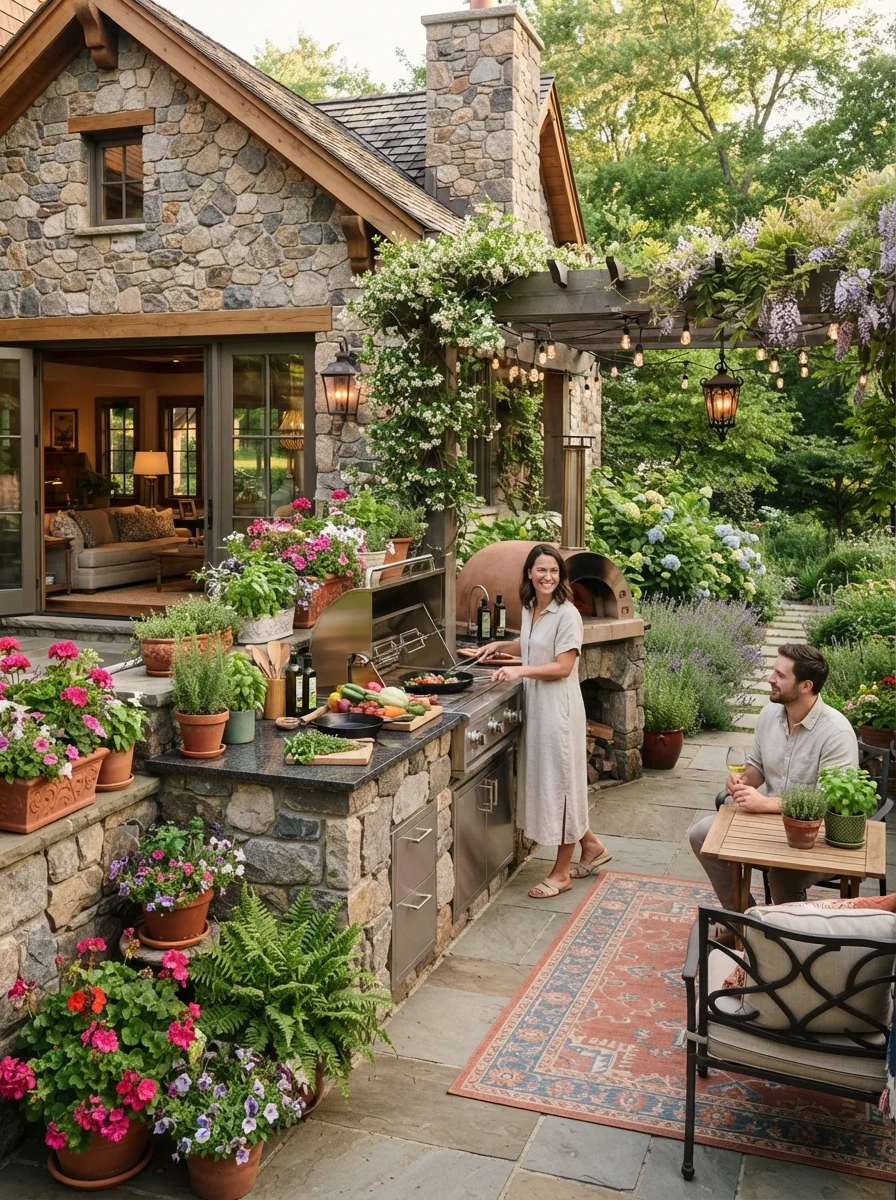
A beautiful outdoor kitchen doesn’t exist in isolation. It should feel like a natural extension of your home.
Use similar colors, materials, and finishes that complement your house. Matching stone, coordinating cabinetry, or repeating design elements creates a seamless transition between indoor and outdoor spaces.
Landscaping also plays a huge role. Add planters, ornamental grasses, herbs, or flowering shrubs around the kitchen to soften hard surfaces.
Add Personality Without Overcrowding
Decorate thoughtfully with:
- Outdoor rugs.
- Decorative planters.
- Comfortable weather-resistant cushions.
- String lights.
- Simple wall art designed for outdoor use.
- Fresh herb gardens near the prep station.
A few carefully chosen accessories create warmth without making the space feel cluttered.
Remember, every decorative item eventually needs cleaning. Your future self will thank you for showing a little restraint.
FAQ
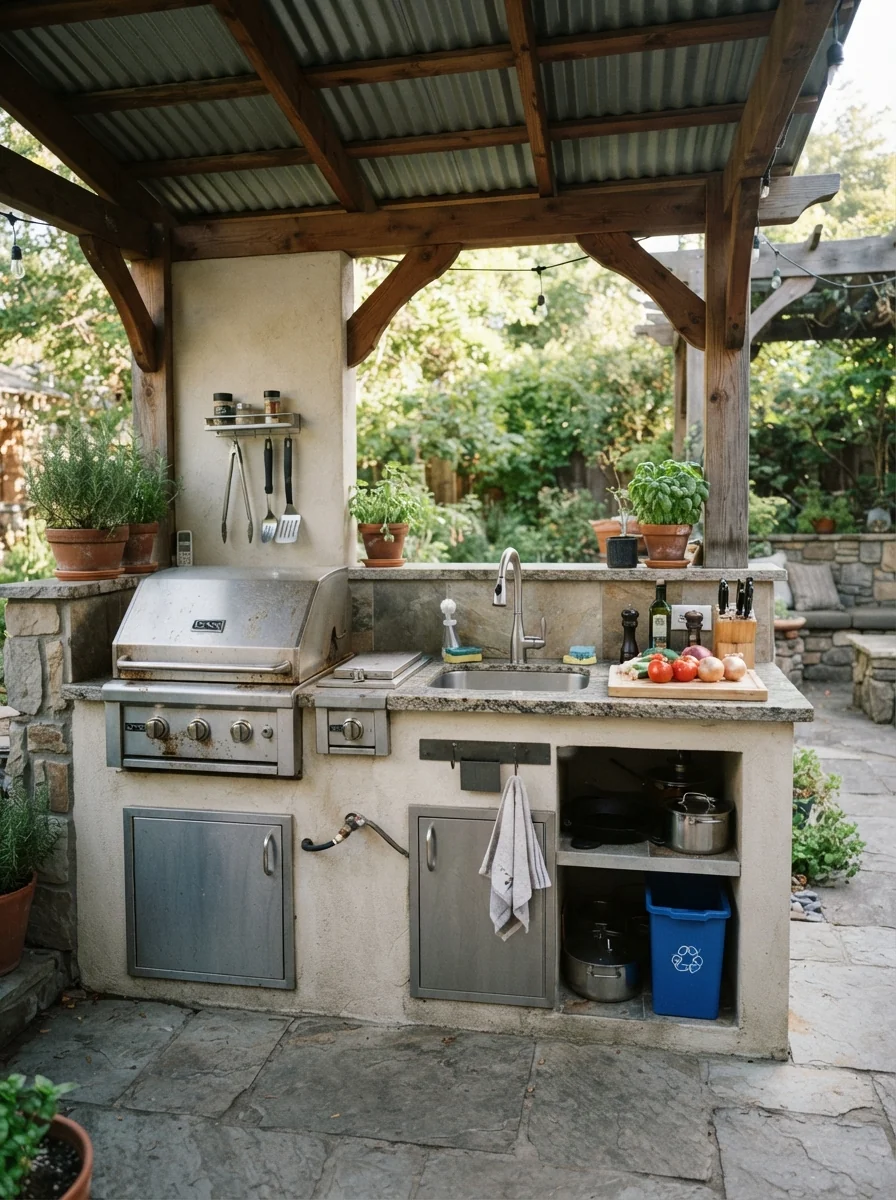
What size should an outdoor kitchen be?
The ideal size depends on your available space and cooking habits. Even a compact setup with a grill, prep counter, and small refrigerator can work beautifully if you organize it efficiently.
Do I need a sink in an outdoor kitchen?
A sink isn’t absolutely necessary, but it makes cooking and cleanup much easier. You can wash produce, rinse utensils, and clean your hands without heading indoors repeatedly.
Which countertop material works best outdoors?
Granite, concrete, and porcelain perform exceptionally well because they resist weather, heat, and daily wear. Choose materials designed specifically for outdoor exposure.
How can I protect my outdoor kitchen from bad weather?
Install covers, use weather-resistant materials, cover appliances when they’re not in use, and perform regular maintenance. A covered patio or pergola also provides valuable protection.
Is an outdoor kitchen worth the investment?
If you enjoy entertaining or frequently cook outside, absolutely. A well-designed outdoor kitchen adds convenience, expands your living space, and can increase your home’s overall appeal.
Conclusion
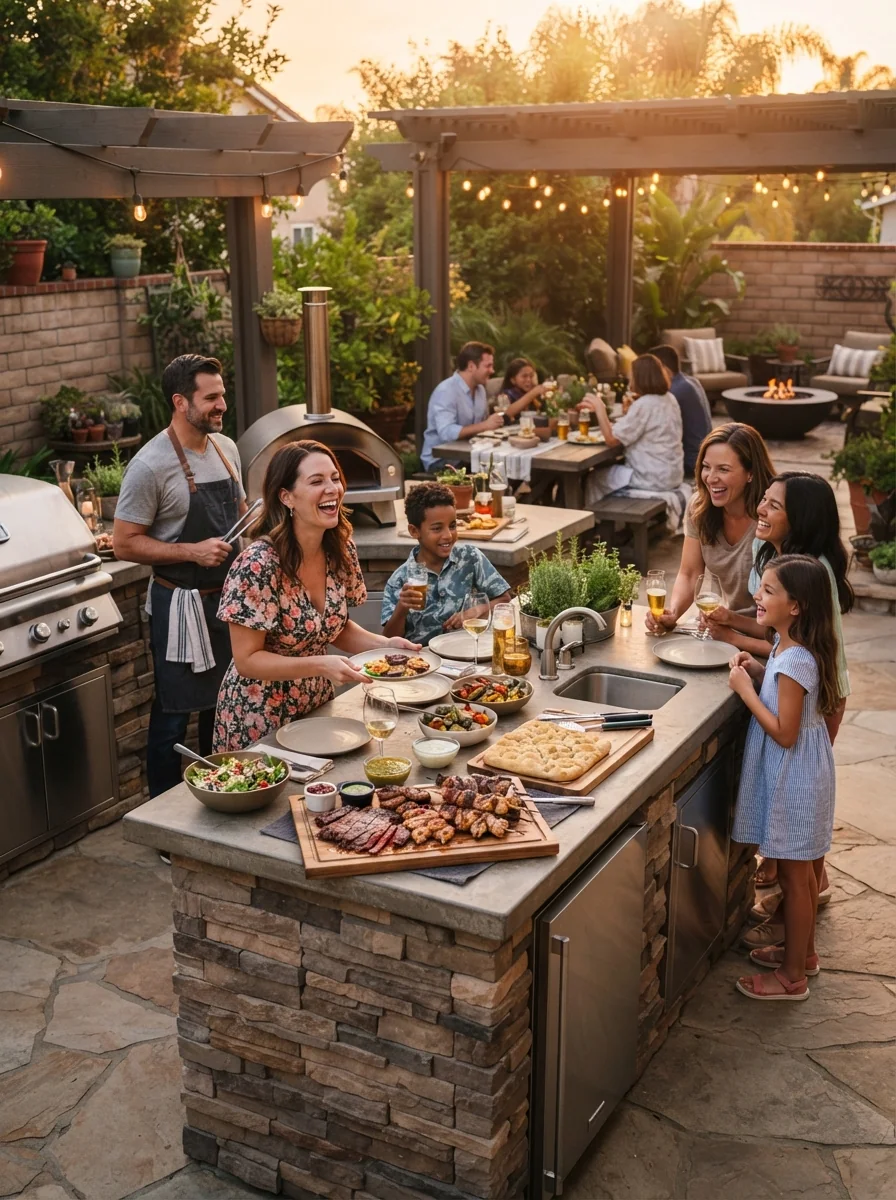
Creating an outdoor kitchen doesn’t require endless square footage or a luxury-sized budget. Focus on a practical layout, durable materials, comfortable seating, and appliances you’ll actually use. Add thoughtful lighting, smart storage, and a touch of personality, and you’ll end up with a backyard cooking space that feels both beautiful and functional. Once everything comes together, don’t be surprised if your outdoor kitchen becomes everyone’s favorite place to gather.