Book Shelf Styling: Start With a Clear Styling Purpose
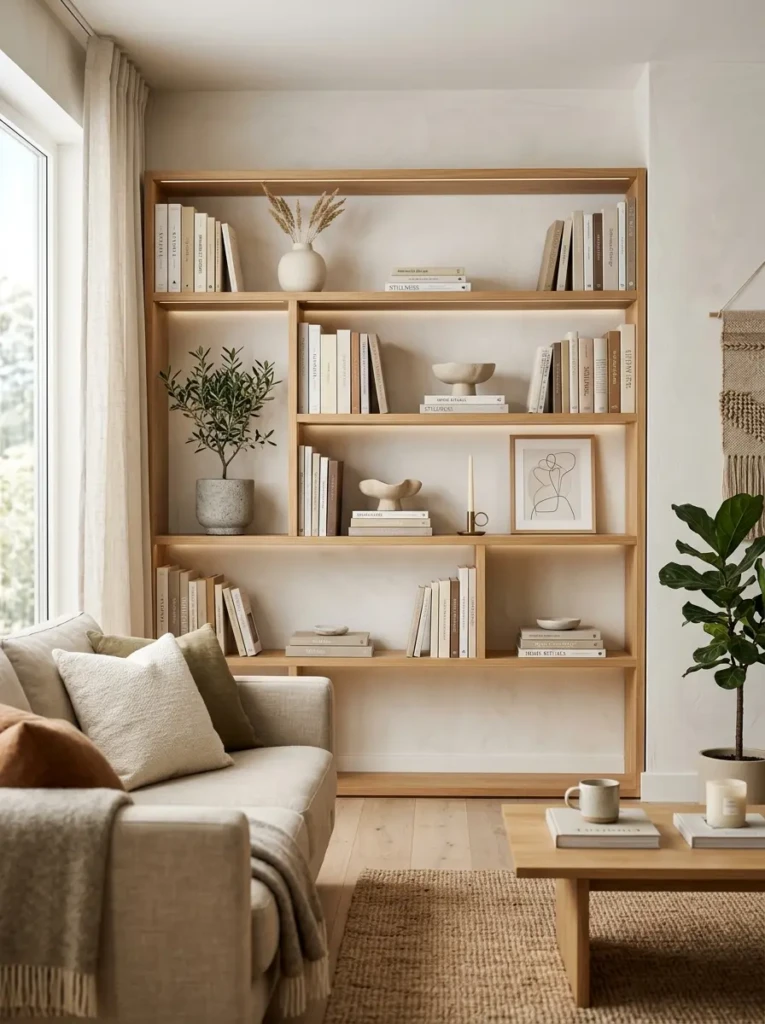
A well-styled bookshelf should do more than hold books. It should reflect how you live, what you value, and how the room functions. Before placing anything, decide whether the shelf is meant to feel calm, academic, decorative, or practical. This single decision helps guide color choices, spacing, and what supporting objects belong on each shelf.
2. Build Around Your Best Books
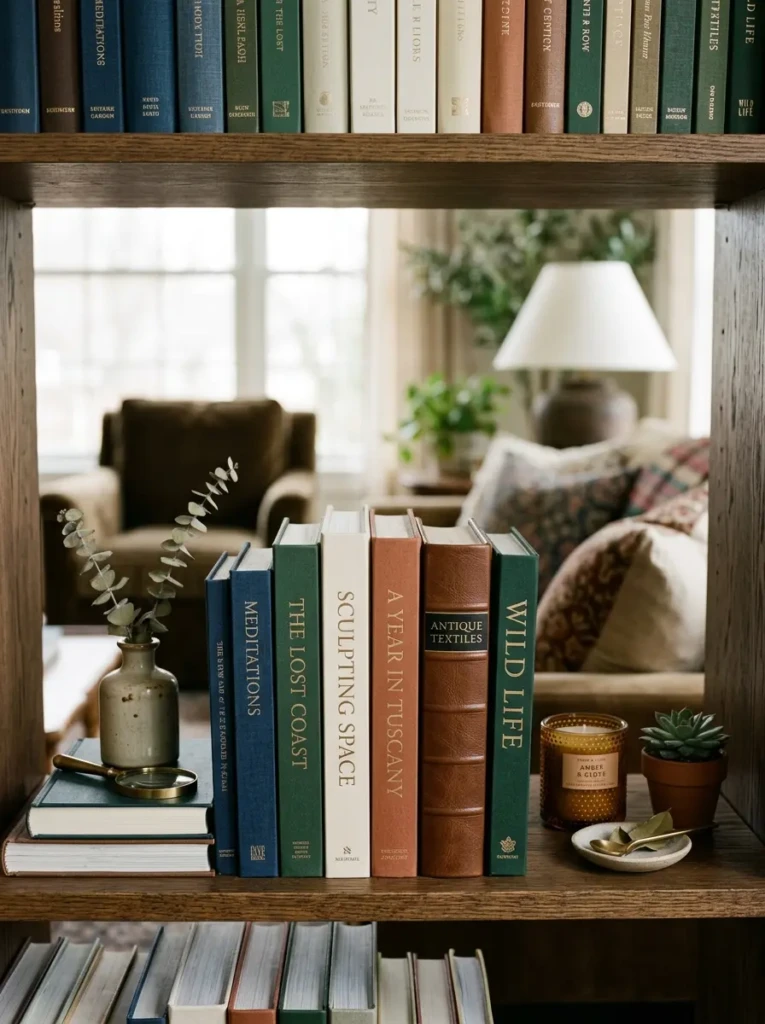
The strongest shelves begin with books that deserve visibility. Use hardcovers, attractive spines, and meaningful titles as the foundation. Group books by tone, size, or subject so the arrangement feels intentional instead of random. Your collection should anchor the design before any decorative pieces are introduced.
3. Use Book Shelf Decor With Purpose
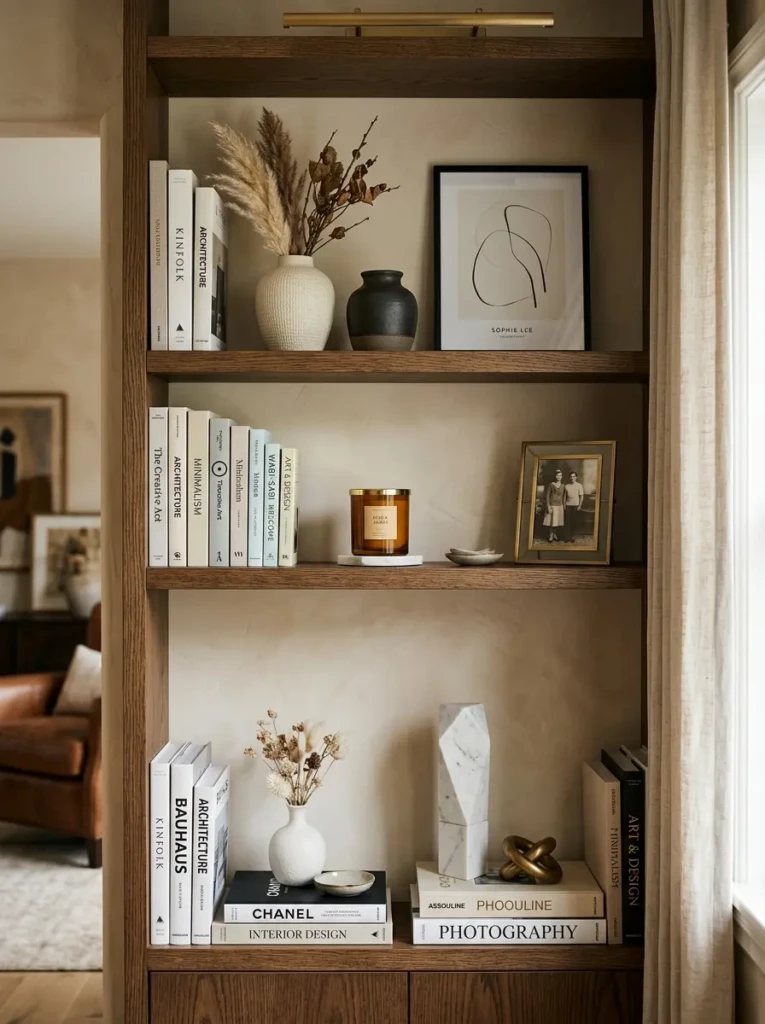
The best book shelf decor adds contrast without overwhelming the books themselves. Small framed art, ceramics, candles, and sculptural objects work well because they interrupt rows of vertical lines. Choose pieces that vary in texture—wood, glass, stone, or metal—to create depth while keeping the shelf balanced.
4. Mix Vertical and Horizontal Stacks
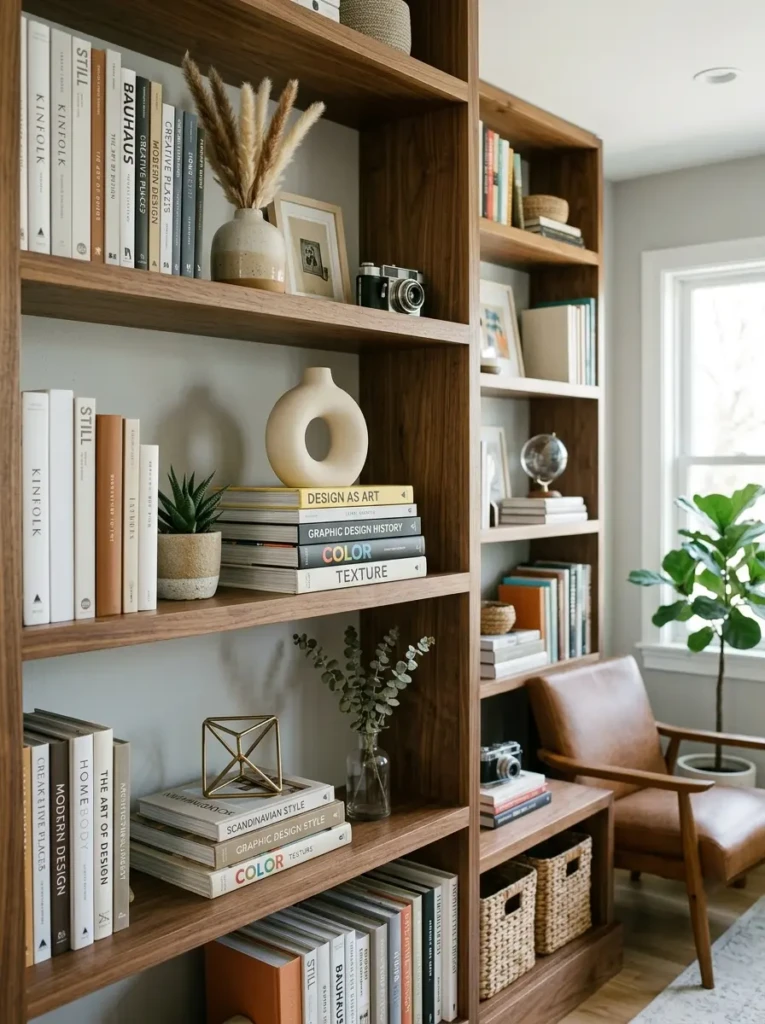
One of the easiest ways to improve shelf styling is to combine upright books with horizontal stacks. Vertical rows create structure, while horizontal piles soften the look and provide a platform for small accessories. Alternate these formats across the shelving unit so the eye keeps moving naturally from section to section.
5. Create Visual Rhythm Through Repetition
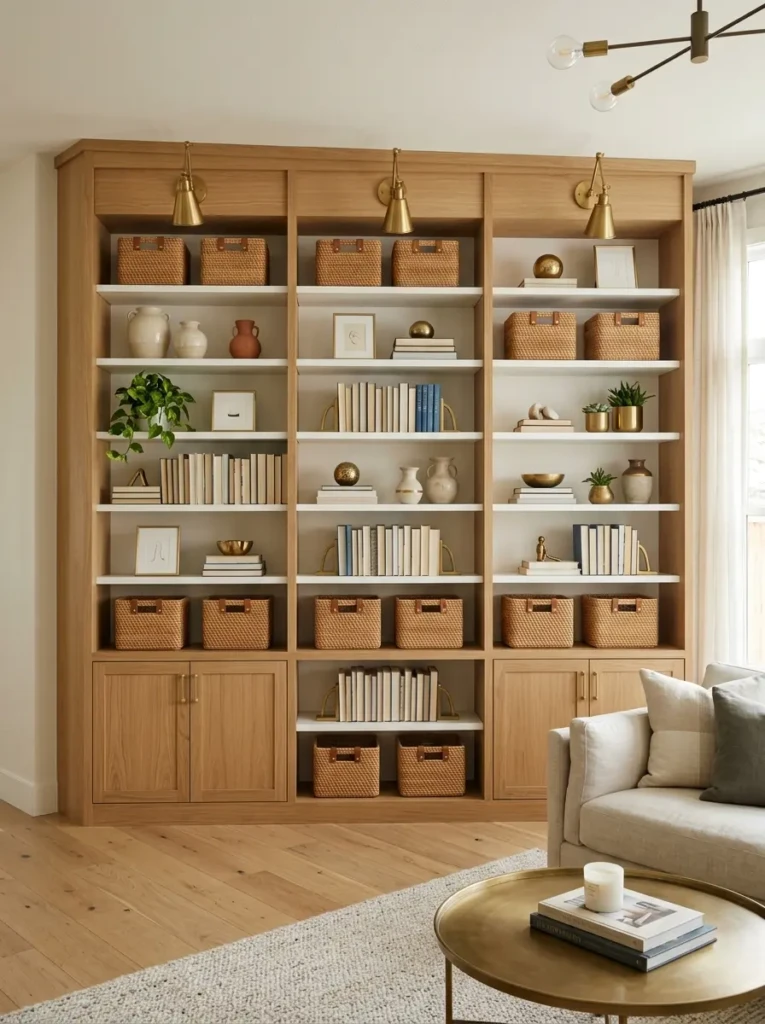
Repeated shapes and tones make shelves feel polished. This could mean using similar baskets, matching neutral book jackets, or recurring brass accents across multiple levels. Repetition gives continuity, especially on larger wall units or built-ins where many compartments need to feel connected.
6. Leave Open Space Intentionally
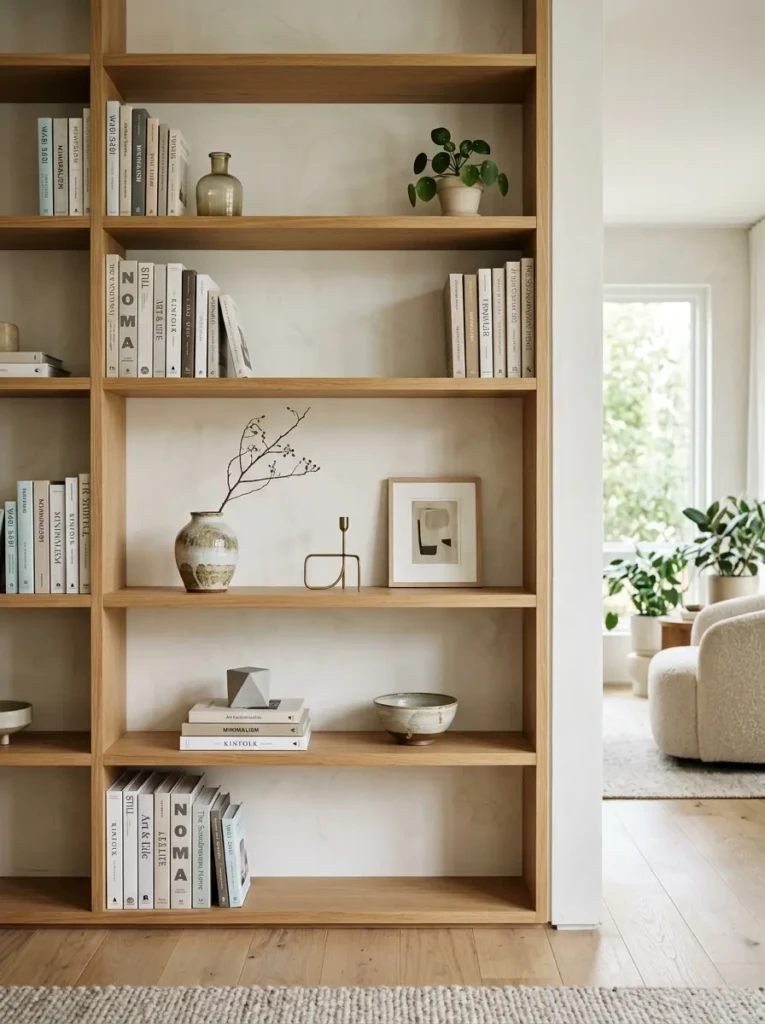
Not every inch of shelving should be filled. Empty space is what makes displayed objects stand out. Aim for breathing room between clusters of books and decor items. Negative space also keeps the shelf from feeling crowded and gives the overall room a more elevated, curated look.
7. Style Book Shelves in Bedroom for Calm
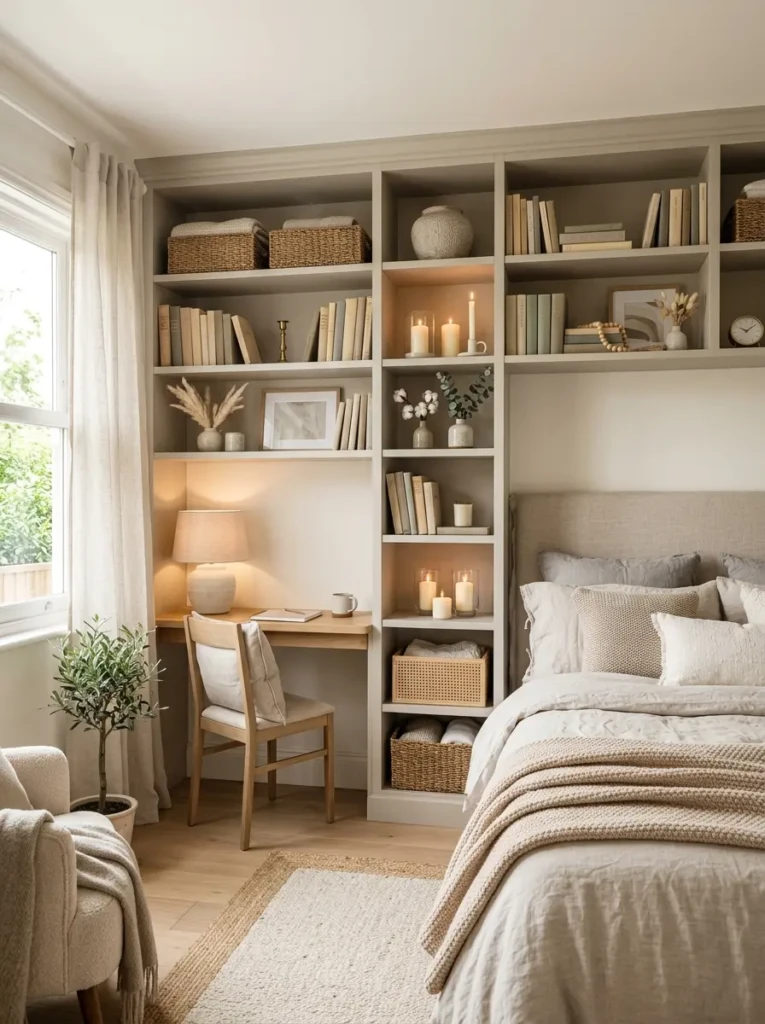
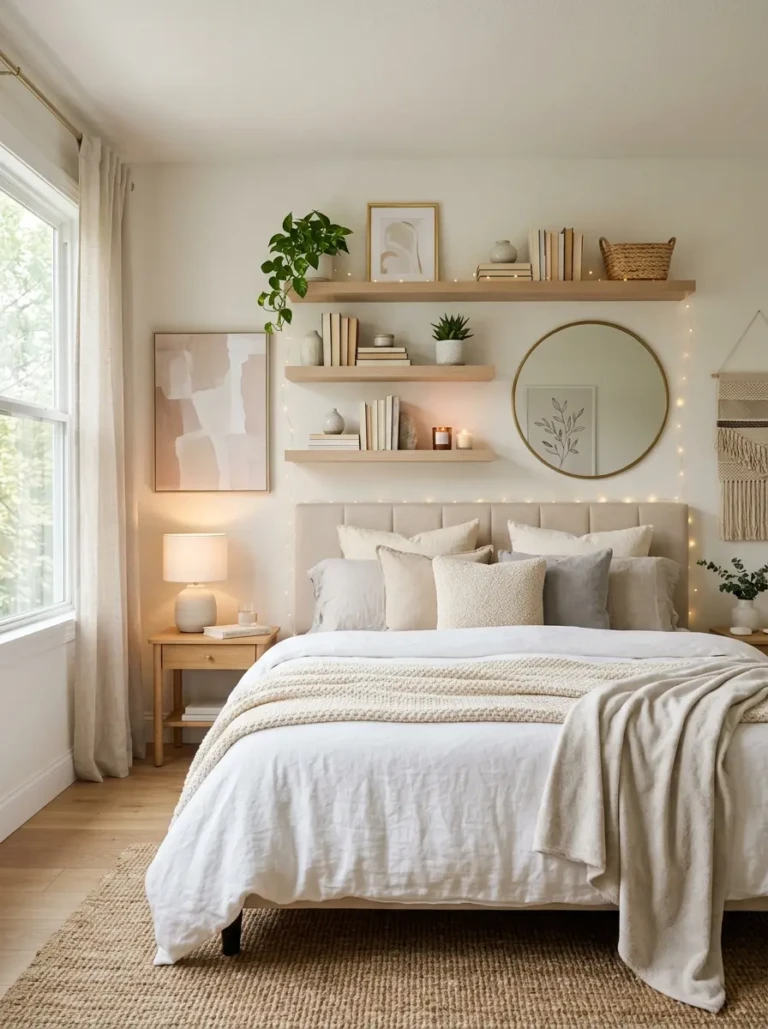
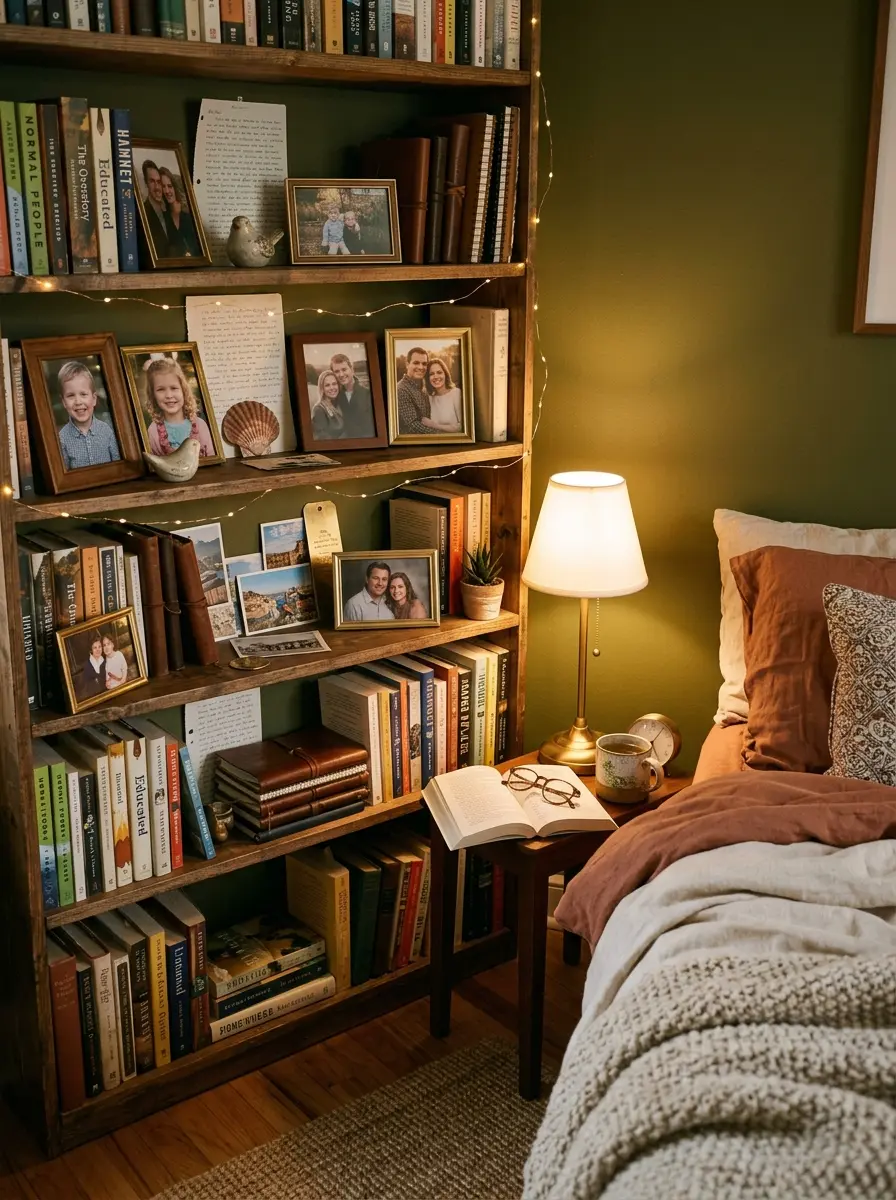
When styling book shelves in bedroom spaces, keep the mood softer and less visually busy. Use muted covers, woven storage boxes, framed photos, and a few sentimental objects. Bedroom shelving should support rest, so avoid overly bright colors or too many competing decorative pieces.
8. Make Bedroom Bookshelves Feel Personal
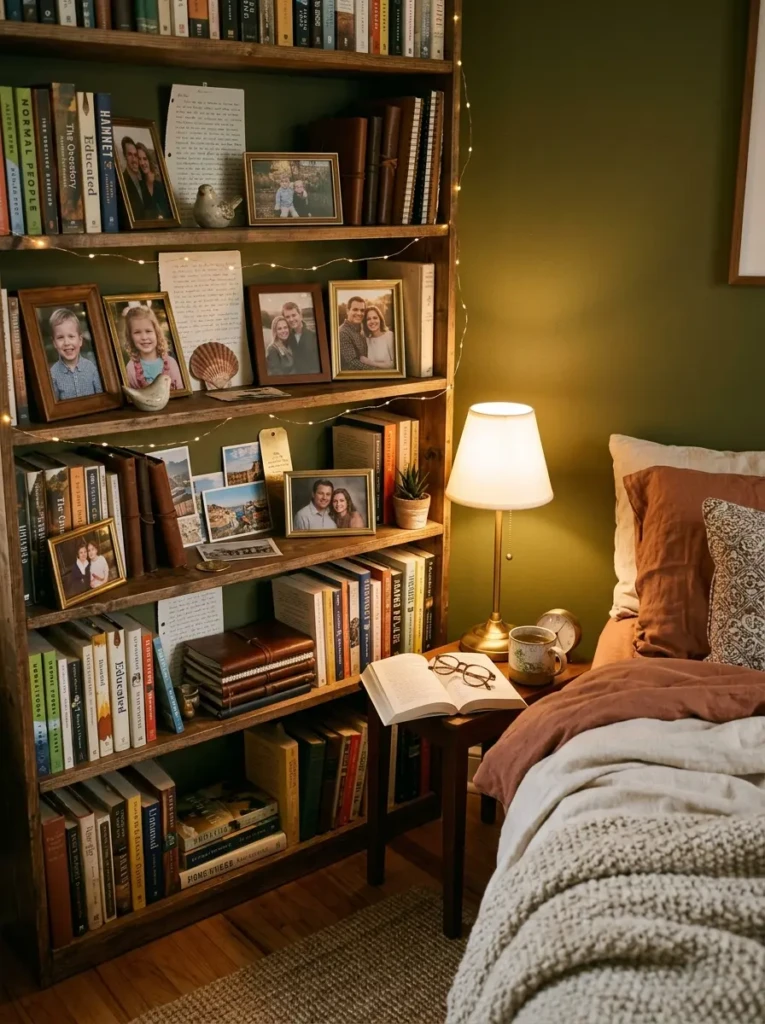
The most inviting bedroom bookshelves blend reading essentials with intimate design details. Include bedside favorites, journals, a small lamp, or a dish for jewelry. Personal touches make the shelves feel integrated into the room rather than copied from a showroom.
9. Add Layers With Book Decor
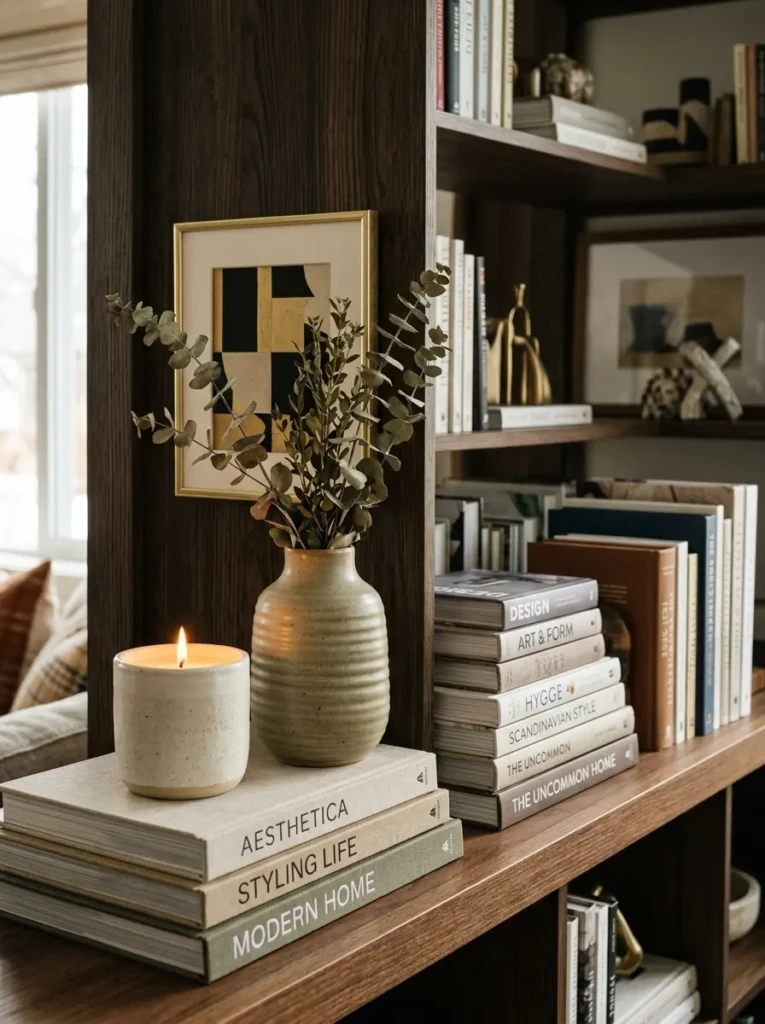
Thoughtful book decor means styling around the books without hiding them. Lean a small artwork behind a vase, place a candle on a horizontal stack, or rest a decorative object in front of shorter books. Layering creates dimension and makes the shelf feel designed from front to back.
10. Use Color Blocking for a Modern Look
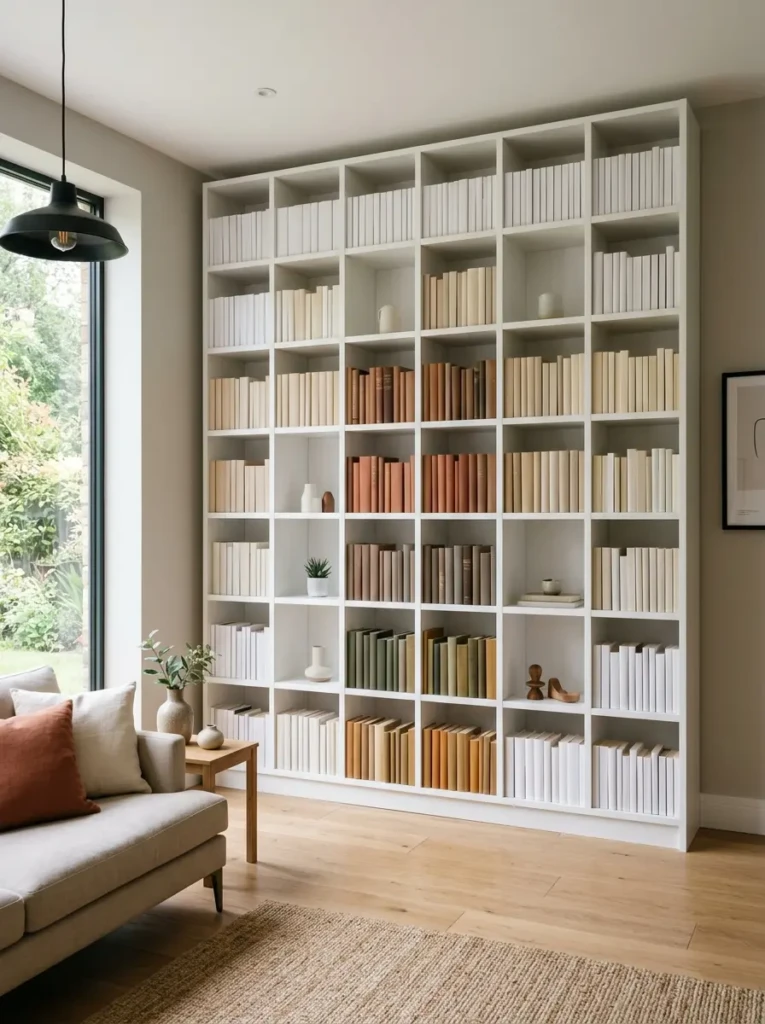
Color grouping is a simple styling technique that makes shelves look deliberate. Arrange books by whites, earth tones, dark neutrals, or one accent shade. This approach works especially well in modern interiors where clean lines and visual order matter.
11. Bring Nature Into the Shelf Layout
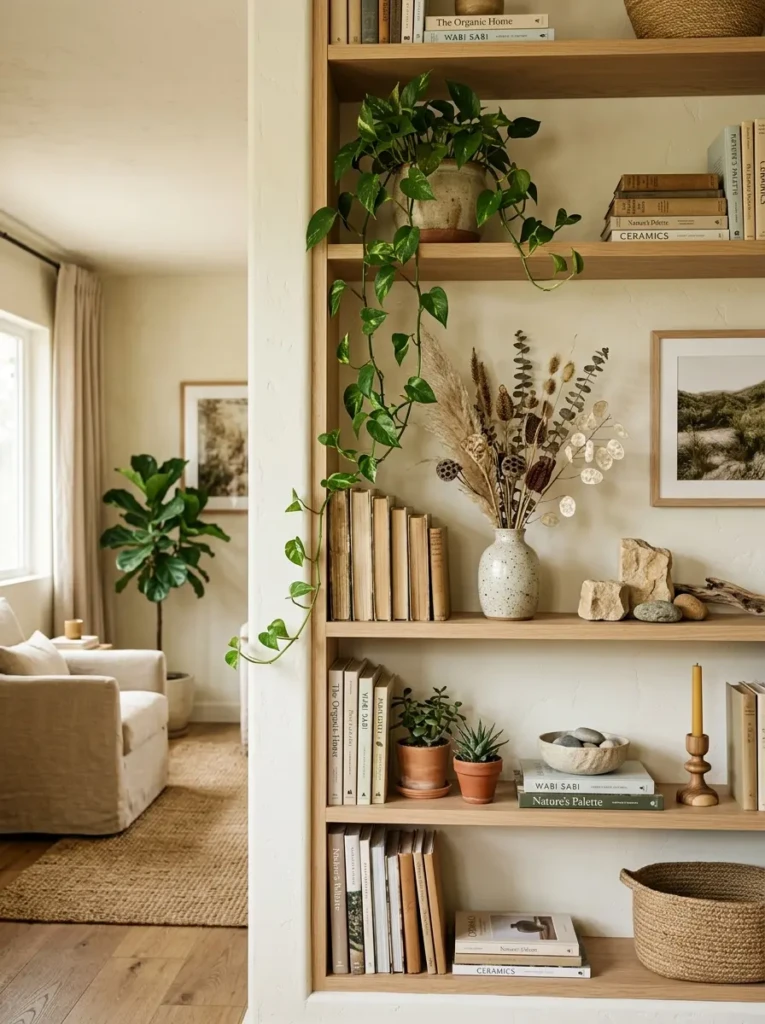
Natural elements soften the rigid geometry of shelving. A trailing plant, olive branch in a vase, coral, stone, or dried stems can make the display feel warmer and less static. Organic shapes are especially useful if your shelf contains many square or rectangular objects.
12. Elevate Home Office Bookshelf Decor
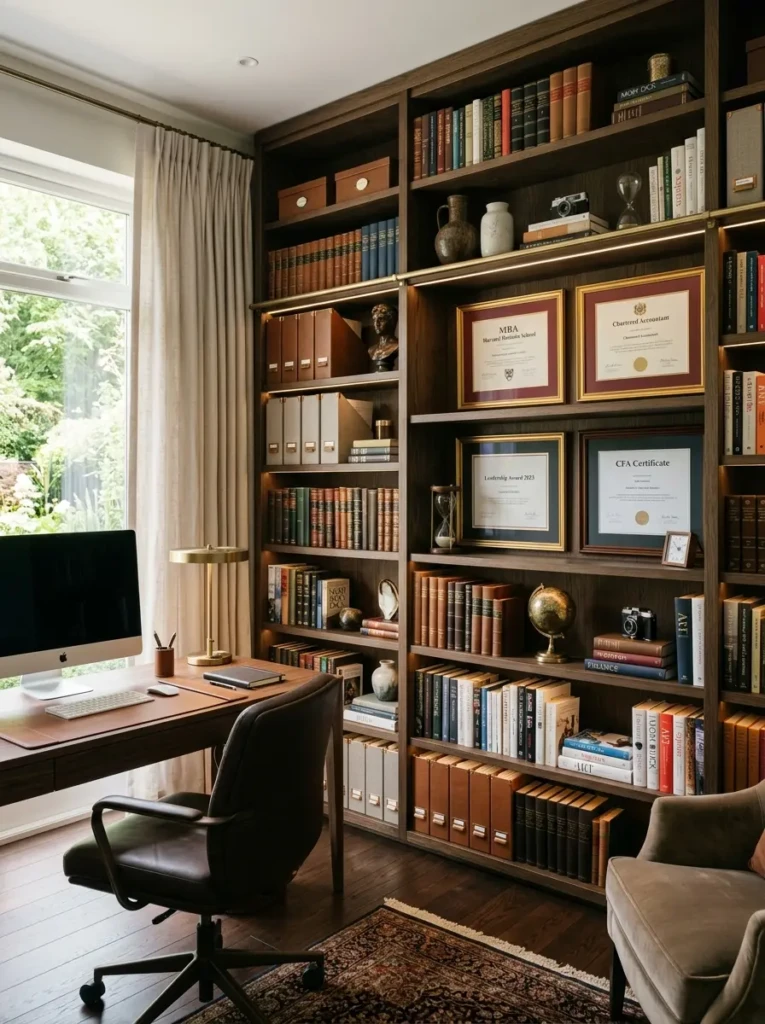
Functional spaces need styling that supports productivity. Great home office bookshelf decor combines reference books, boxes for paperwork, framed credentials, and a few calming accents like plants or ceramics. The shelf should feel inspiring while still serving a work-focused purpose.
13. Organize by Zones and Categories
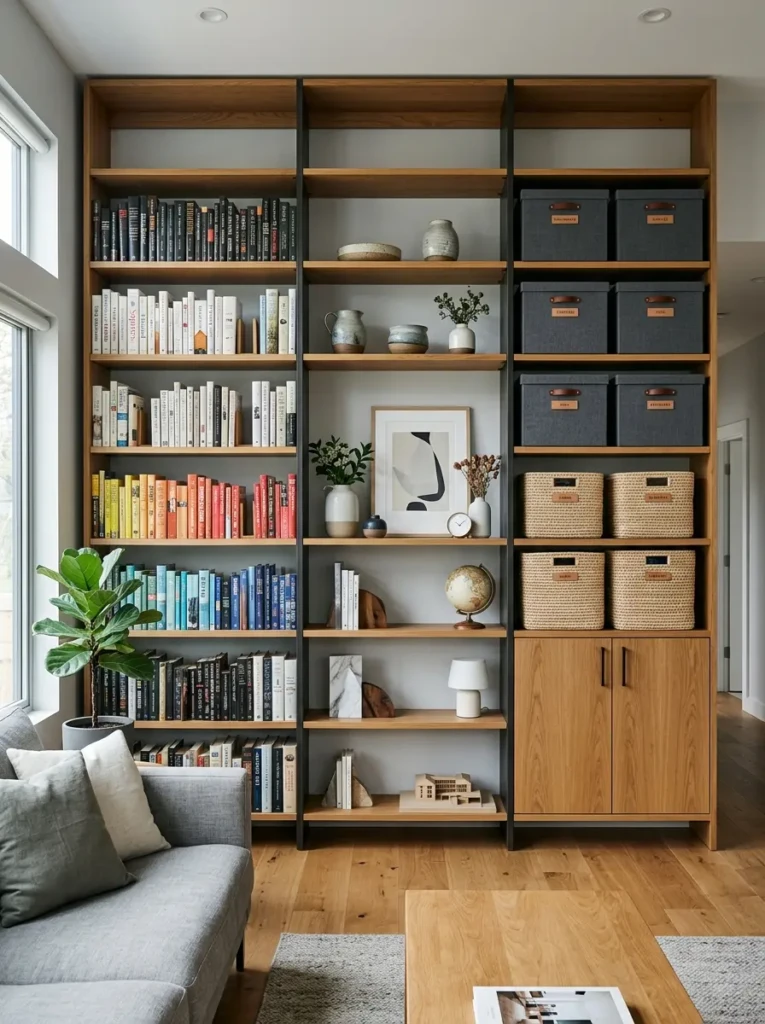
Instead of styling shelf by shelf, think in zones. Dedicate one area to books, another to objects, another to storage. Category-based zoning creates clarity and helps large shelves look structured. This is especially effective in family rooms, offices, and study walls.
14. Balance Heavy and Light Objects
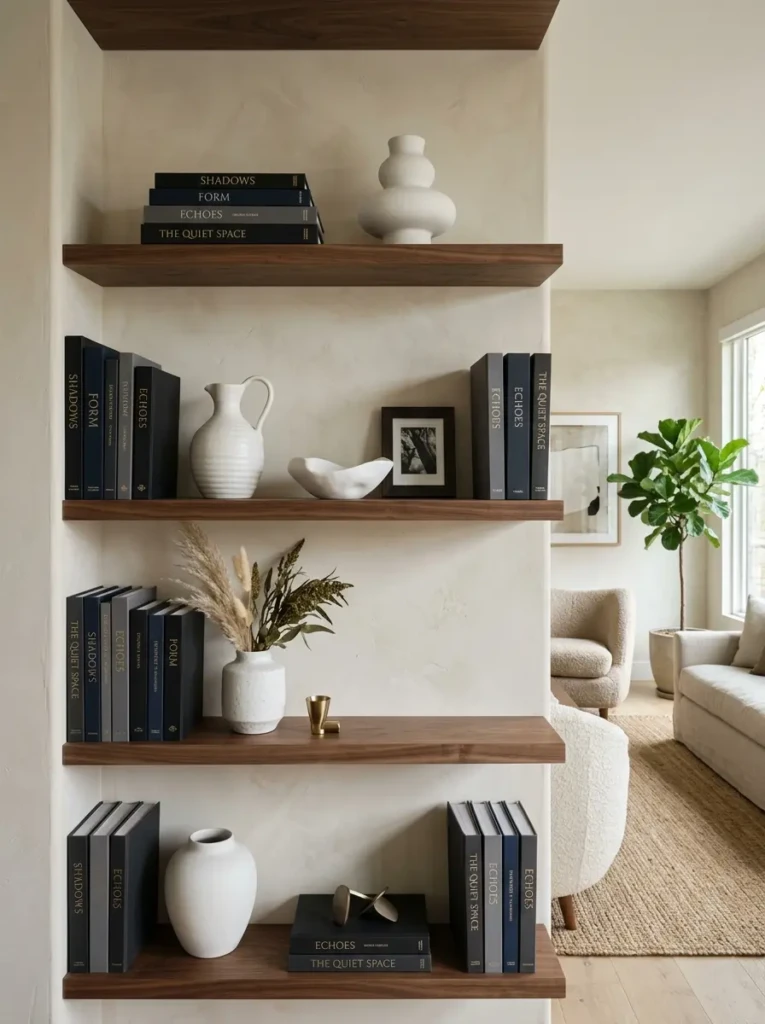
Visual balance matters more than symmetry. If one shelf contains dense dark books, offset that weight with lighter objects or open space on the adjacent section. Spread large items across the full shelving unit rather than clustering them in one place.
15. Make Use of Meaningful Objects
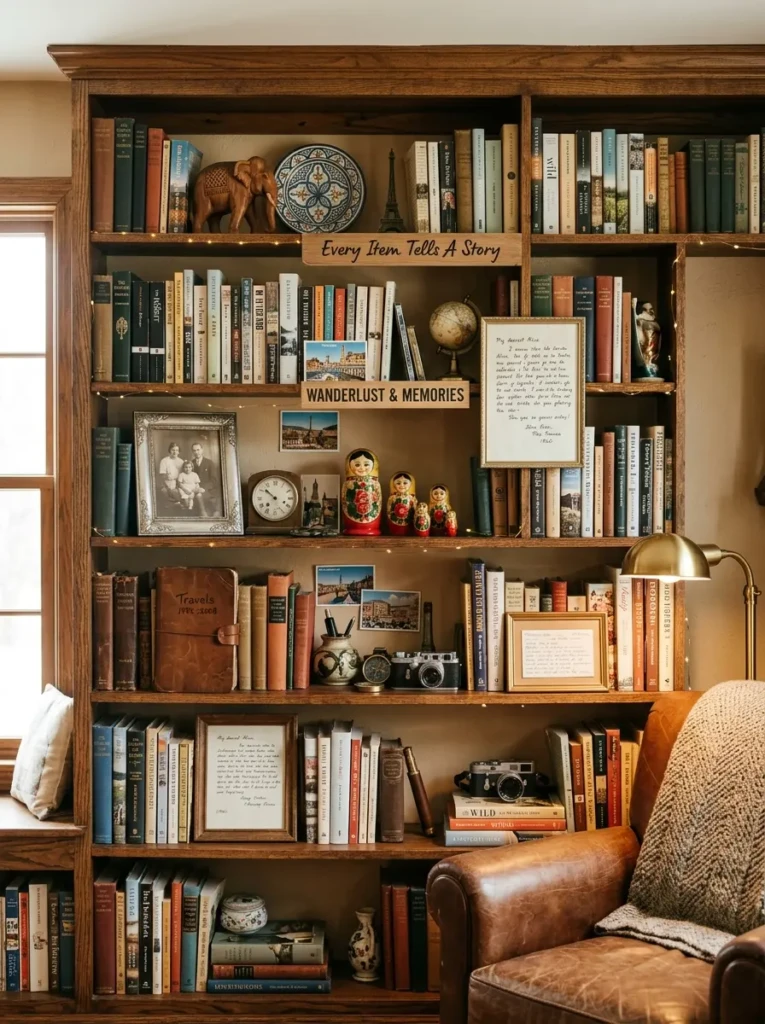
Bookshelves become memorable when they tell a story. Add travel finds, heirlooms, framed notes, or collectibles that connect to your interests. These objects create personality and make the shelf feel authentically yours.
16. Design Home Library Office Study Book Shelves for Depth
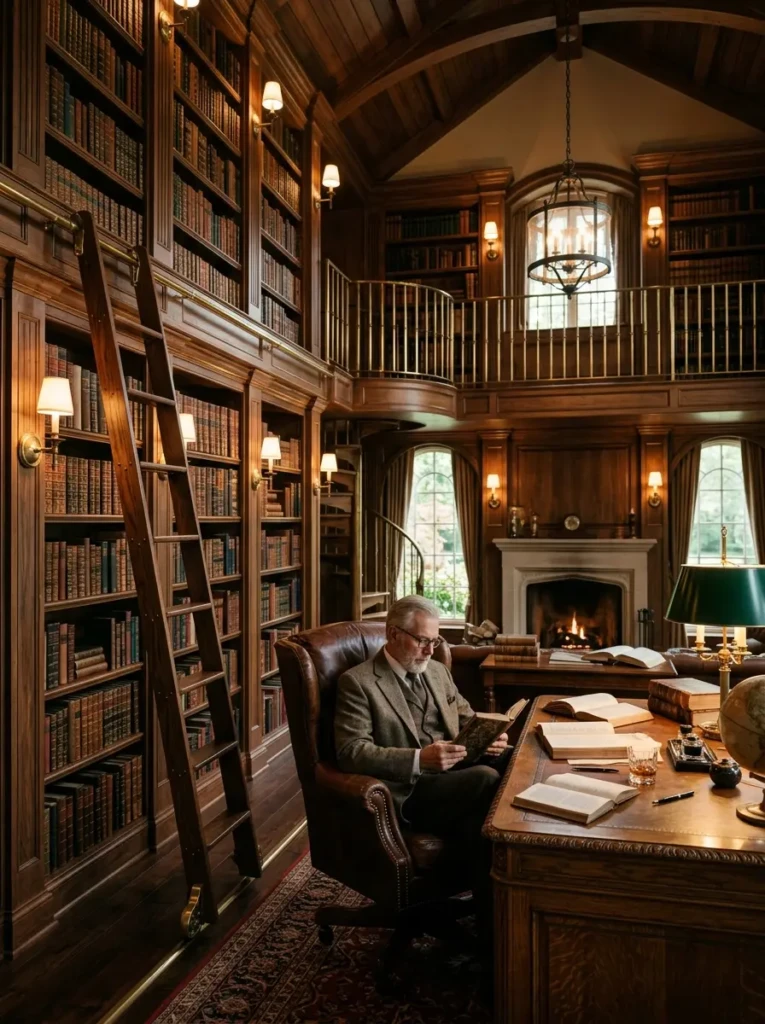
Large home library office study book shelves should combine function with atmosphere. Use layered lighting, rolling ladders if available, archival boxes, and a mixture of vertical rows with curated display sections. In study spaces, shelves should communicate knowledge, focus, and comfort at once.
17. Refresh Styling by Season
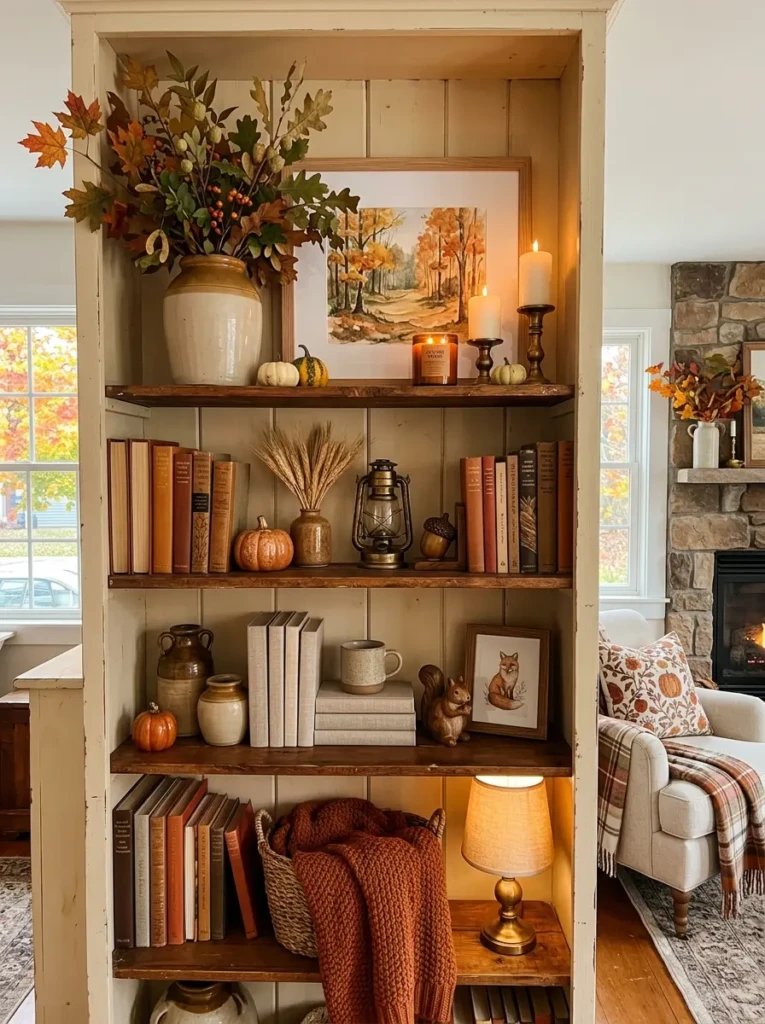
Bookshelf styling does not need to remain static all year. Rotate in seasonal branches, candles, or small artwork changes to keep the shelves fresh. Minor updates maintain interest without requiring a complete redesign.
18. Finish With Editing, Not Adding
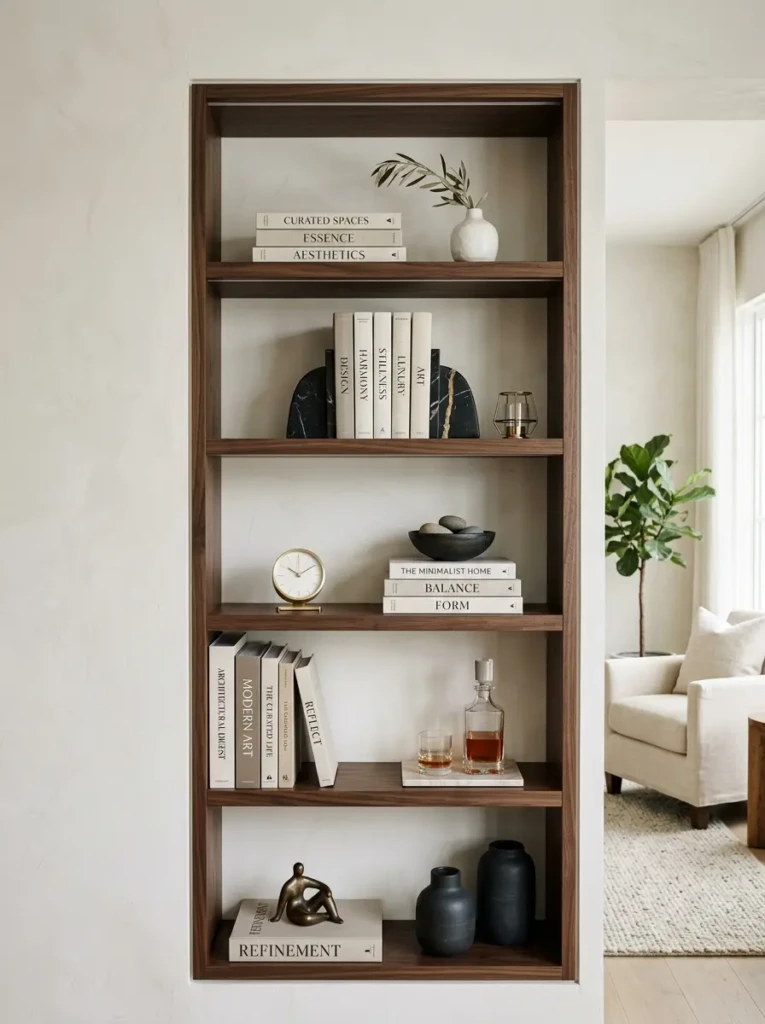
The final step in professional shelf styling is always editing. Remove one or two items from every shelf and reassess the balance. Most shelves improve when simplified. A refined bookshelf feels intentional, spacious, and easier to appreciate.
Conclusion
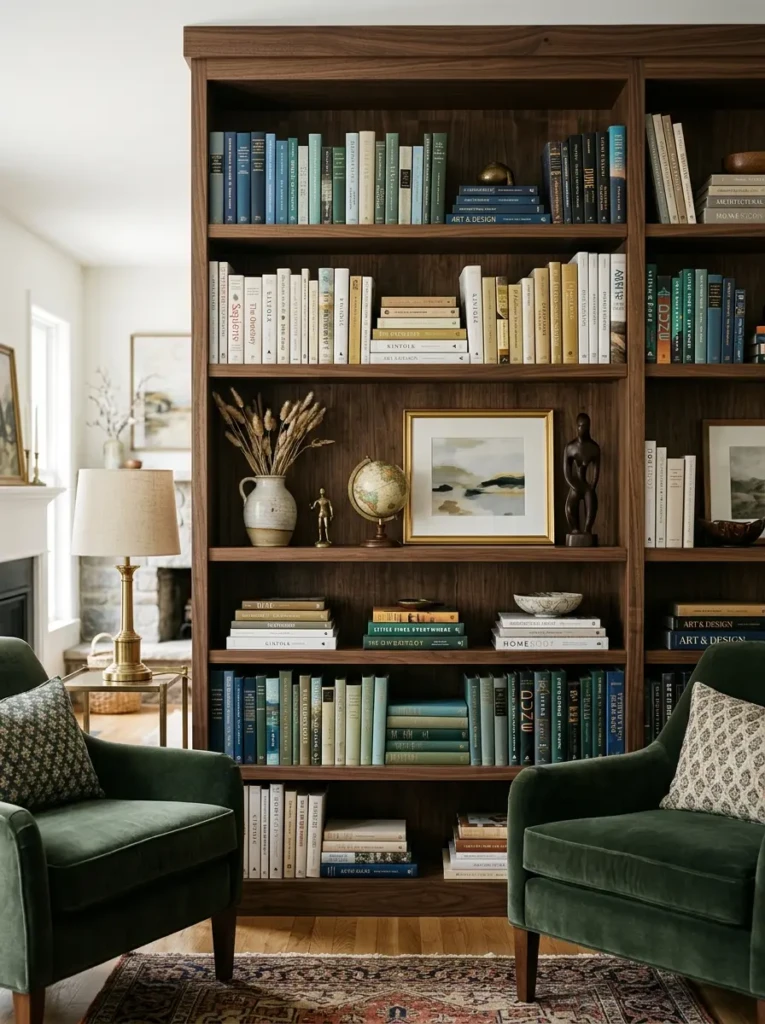
Book shelf styling works best when books remain the hero and decor supports the story. By combining structure, negative space, personal objects, and room-specific function, you can create shelves that feel elegant and useful. Whether you are styling a bedroom nook, a work zone, or a full study wall, the right balance of books and design details transforms storage into a defining feature of the room.