Living Room Rug Inspiration
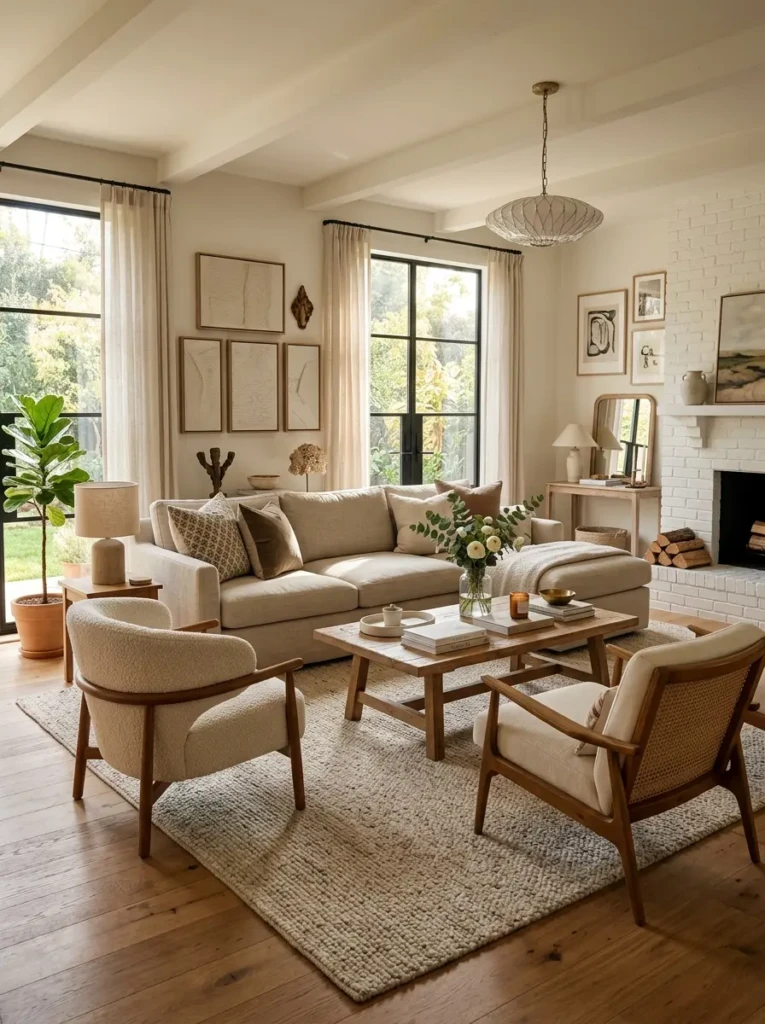
A well-chosen living room rug anchors furniture, softens acoustics, and gives the entire space a finished feel. It can separate zones in open layouts, add warmth to hard flooring, and introduce color or texture without overwhelming the design.
Start With Function First
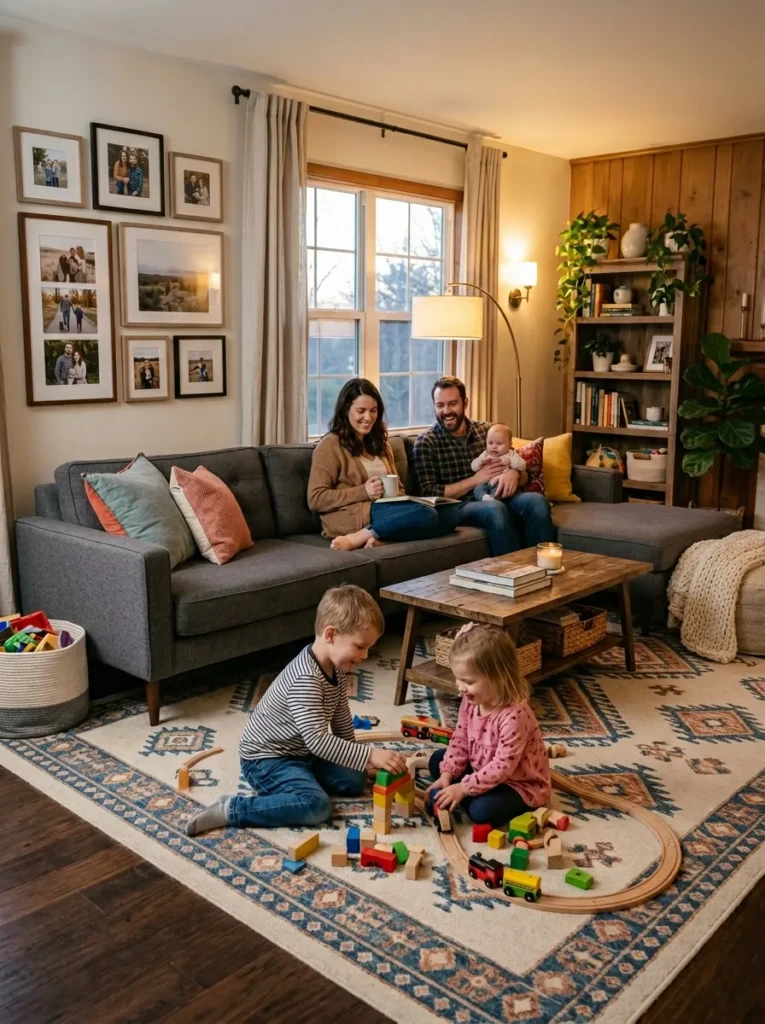
Before selecting pattern or material, think about how the room is used. High-traffic family spaces need durable fibers, while formal sitting rooms can support more delicate weaves and textures.
Measure the Seating Area
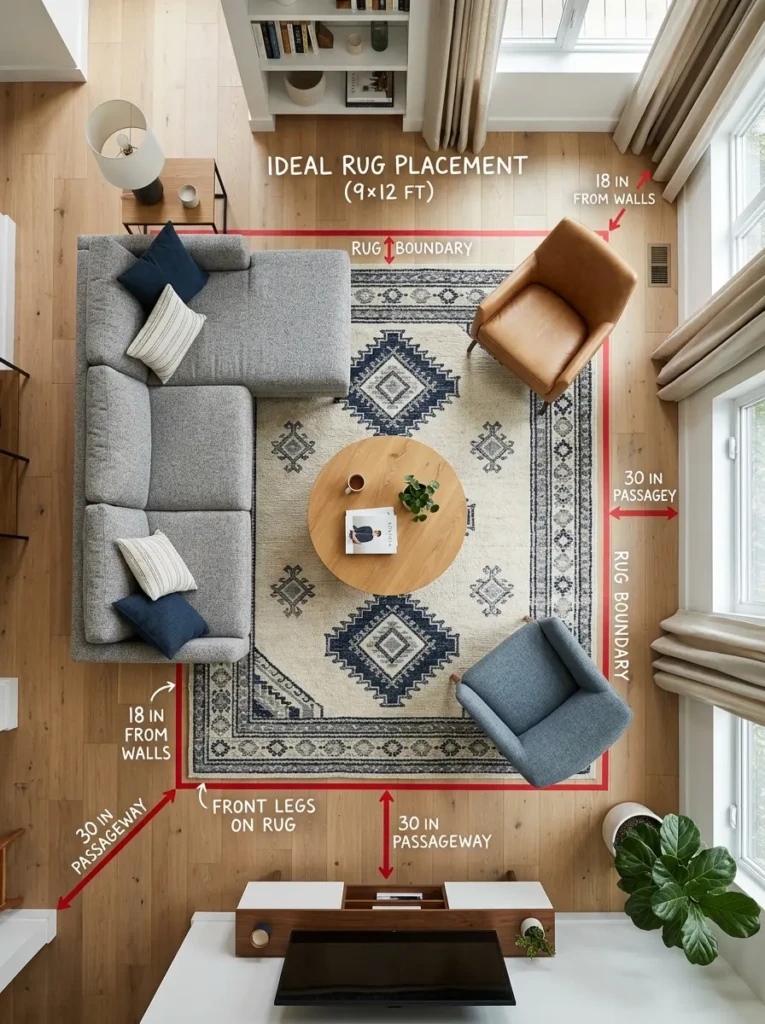
The most successful living room rug placement starts with accurate measurements. A rug should connect the sofa, chairs, and table so the furniture arrangement feels intentional rather than floating.
Choose the Right Size
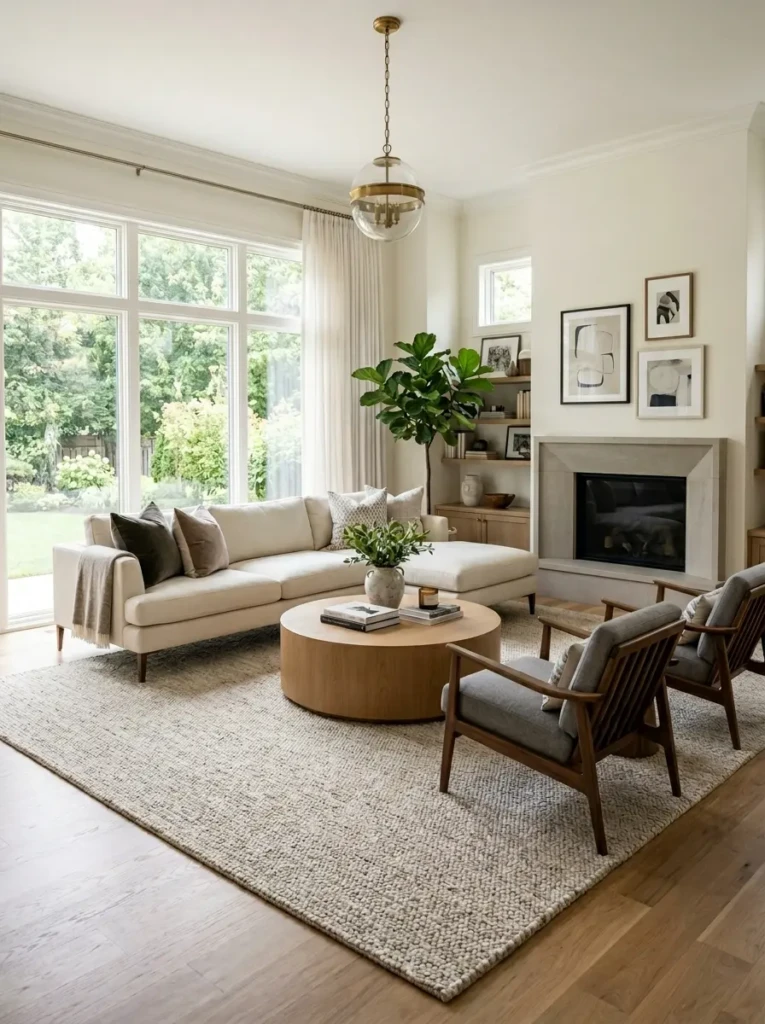
Too-small rugs make a room feel disconnected. In most spaces, front legs of all major furniture pieces should rest on the rug, while larger rooms can accommodate fully grounded layouts.
Living Room Rug Ideas for Every Style
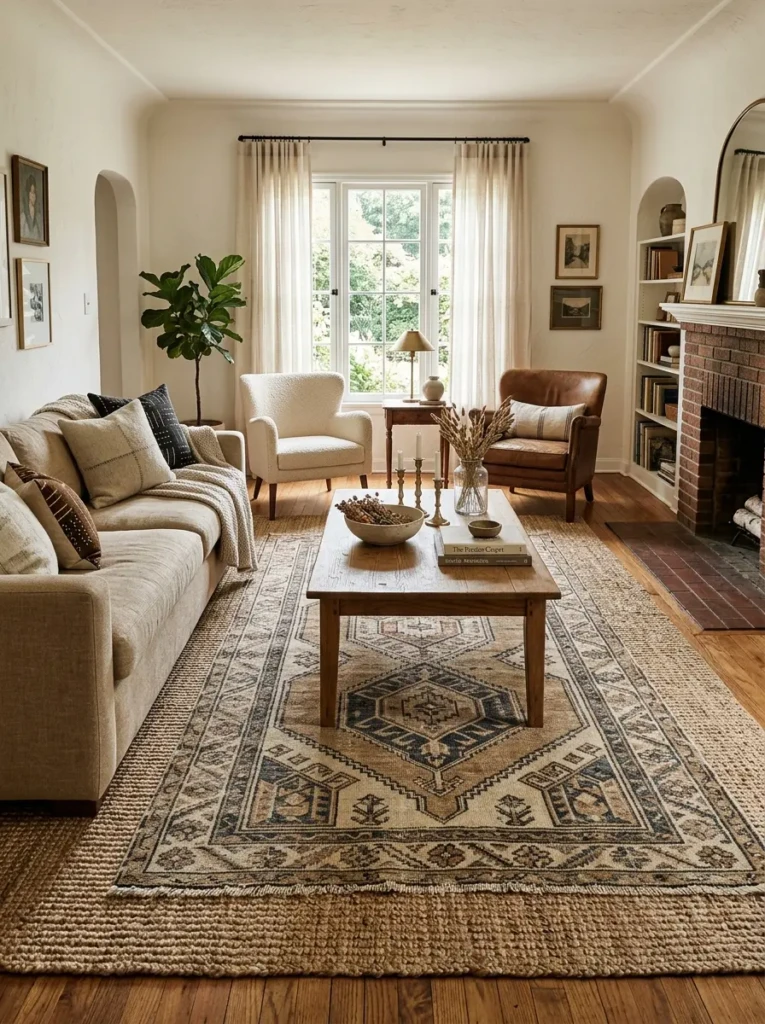
Among the most practical living room rug ideas are neutral wool rugs, geometric flatweaves, layered jute foundations, and subtle vintage-inspired patterns. These options adapt easily as furniture and décor evolve.
Use Color to Build Mood
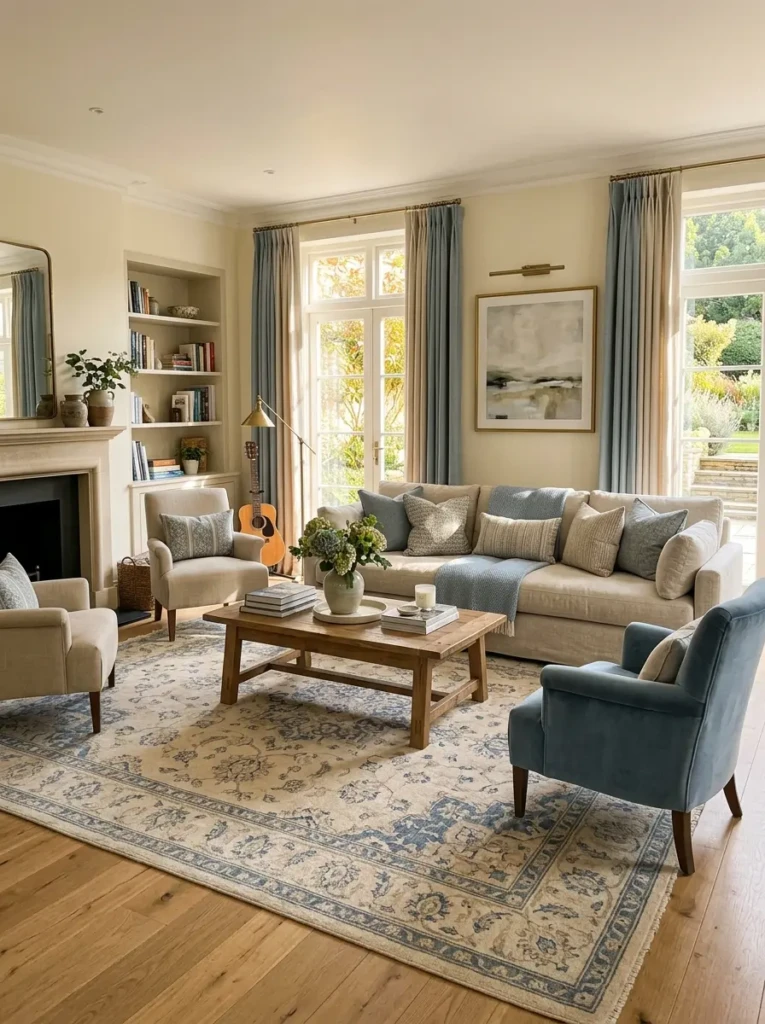
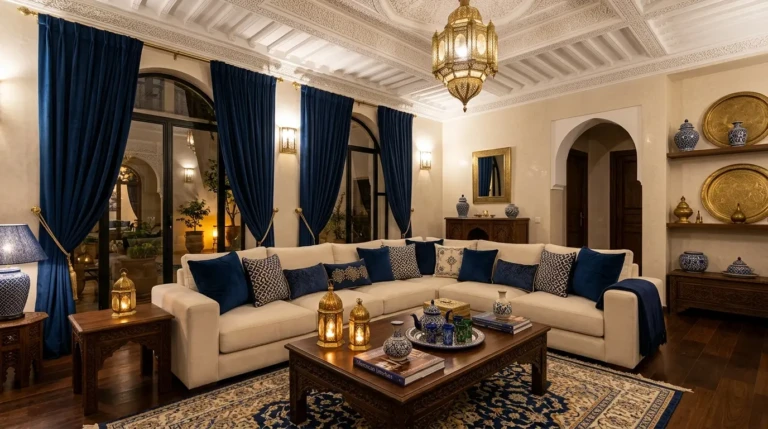
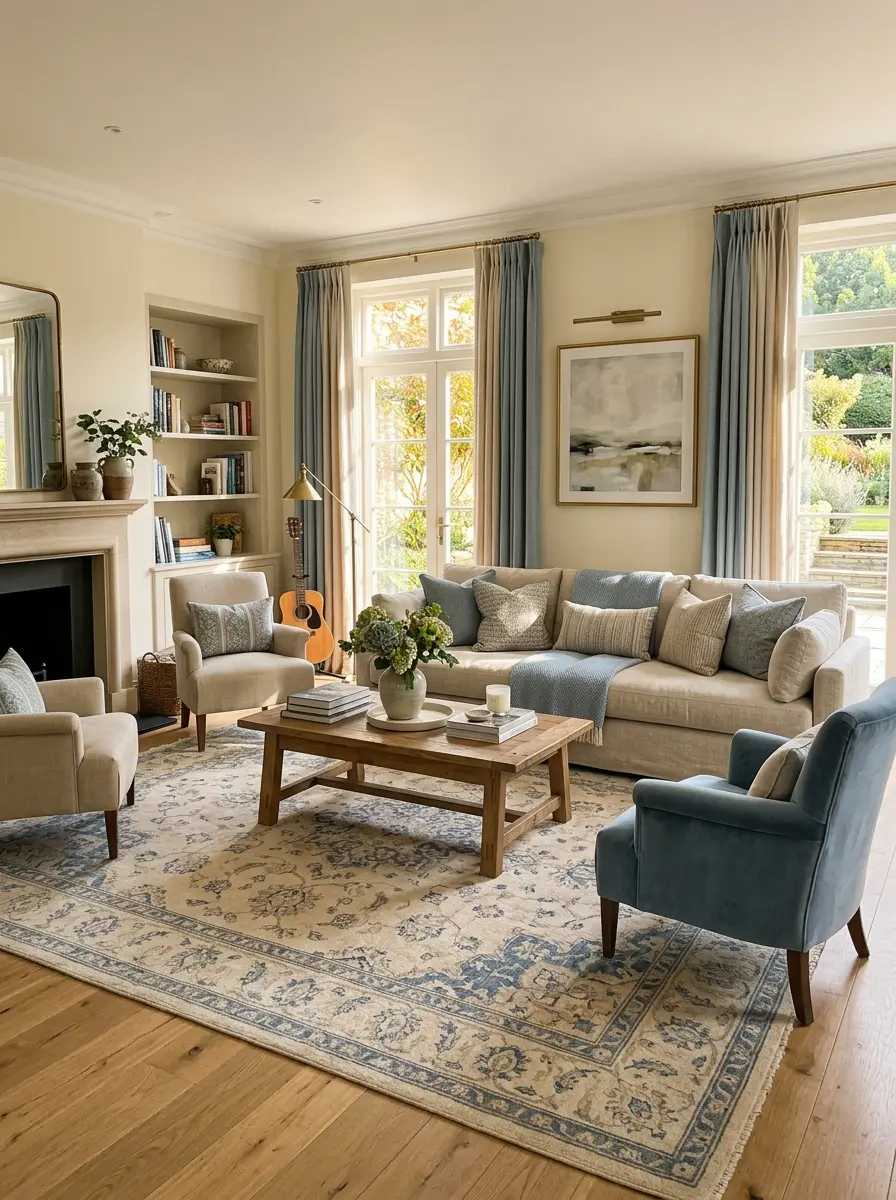
Soft beige, charcoal, muted blue, and olive tones work especially well in living spaces. Choose shades that repeat colors already present in cushions, curtains, or wall art for visual consistency.
Add Texture for Depth
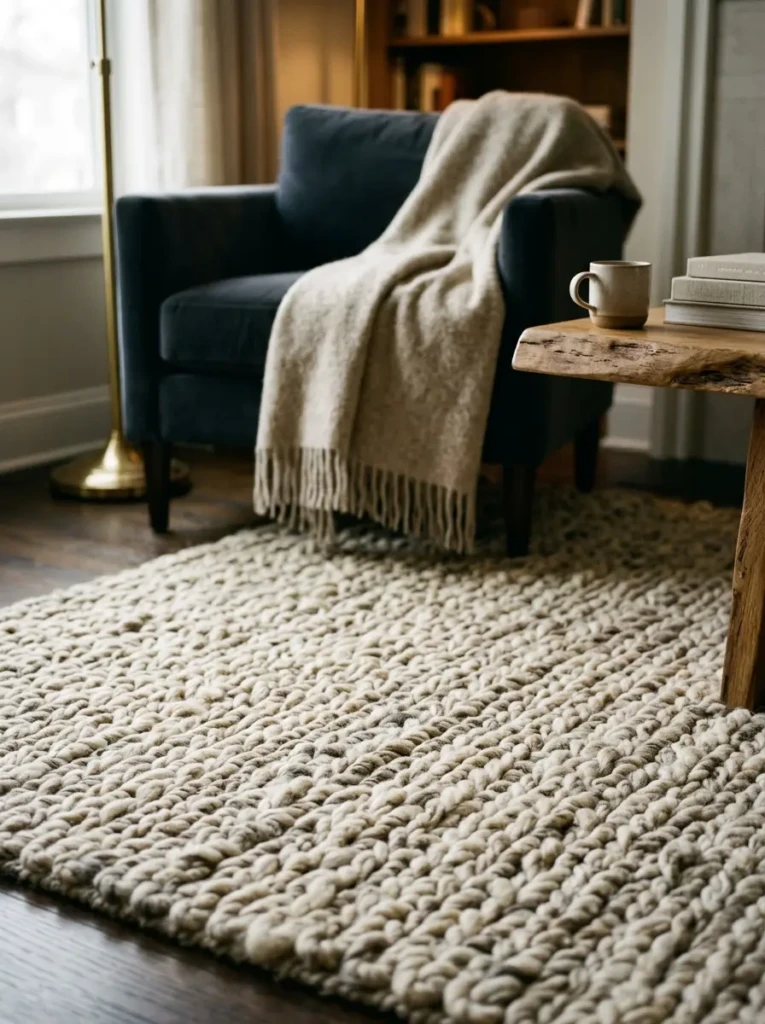
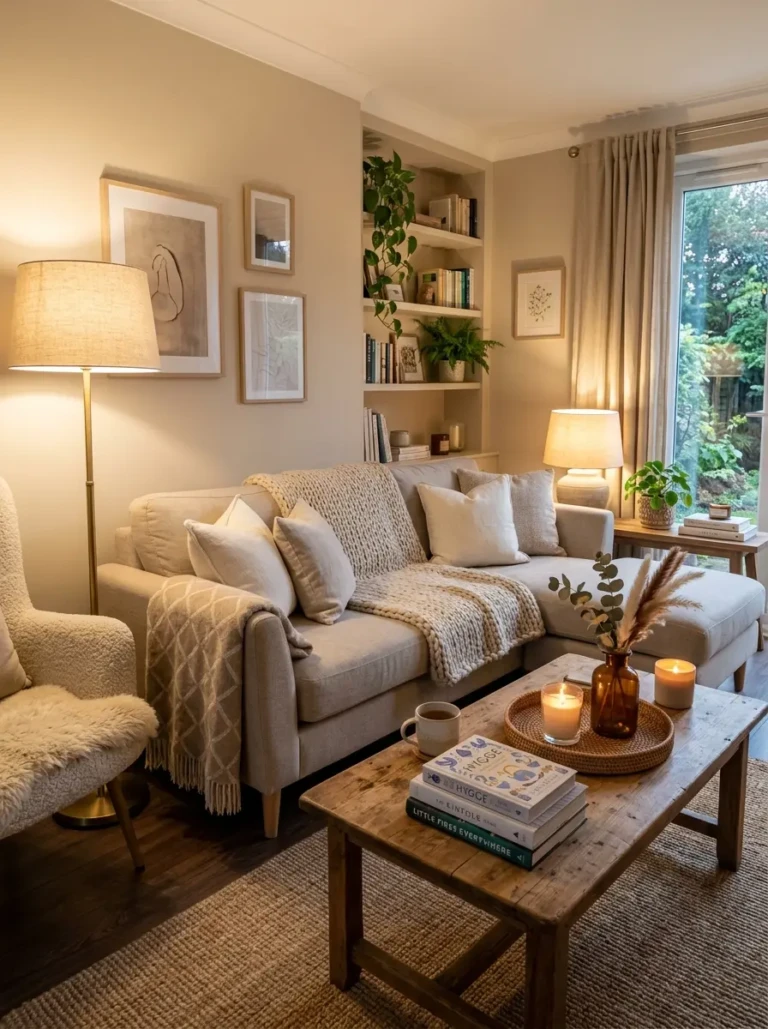
Texture often matters more than pattern. Chunky wool, low-pile cotton, hand-knotted blends, and natural jute can all create depth that makes the room feel thoughtfully designed.
Balance Pattern With Furniture
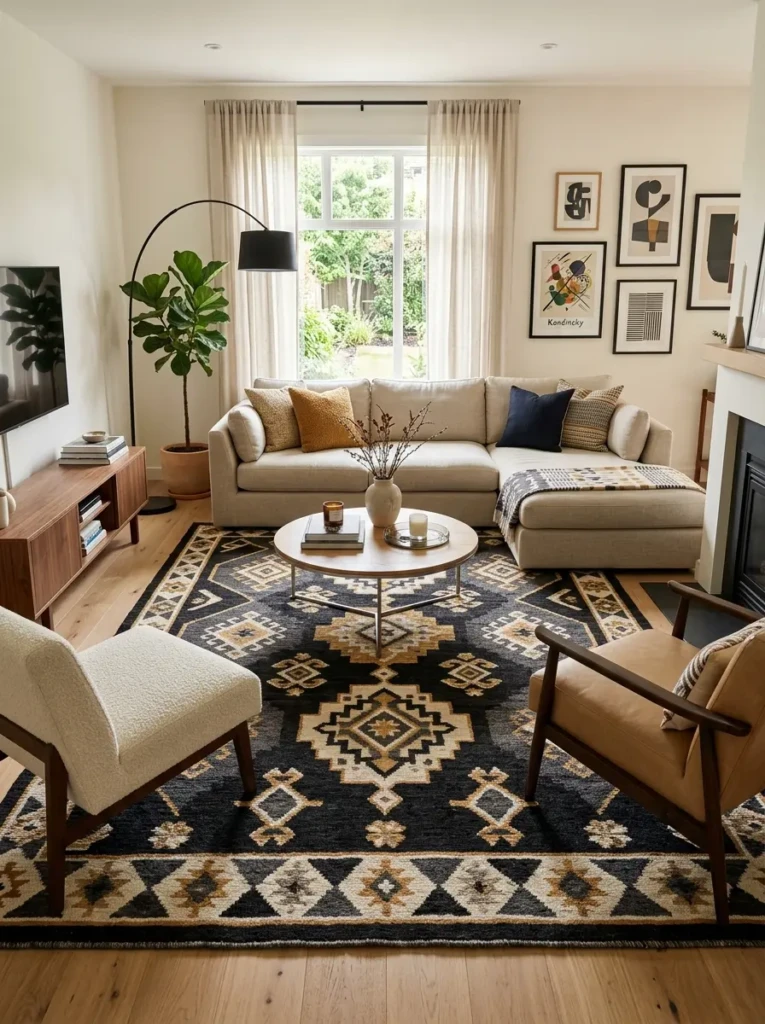
If the sofa fabric is bold, keep the rug understated. If the furniture is solid and simple, a patterned rug can become the focal point that adds movement and personality.
French Country Living Room Warmth
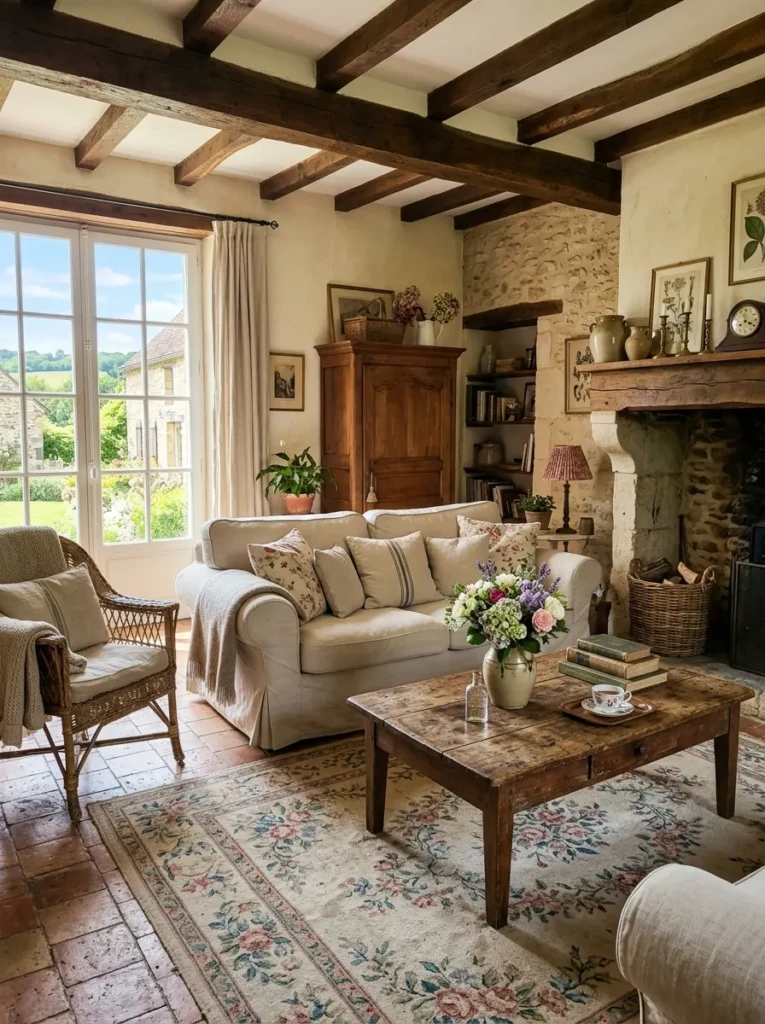
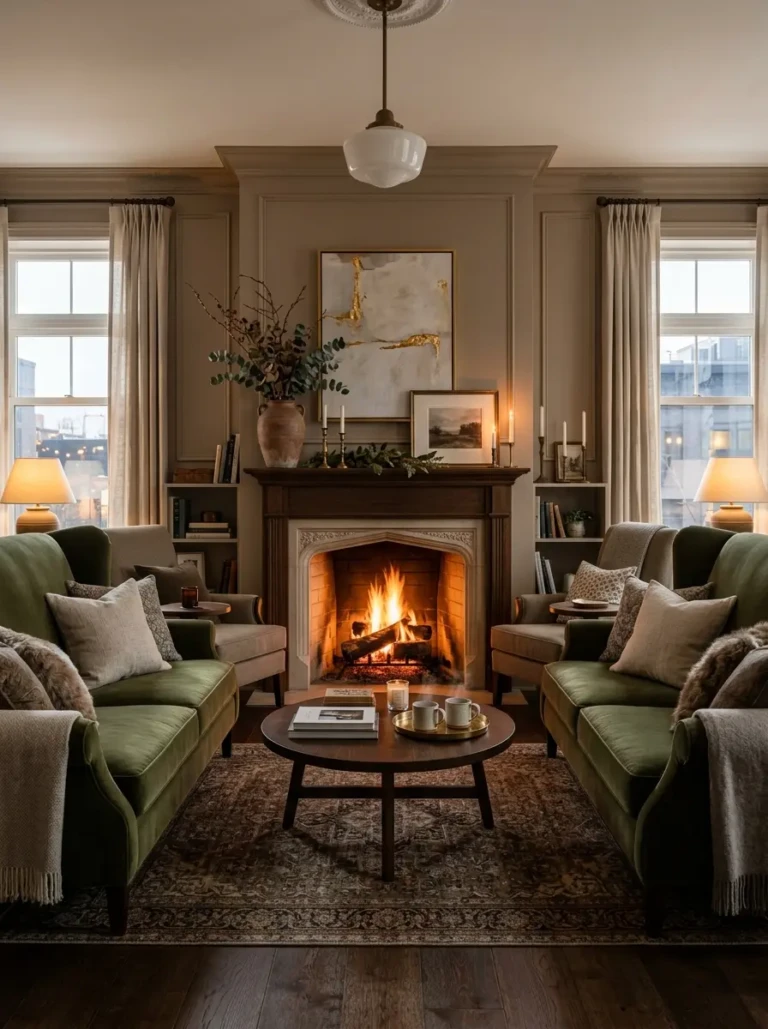
In a french country living room, rugs with faded florals, muted medallions, and warm cream backgrounds pair beautifully with linen upholstery, distressed wood, and antique-inspired accents.
Vaulted Ceiling Living Room Scale
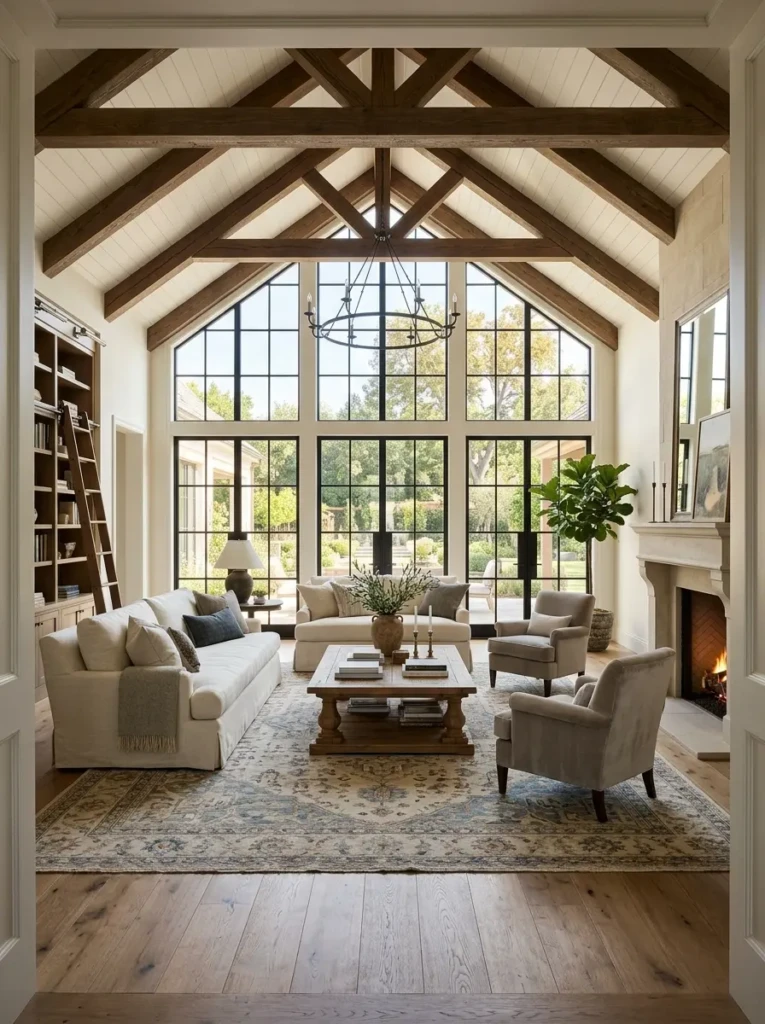
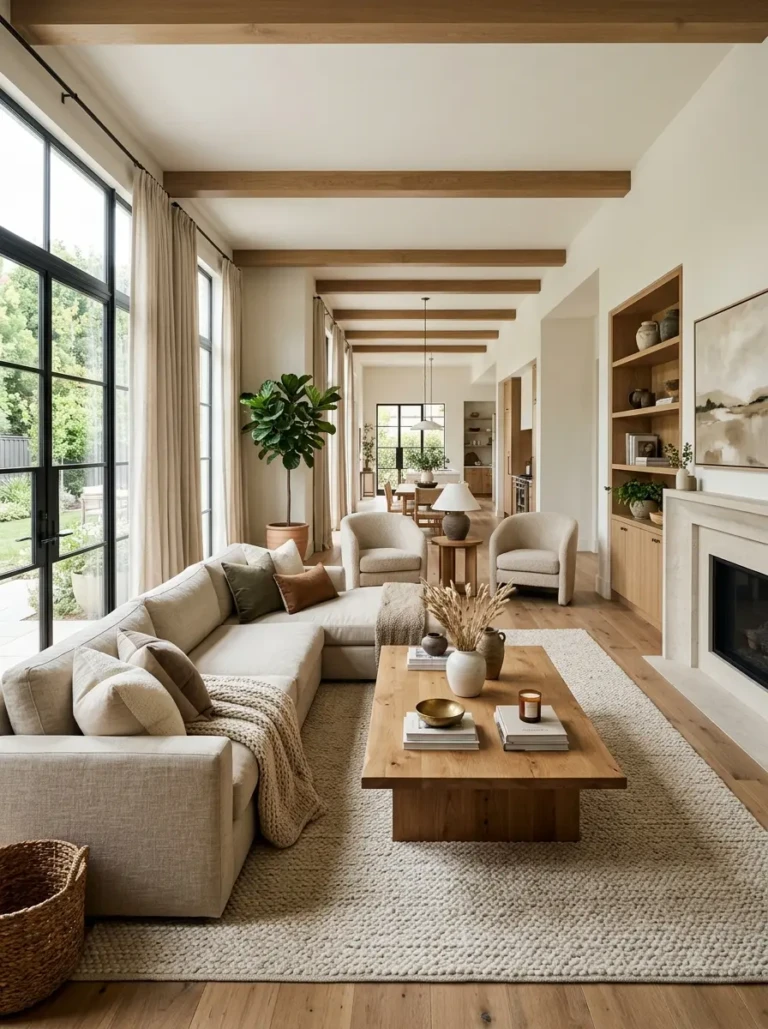
A vaulted ceiling living room often needs a larger rug than expected. The visual volume created by ceiling height can make small rugs disappear, so oversized layouts help ground the room.
Industrial Living Room Contrast
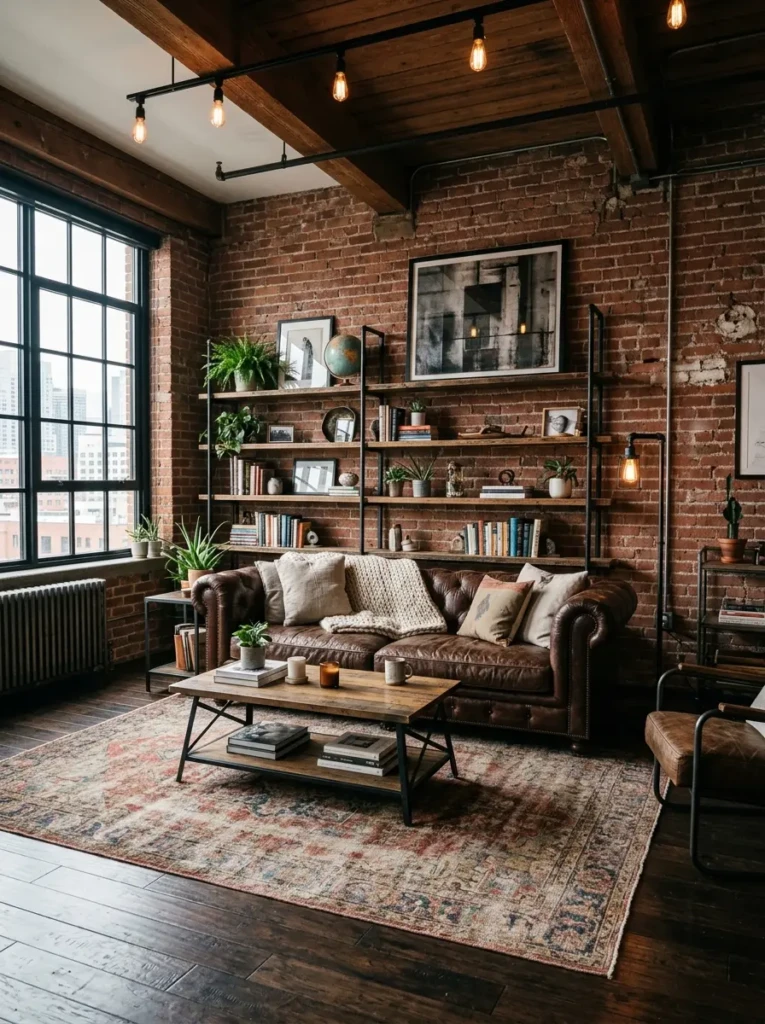
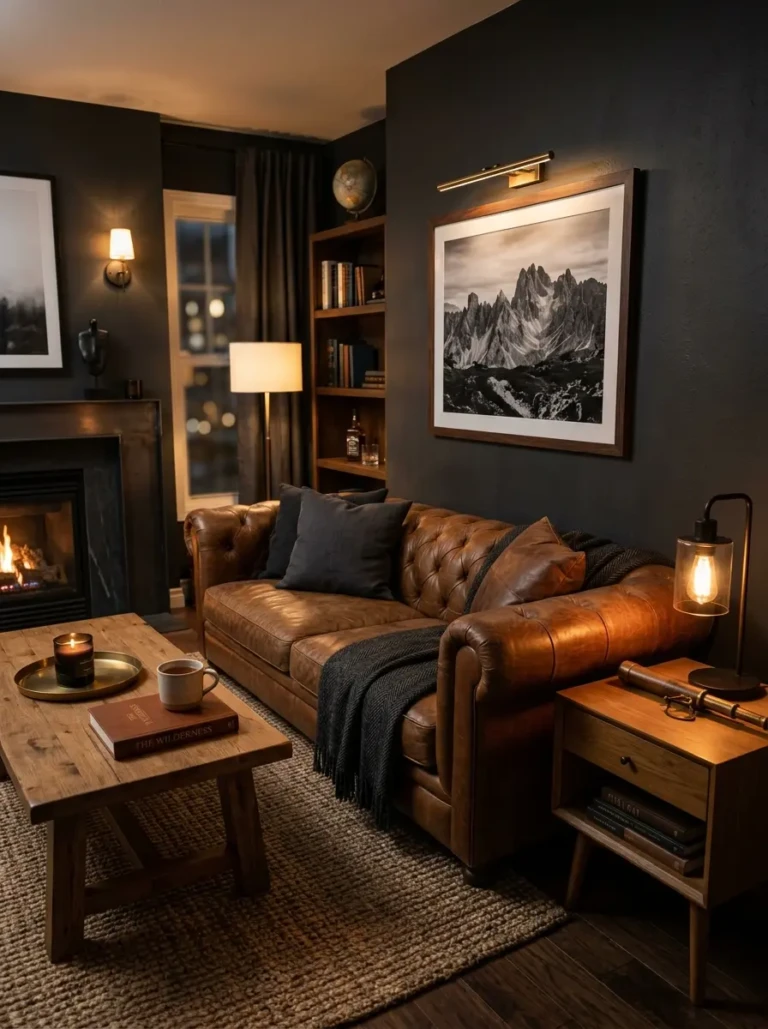
For an industrial living room, choose rugs that soften concrete, metal, and exposed brick. Vintage Persian patterns, distressed neutrals, and dark geometric rugs balance the harder architectural elements.
Tiny Living Room Ideas That Work
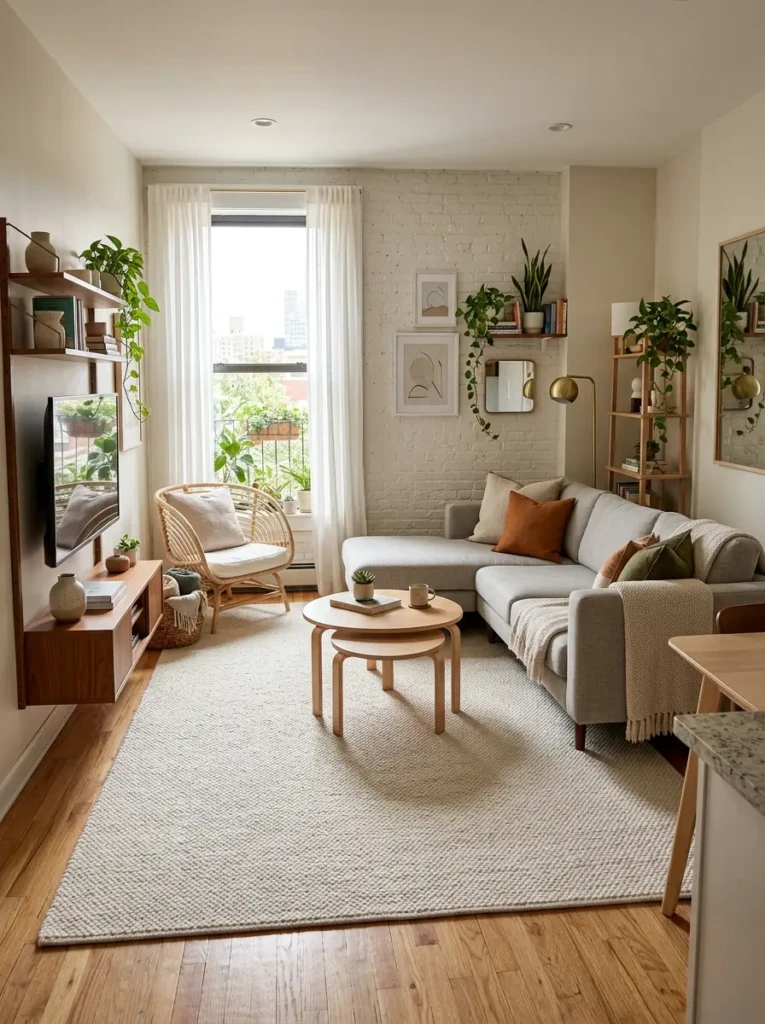
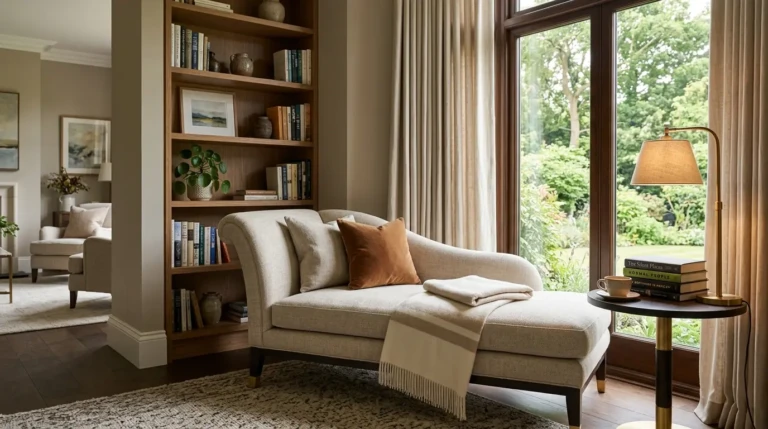
The best tiny living room ideas use rugs to visually widen the floor area. Light colors, subtle stripes, and properly sized rectangular rugs can make compact spaces feel more open.
Layer Rugs for Visual Interest
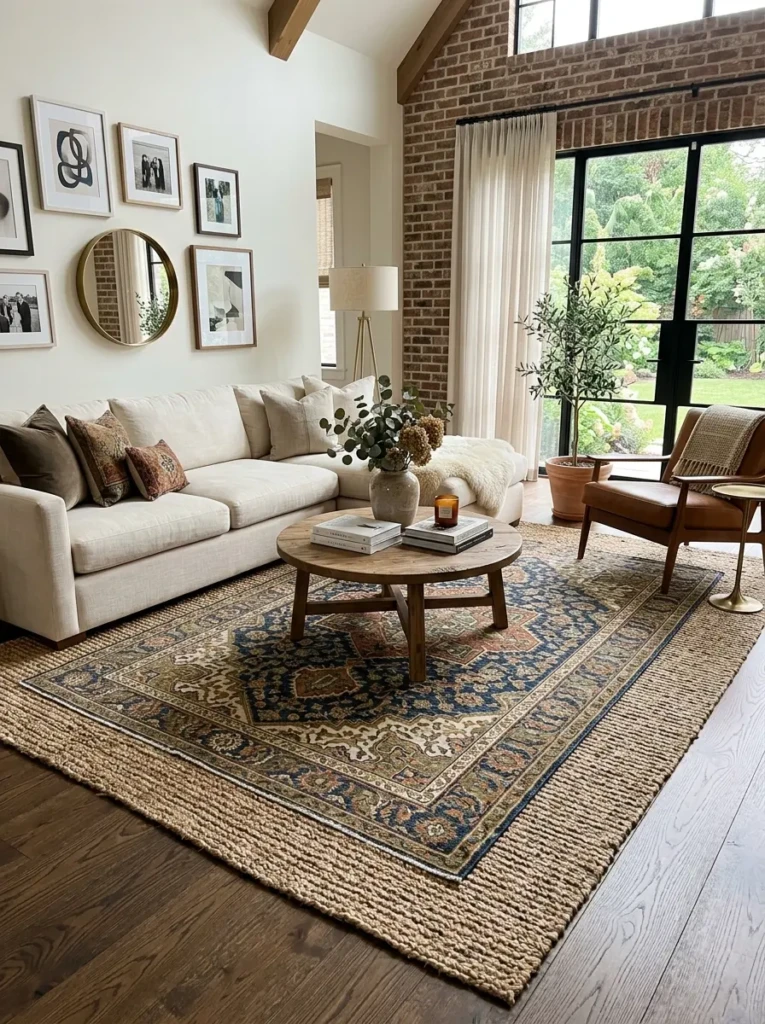
Layering a smaller patterned rug over a larger natural-fiber base adds dimension and helps define the central seating area without requiring a custom-sized piece.
Modern Classic Living Room Elegance
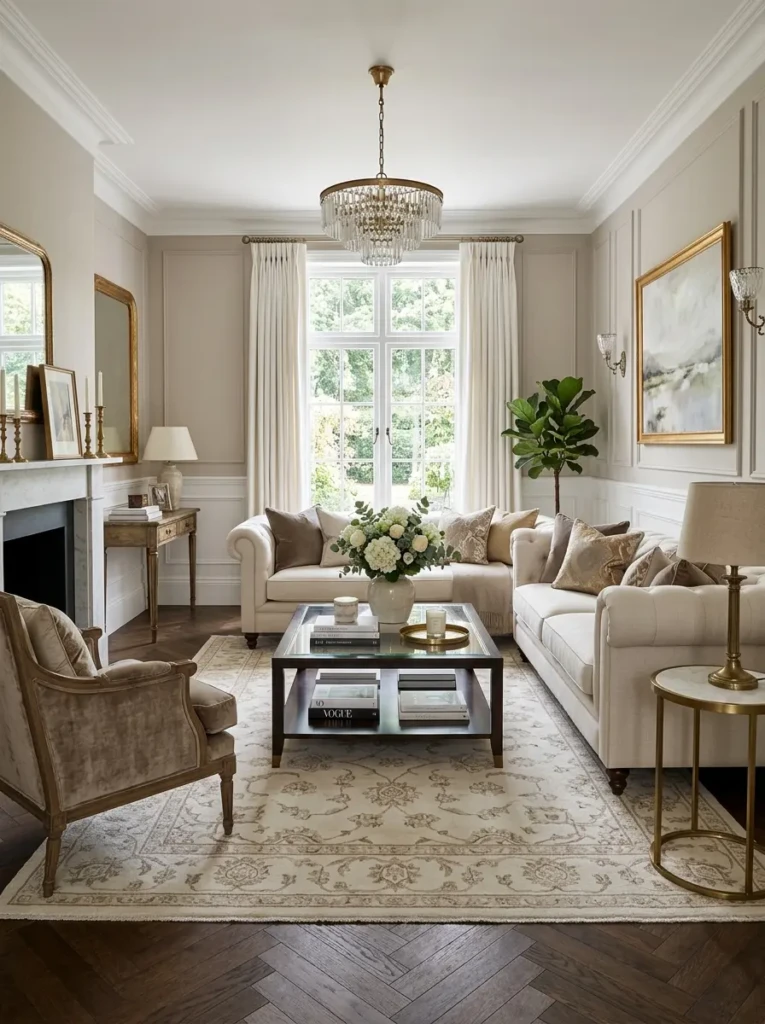
A modern classic living room benefits from rugs with timeless motifs in updated palettes, such as taupe, black, ivory, or muted blue. This keeps the room elegant yet current.
Use Shape to Guide Flow
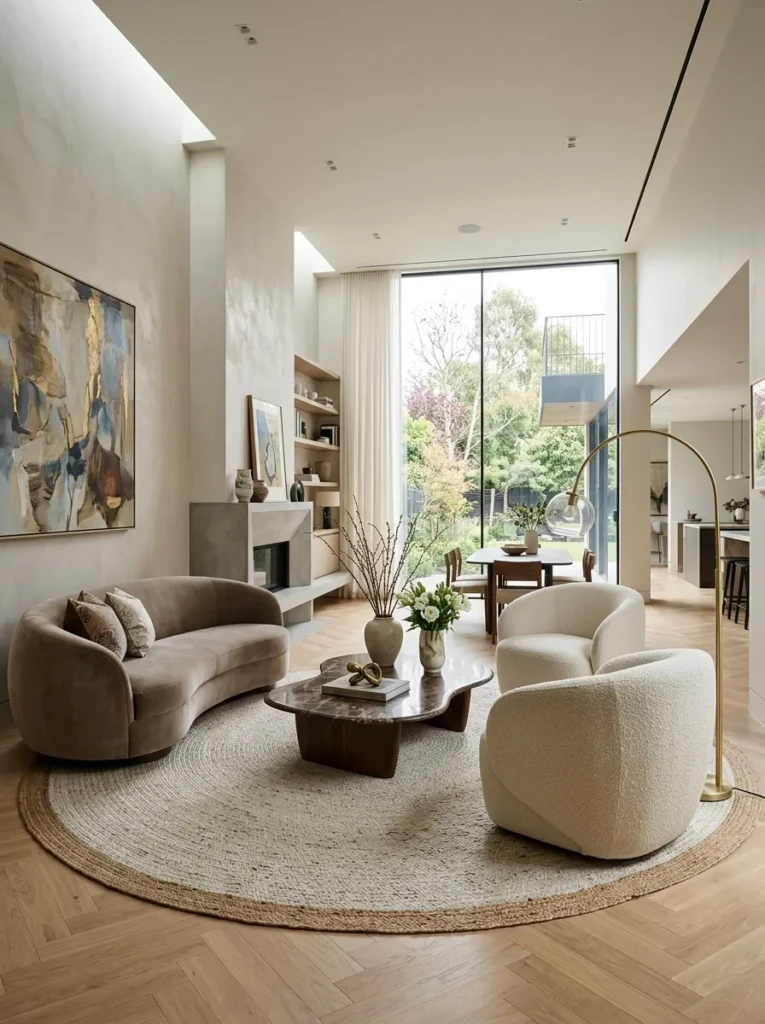
Rectangular rugs are standard, but round rugs can soften angular furniture layouts. Oval rugs also work well under curved sectionals or in transitional spaces.
Toca Boca Living Room Ideas Influence
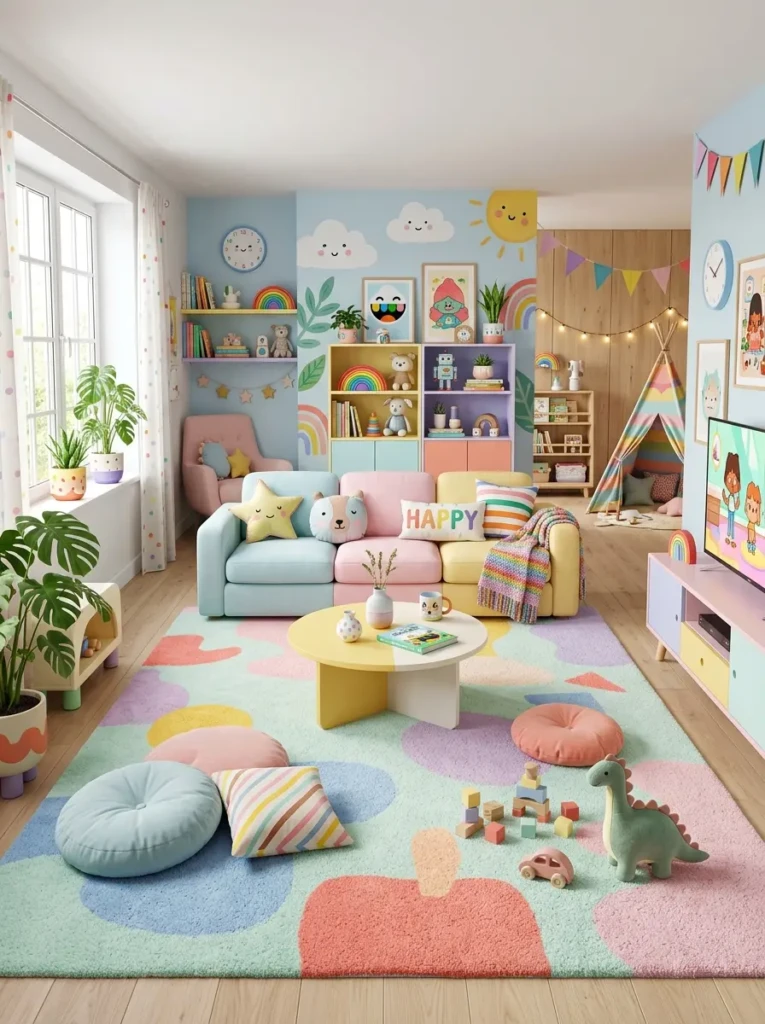
Playful color combinations inspired by toca boca living room ideas can translate into real interiors through pastel rugs, cheerful abstract shapes, and fun layered accessories that still feel stylish.
Match the Rug to Flooring
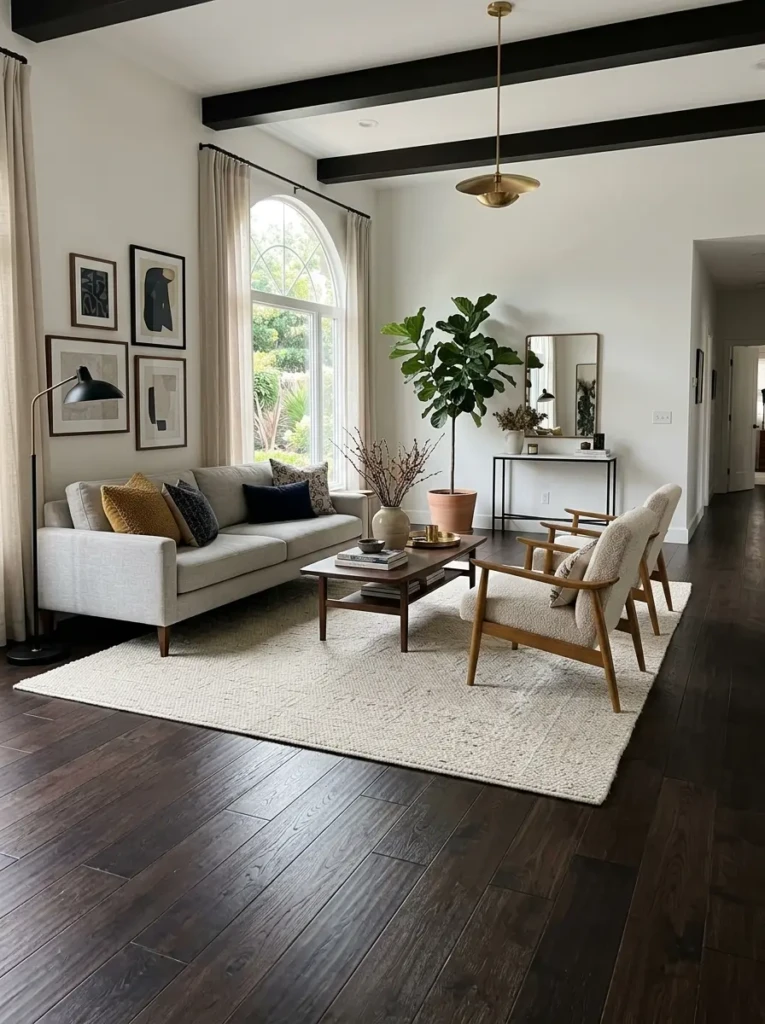
Dark wood floors pair well with lighter rugs for contrast, while pale flooring often benefits from richer tones that add depth and keep the room from feeling flat.
Consider Material Carefully
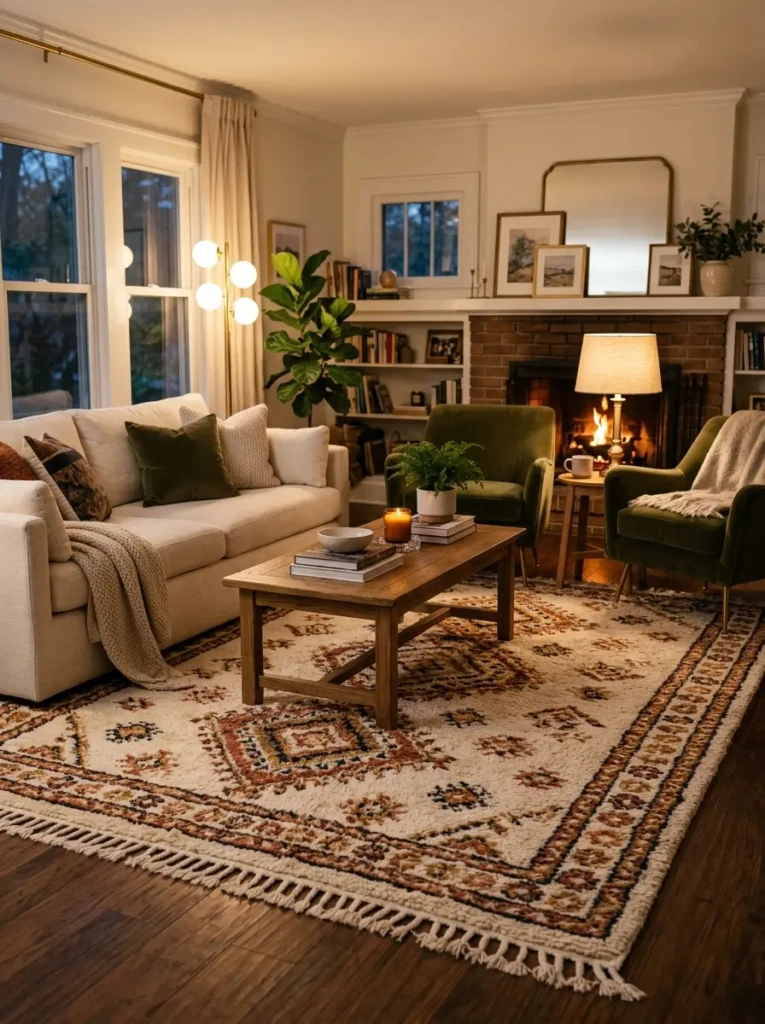
Wool remains one of the best choices for living rooms because it is durable, naturally stain resistant, and comfortable underfoot. Synthetic blends are practical for homes with children or pets.
Create Zones in Open Layouts
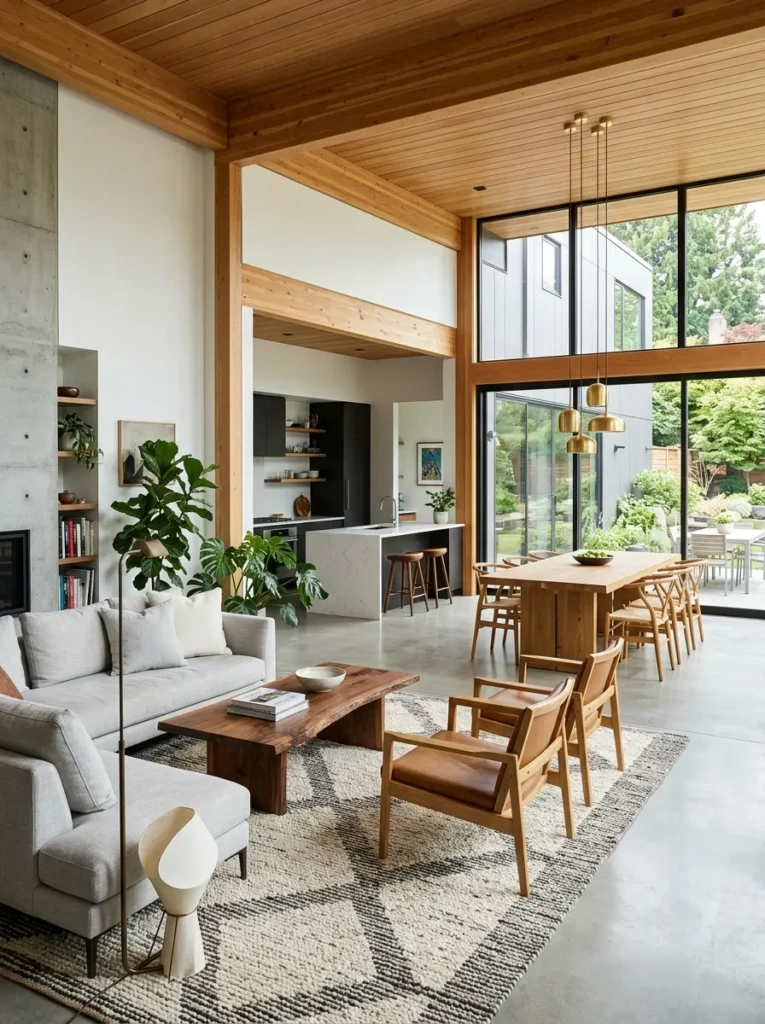
In open-plan homes, rugs define the living area without needing walls. Use one large rug under the seating zone to clearly separate it from dining or kitchen spaces.
Keep Maintenance in Mind
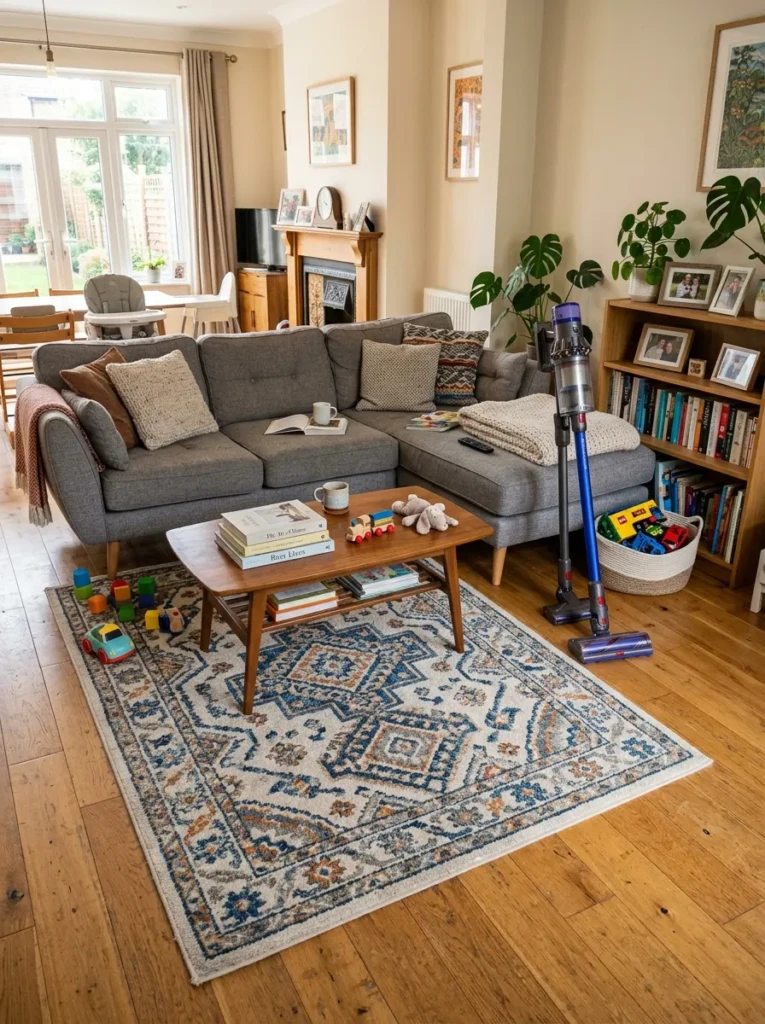
Low-pile rugs are easier to vacuum and maintain. Patterned surfaces also hide daily wear better than solid light colors, making them ideal for busy households.
Seasonal Styling Updates
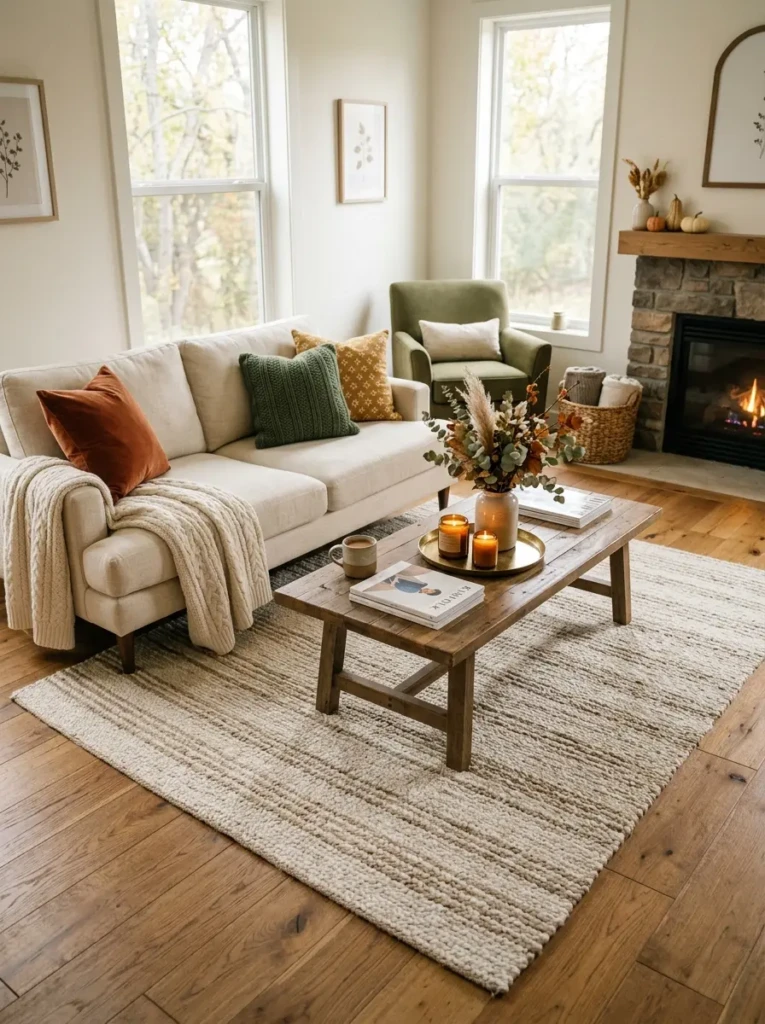
Switching pillows, throws, and small décor around the rug each season keeps the room fresh. A neutral base rug offers the most flexibility for year-round styling.
Coordinate With Lighting
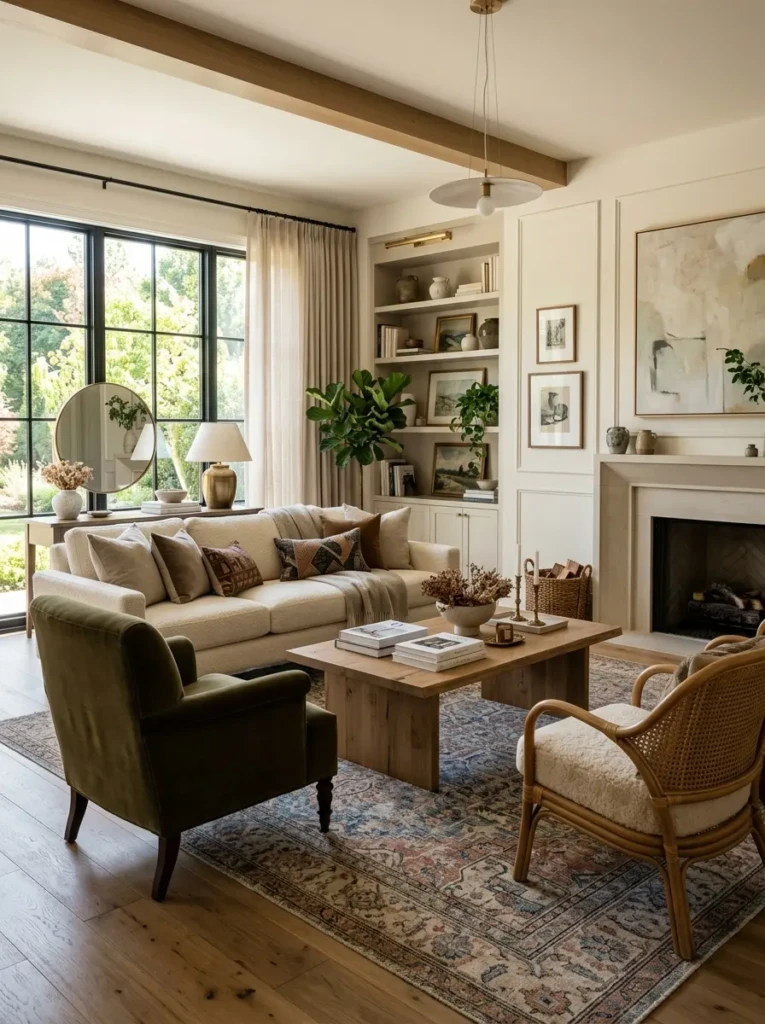
Natural light changes how rug colors appear throughout the day. Always test swatches in morning and evening light before making a final decision.
Final Styling Formula
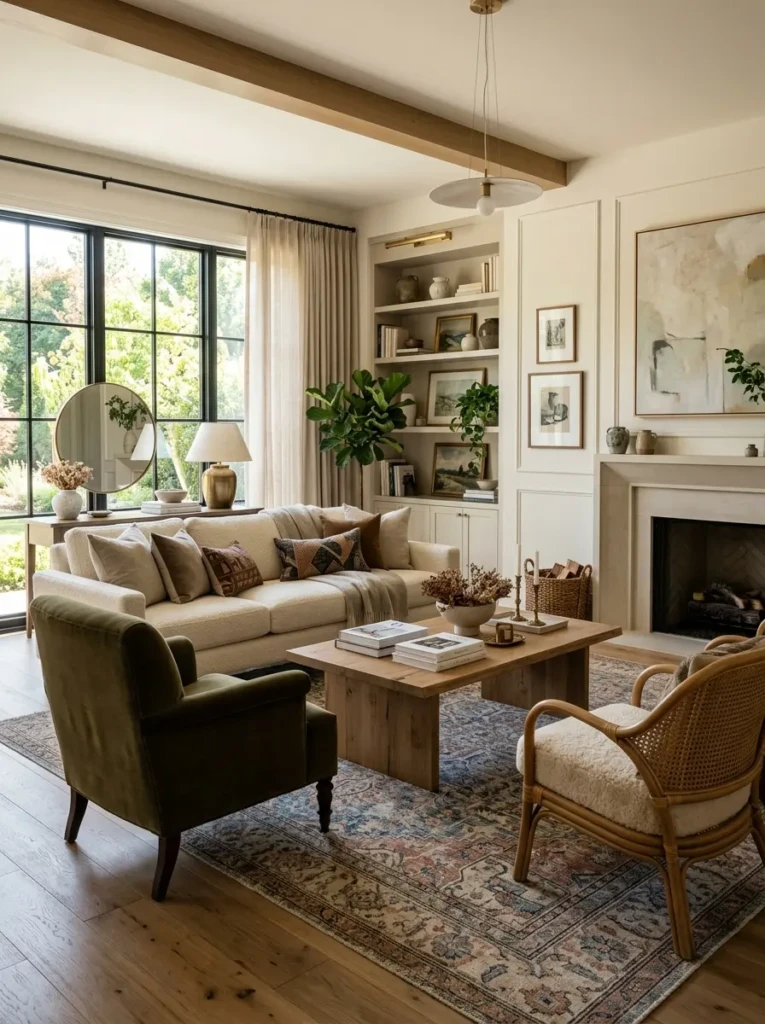
The best living room rug inspiration comes from balancing size, material, texture, and placement. When the rug connects the furniture, complements the room style, and supports everyday use, the entire living room instantly feels more polished, comfortable, and complete.